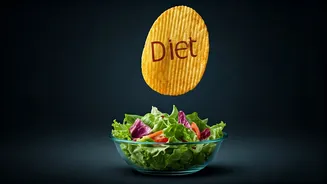









The 'Health Halo' That Leads to Overeating
One of the biggest traps with diet-branded snacks is a psychological phenomenon known as the "health halo" effect. When a food is marketed as "low-fat," "baked," or "veggie," our brains tend to perceive the entire product as virtuous. This can lead to what
researchers call "portion distortion." You might think you're being healthy, which gives you a subconscious permission slip to eat more than you otherwise would. Studies have shown that when people believe a food is low-fat, they can end up consuming significantly more, completely erasing any potential calorie savings. That seemingly small bag of baked chips can quickly turn into two, under the mistaken belief that they don't "count" as much as regular chips.
The Slight Calorie Difference That Isn't So Different
Food companies often promote baked chips as a superior choice because they are lower in fat and calories. While it's true that baking reduces fat content compared to frying, the difference in calories is often minimal. A standard single-serving bag of fried chips might contain around 150-160 calories, while its baked counterpart often has about 130 calories. While lower, this small 20 to 30 calorie difference is easily negated if the health halo effect causes you to eat a larger portion. Furthermore, to make up for the lack of flavor and texture from fat, manufacturers often add more starch and sugar to baked varieties, which can increase the carbohydrate count.
The Nutritional Mirage of Veggie Chips
Then there are veggie chips and straws, which sound like the ultimate guilt-free snack. The reality is often disappointing. The main ingredients in most veggie straws are typically potato starch and potato flour, just like regular chips. The "veggie" component usually comes from small amounts of vegetable powder or paste, which offers little of the nutritional benefit of whole vegetables. Ironically, some popular brands of veggie straws contain more sodium and less fiber than classic potato chips. Fiber is crucial for feeling full and satisfied, so a snack that lacks it is less likely to curb your hunger.
The Sodium Surge That Causes Bloating
Whether baked, fried, or made from veggie powder, most chips are loaded with sodium. While salt itself contains no calories, consuming it in high amounts can sabotage your weight loss progress. A high-sodium diet causes your body to retain water as it tries to dilute the salt in your bloodstream. This leads to bloating and a temporary increase on the scale, which can be incredibly demotivating when you're working hard to see results. Moreover, salty foods can be addictive and may increase cravings for other highly processed, calorie-dense foods. Some veggie chip varieties have been found to contain even more sodium than their fried potato counterparts.
The Missing Nutrients for Satiety
Ultimately, the goal of a snack in a weight loss plan is to manage hunger between meals without consuming excess calories. The most effective snacks are those that promote satiety, or the feeling of fullness. This is usually achieved with a combination of protein, fiber, and healthy fats. Diet chips, for the most part, are lacking in these key nutrients. They are primarily composed of refined carbohydrates that are quickly digested, which can lead to a spike and subsequent crash in blood sugar, leaving you hungry again shortly after eating. This makes it much harder to stick to your overall calorie goals for the day.