





What is Policy Gridlock?
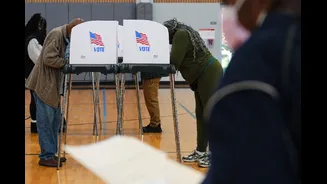
Policy gridlock is what happens when control of the US government is split, with one party holding the presidency and another controlling one or both chambers of Congress. Following the November 2026 midterm elections, the Democratic party has won a majority
in both the House of Representatives and the Senate, creating a direct counterweight to the Republican administration. This division makes it extremely difficult to pass major, sweeping legislation. Big changes on taxes, federal spending, or industry regulation become much harder to achieve because the two parties must compromise to get anything done, which is often not possible in a highly charged political environment. The president retains executive powers, but the path for ambitious new laws is effectively blocked.
The Surprising Upside for Markets
It might seem counterintuitive, but financial markets historically perform well during periods of gridlock. Many investors and strategists see it as a positive, with one analyst calling gridlock 'the market's friend'. The key reason is predictability. When businesses know that no sudden, disruptive laws are on the horizon—such as major tax hikes or sweeping new regulations—they can plan for the future with more certainty. This stability allows companies to commit to longer-term projects and investments. Following the election results, global stock markets rallied, with investors betting that the divided government would curb the more extreme policy impulses and reduce overall uncertainty.
The Risks of a Divided Government
However, gridlock is not without its risks. The inability to pass legislation can become a major problem during a crisis. If the economy needs a stimulus package or if urgent action is required, a deadlocked Congress can be a significant liability. Furthermore, divided government increases the likelihood of high-stakes political standoffs over essential functions, such as raising the national debt ceiling to avoid a default on US government debt. Failure to reach an agreement on such 'must-pass' bills could shake confidence in the US economy and create volatility in global markets. The administration may also try to bypass Congress using executive orders, creating a confusing policy environment for businesses.
How Business Confidence is Affected
For business leaders, political gridlock is a double-edged sword. On one hand, the reduced risk of disruptive policy change is a welcome relief. It lowers the 'political risk' factor in investment decisions. On the other hand, a government that cannot act decisively can be a source of frustration and uncertainty. Companies in sectors that rely on government spending or that face significant regulatory oversight will be watching closely. For example, some analysts expect increased scrutiny and potential headwinds for the artificial intelligence (AI) infrastructure sector, which has been a major driver of growth. Ultimately, while gridlock provides a stable policy floor, it also lowers the ceiling for proactive, pro-growth government initiatives.
What This Means for Indian Markets
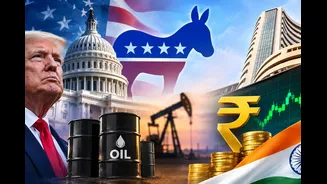
The effects of US political shifts often ripple across the globe, and India is no exception. For Indian markets, the outcome could be felt through several channels. A gridlocked Washington might mean less volatility in US Treasury yields and the dollar, which can affect foreign investor flows into Indian equities. Indian IT and pharmaceutical companies will be watching for any changes in US regulatory or trade policy. While a divided Congress makes sweeping tariff changes less likely, the administration still holds significant power in this area. The Democratic-controlled Congress is also expected to increase scrutiny of corporate practices and trade relationships, which could affect Indian firms with significant US exposure. Indian stock indices like the Sensex and Nifty 50 reacted positively to the initial news, aligning with the global rally on the perceived benefits of predictability.