




A New Era of Strategic Partnership
The foundation for this enhanced collaboration is built on key strategic agreements. The U.S.-India initiative on Critical and Emerging Technology (iCET) and its successor, the TRUST initiative, have explicitly named space as a priority area for cooperation.
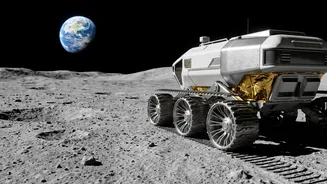
This political commitment was solidified when India became a signatory to the Artemis Accords in 2023, a U.S.-led framework for responsible and transparent lunar exploration. These agreements signal a move from a relationship of simple technology exchange to one of co-development and shared ambition. Most recently, in August 2026, NASA formally invited ISRO to join its Moon Base program, aiming to establish a sustained human presence near the lunar south pole. This opens the door for India to play a direct role in shaping humanity's future on the Moon.
From NISAR to a Moon Base
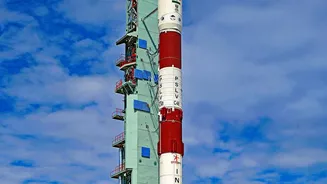
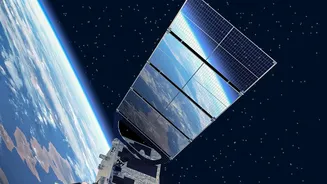
The successful collaboration on the NASA-ISRO Synthetic Aperture Radar (NISAR) mission serves as a powerful blueprint. Launched to map Earth's surface with unprecedented detail, NISAR demonstrated how the two agencies can effectively merge their technological prowess, with NASA providing the L-band radar and ISRO contributing the S-band radar and the launch vehicle. The partnership is now set to leap from Earth observation to deep space. The invitation to participate in the lunar base builds directly on the Artemis Accords partnership. For Indian scientists, this could mean unprecedented access to lunar data and opportunities to design instruments for lunar missions. For engineers, it represents a chance to contribute to the complex challenges of building off-world habitats, life-support systems, and robotics.
Fueling India's Private Space Boom
The collaboration extends well beyond government agencies. A key goal of the partnership is to connect the two nations' commercial space sectors. With India's space economy projected to grow significantly, there is immense potential for Indian startups. U.S. investment and partnerships can provide Indian companies with capital, mentorship, and access to the world's largest space market. This directly translates into high-skilled jobs for engineers in areas like satellite manufacturing, launch vehicle development, and ground systems. Initiatives like the U.S.-India commercial space sub-working group are actively working to remove regulatory barriers and facilitate these connections. The U.S. Department of Commerce has highlighted India's space sector as a key market, anticipating its global share could grow fivefold.
New Frontiers for Researchers and Astronauts
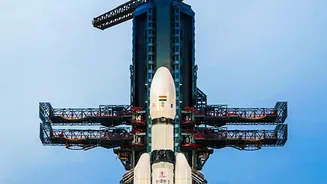
The deepening ties promise to be transformative for Indian researchers and aspiring astronauts. The agreements pave the way for more open sharing of scientific data, giving Indian academics access to a wealth of information from NASA missions. A landmark development is the plan for ISRO astronauts to receive training at NASA's Johnson Space Center. This prepares them for a potential joint mission to the International Space Station (ISS), a major milestone that would give India hands-on experience in human spaceflight operations. This collaboration directly supports India's own ambitions, including the Gaganyaan human spaceflight program, by providing exposure to global best practices in astronaut training and mission planning.
Opportunities in Data and Development
Beyond missions, the collaboration creates a vast ecosystem of opportunity. The growing geospatial market, projected to become a multi-billion dollar industry in India, will be fueled by data from joint satellite missions. This creates demand for data scientists and software engineers who can turn satellite imagery into actionable intelligence for climate change monitoring, disaster management, and urban planning. Furthermore, joint development of critical technologies—from semiconductors to advanced materials for spacecraft—will require a new generation of engineers and materials scientists. While challenges around export controls and technology transfer regulations remain, the clear political will on both sides is aimed at smoothing these pathways for greater industrial collaboration.