




What is a Semicryogenic Engine?
Think of a rocket engine as a controlled explosion. The fuel and an oxidiser (to help it burn) are mixed and ignited to create immense thrust. For its most powerful rockets like the LVM3, ISRO has been using cryogenic engines, which use super-cooled liquid
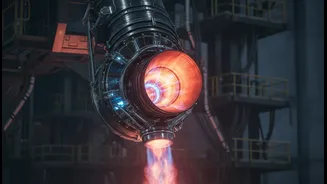
hydrogen as fuel and liquid oxygen as the oxidiser. A semicryogenic engine, like the new SE-2000 being tested, changes the recipe. It still uses liquid oxygen, but the fuel is a highly refined form of kerosene—similar to jet fuel. Because only one of the propellants (the oxygen) needs to be kept at cryogenic, or extremely low, temperatures, it's called 'semi'-cryogenic. This seemingly small change has massive benefits. Kerosene is much cheaper and can be stored at normal temperatures, making it far easier and less expensive to handle than liquid hydrogen.
More Power at Less Cost
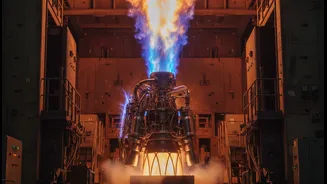
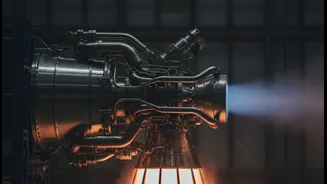
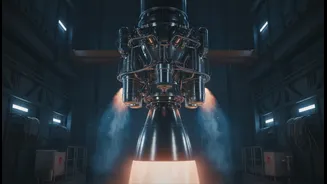
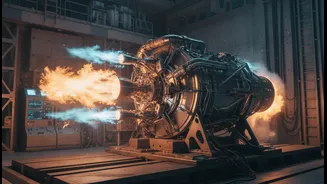
The primary advantages of the semicryogenic engine are power and efficiency. The new SE-2000 engine is being developed to produce 2,000 kilonewtons (kN) of thrust, which translates to about 200 tonnes. This is a significant upgrade. Recent tests have been pushing the engine's components to their limits, with a successful test on June 24, 2026, reaching 175 tonnes of thrust—88% of its target. The fuel switch is also a major cost-saver. Refined kerosene is not only cheaper but also denser than liquid hydrogen, meaning more fuel can be packed into the same sized tank. This combination of higher thrust and a more efficient fuel allows a rocket to either carry much heavier payloads into orbit or travel further into space. It is a key step in making space launches more economical for India.
Building Bigger, Better Rockets
This new engine is the heart of India's future in space. ISRO plans to use the SE-2000 to power a new booster stage called the SC120. This will replace the current L110 core stage of the LVM3, India's heaviest rocket. This upgrade will significantly boost the LVM3's lifting capacity. The goal is to increase its payload to Geosynchronous Transfer Orbit (GTO) from 4 tonnes to 5 tonnes. That extra capacity means India can launch heavier, more complex communication satellites for itself and for international customers, strengthening its position in the global launch market. Currently, India holds about 2% of this market, with ambitions to increase that share substantially. This engine is the key to unlocking that potential.
The Key to Reusable Launchers
One of the biggest shifts in the global space industry is the move towards reusable rockets, pioneered by companies like SpaceX. Reusability drastically cuts the cost of access to space because the most expensive parts of the rocket aren't discarded after a single use. The semicryogenic engine is a critical piece of technology for India's own reusable launch vehicle (RLV) ambitions. The efficiency and thrust characteristics of the LOX-kerosene combination make it well-suited for the booster stages that would perform a powered landing back on Earth. The SE-2000 is expected to power India's Next Generation Launch Vehicle (NGLV), which is being designed from the ground up with reusability in mind. Mastering this engine technology is a foundational step toward making Indian spaceflight more sustainable and cost-effective.
What This Means for India's Future in Space
The successful development of the semicryogenic engine is not just about one piece of hardware. It represents a leap in self-reliance for India, as this is a complex technology available to only a few nations. This powerful new engine will enable a new generation of launch vehicles capable of supporting more ambitious missions. This includes launching heavier scientific probes for deep-space exploration, deploying bigger observation satellites, and supporting the future evolution of the Gaganyaan human spaceflight programme. It will also make ISRO a more formidable competitor in the lucrative international launch market, bringing in revenue and bolstering India's reputation as a high-tech powerhouse. The recent successful tests are a clear signal that the next generation of Indian rocketry is coming to life.