





The Myth of a Universal Standard
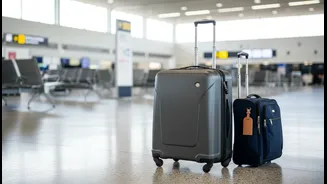
It’s a logical assumption: if planes are similar, shouldn't cabin bag allowances be too? The reality is far more complex. There is no single, globally enforced standard for carry-on luggage. While organizations like the International Air Transport Association
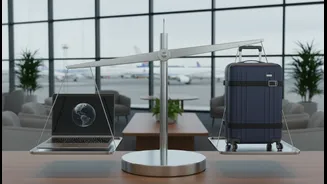
(IATA) have proposed guidelines, individual airlines retain the final say. This autonomy allows them to set policies based on several factors. The type of aircraft in their fleet is a major one; the overhead bins on a smaller regional jet are not the same as those on a wide-body Airbus A380. Furthermore, cabin baggage policy has become a significant part of airline business models, especially for low-cost carriers. By enforcing strict, smaller-than-average limits, these airlines create a lucrative revenue stream from passengers who must then pay to check their bags.
A Snapshot of Indian Carriers
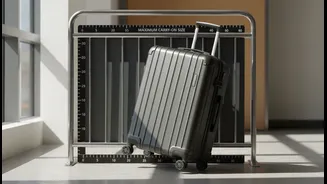
For travellers within India, the rules are relatively consistent, but the differences are important. Most major domestic airlines like IndiGo, Air India, and SpiceJet allow one cabin bag weighing up to 7 kg for economy passengers. Vistara also offers a 7 kg limit for Economy, but increases this to 10 kg for Premium Economy and 12 kg for Business Class. Where things differ more noticeably is in the dimensions. IndiGo specifies a size of 55cm x 35cm x 25cm. Air India uses 55cm x 40cm x 20cm for many flights. Vistara's dimensions are 55cm x 40cm x 20cm. While these measurements seem close, that extra few centimetres in depth or width can be the difference between gliding on board and being forced to check your bag at the gate, often for a significant fee.
Navigating International Rules
Once you fly internationally, the variations become even more pronounced. Full-service carriers often have different rules than the budget airlines common in Europe and Southeast Asia. Lufthansa, for example, allows a cabin bag of up to 8 kg with dimensions of 55 x 40 x 23 cm. Emirates allows 7 kg for economy passengers, but for those boarding in India, it uses a total linear dimension limit of 115 cm (length + width + height) instead of specific individual measurements. This highlights a critical point: rules can even change based on your departure country, not just the airline. International weight limits are often more strictly enforced than on domestic routes, and many carriers will weigh bags at the gate.
The Personal Item Puzzle
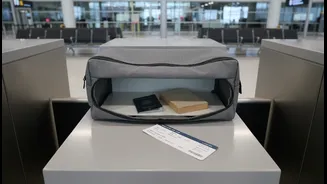
Adding another layer of complexity is the 'personal item'. Most airlines in India allow a small additional item, such as a ladies' handbag or a laptop bag, that must fit under the seat in front of you. IndiGo specifies a weight of up to 3 kg for this item. However, the enforcement of this rule, particularly under the 'one-cabin-bag' directive at Indian airports, can be inconsistent. During busy periods or on full flights, gate staff may insist that all your belongings, including your personal item, fit into a single piece of luggage for boarding. This can lead to frantic repacking at the gate. International carriers also have varied policies, with some, like Emirates, explicitly stating their allowance is for one piece of cabin baggage only for economy travellers from India.
Tips for Stress-Free Boarding
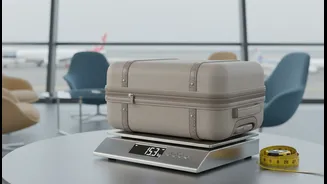
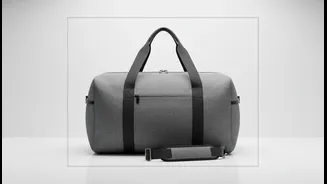
Given the lack of standardisation, the savvy traveller must be proactive. First and foremost, check the airline's specific baggage policy on their official website every single time you book a flight. Do not rely on past experience, even with the same airline, as policies can and do change. When buying luggage, consider a soft-sided bag which offers more flexibility to fit into a sizer than a rigid hardshell case. Before leaving for the airport, use a measuring tape to check your bag's dimensions—including the wheels and handles—and weigh it. Pay close attention to both weight and size, as exceeding either can result in fees. Finally, if you know you'll be cutting it close, pre-paying for a checked bag online is almost always cheaper than paying at the airport.