







The Brain’s Gatekeeper Problem
As we age, our cells begin to show wear and tear. In the brain, this process can be devastating, leading to the cognitive decline seen in neurodegenerative diseases like Alzheimer's, Parkinson's, and ALS. For years, scientists have understood that a breakdown
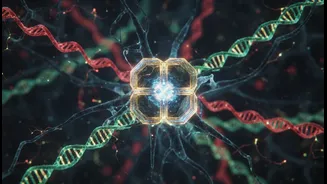
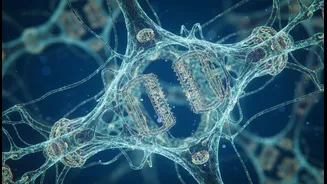
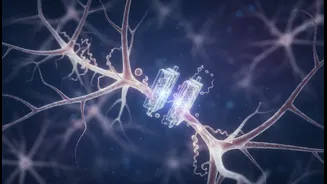
in cellular quality control is a major culprit. Damaged components and toxic proteins accumulate, impairing the function of neurons. A key player in this breakdown is the Nuclear Pore Complex (NPC), a sophisticated gateway that controls all traffic in and out of a cell’s nucleus, which houses its DNA. These pores are the gatekeepers of the cell, ensuring that essential molecules get in and waste products get out. In aging and diseased brains, these gatekeepers can become damaged or dysfunctional.
A Gateway in Decline
Recent research has highlighted a strong link between dysfunctional NPCs and the onset of neurodegenerative disorders. In healthy neurons, these pores are robust, maintaining the delicate balance between the nucleus and the surrounding cytoplasm. But in conditions like ALS and certain forms of dementia, these structures can become compromised. Some studies have shown that in certain diseases, a key protein quality-control mechanism becomes overactive, prematurely removing proteins that make up the nuclear pore, leading to its destabilization. In other cases, toxic proteins like hyperphosphorylated Tau, associated with Alzheimer's, can directly clog the pores, impairing transport and further stressing the cell. This creates a vicious cycle where cellular dysfunction leads to more damage, accelerating the disease process.
A Scientific Breakthrough
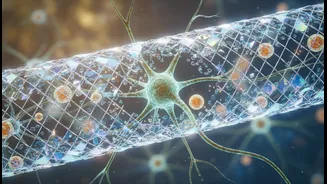
The central challenge has been finding a way to intervene and restore the function of these crucial gatekeepers. Now, multiple teams of scientists are making significant progress. In one recent study, Penn State researchers identified another gatekeeping structure just beneath the neuron's surface, called the membrane-associated periodic skeleton (MPS). Using super-resolution microscopy, they discovered this lattice-like skeleton acts as a traffic controller for what the cell absorbs. They found that when this structure is weakened, which can happen in the early stages of Alzheimer's, the neuron begins to rapidly absorb harmful proteins like amyloid precursor protein (APP). This suggests that manipulating or stabilizing this skeleton could be a new therapeutic strategy.
Restoring the Gatekeeper's Function
The Penn State team demonstrated that the MPS normally acts as a brake, preventing the cell from taking in too much material too quickly. When they mimicked the conditions of early Alzheimer's, they saw that degrading the MPS sped up the intake of toxic proteins, which then accumulated inside the neuron and led to cell death. This groundbreaking work suggests that finding ways to stabilize and protect this skeletal gatekeeper could prevent the cascade of damage that characterizes neurodegenerative diseases. By preventing the unrestricted entry of toxic molecules, scientists hope to restore the cell's natural defenses and maintain its health for longer.
What This Means for Future Treatments
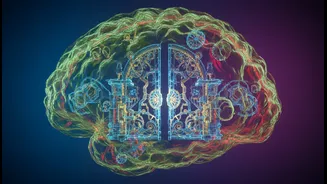
This focus on the cell's internal gatekeepers represents a fundamental shift in how we approach brain diseases. Instead of just trying to clear away toxic proteins after they’ve accumulated, researchers are now looking to fortify the cell's own defenses to prevent the problem from starting. While this research is still in its early stages and based on laboratory experiments, it opens up a promising new avenue for drug development. Future therapies might involve small molecules designed to strengthen the MPS or protect the nuclear pores from damage. By 'locking the gate' against harmful invaders, it may be possible to slow or even halt the progression of devastating conditions like Alzheimer's and protect the brain as it ages. The research provides a new framework for understanding how aging affects our brain cells and may ultimately guide the development of successful therapeutics.