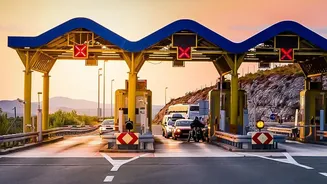








The New Era of Barrier-Free Tolling
The familiar stop-and-go experience at toll plazas on the Delhi-Jaipur section of National Highway-48 is now a thing of the past. As of early August 2026, the National Highways Authority of India (NHAI) has fully implemented a Multi-Lane Free Flow (MLFF)
system across all toll points on the Manesar-Jaipur corridor, including Daulatpura, Manoharpura, and Shahjahanpur. This upgrade makes the entire stretch a barrier-free zone, designed to significantly reduce travel time, cut down on fuel consumption, and decrease traffic congestion by allowing vehicles to move at normal speeds without interruption. It marks a significant step in modernising India's highway infrastructure.
How the System Works Without Barriers
Instead of physical toll booths, the MLFF system uses a sophisticated combination of technologies mounted on overhead gantries. As your vehicle passes underneath, high-resolution Automatic Number Plate Recognition (ANPR) cameras capture an image of your license plate. Simultaneously, Radio Frequency Identification (RFID) readers scan your car's FASTag. This dual system identifies the vehicle and automatically processes the toll payment from the linked FASTag account. The entire process happens in seconds without you needing to slow down, offering a truly seamless journey from start to finish.
The Critical E-Notice You Must Not Miss
This is where driver diligence becomes crucial. What happens if your FASTag has an insufficient balance, is blacklisted, or is invalid? In the old system, a boom barrier would simply not open. In the new barrier-free system, you will still pass through without stopping, but the transaction will be flagged. The system will then automatically generate and send an 'electronic notice' or 'e-notice' for the unpaid toll. This digital message is the new notification that a payment is due, and it is delivered to you through official channels like the Rajmarg Yatra mobile app or the Parivahan web portal. Ignoring this message can lead to financial penalties.
Pay Within 72 Hours or Pay Double
The consequences for not acting on an e-notice are straightforward and costly. Upon receiving the notification, drivers have a 72-hour window to pay the standard user fee for their journey. If this deadline is missed, the penalty is steep: the toll amount is doubled. This policy is in place to ensure compliance and maintain the financial integrity of the automated system. It fundamentally shifts the responsibility from the toll operator at a booth to the driver, who must now be proactive in monitoring their post-travel notifications to avoid these extra charges. Keeping your registered mobile number updated and checking official apps after a trip is now an essential part of travelling on this route.
Your Checklist for a Smooth Journey
To navigate this new system without any issues, it's best to be prepared. First and foremost, always maintain a sufficient balance in your FASTag account before starting your journey. Ensure your FASTag is valid, functional, and that your KYC details are fully updated to prevent any transaction failures. After completing your travel on the Delhi-Jaipur highway, make it a habit to check for any notifications on the Rajmarg Yatra or Parivahan platforms. If you believe you have been charged incorrectly, you can raise a dispute. For any toll-related grievances, the NHAI has dedicated channels, including the toll-free helpline 1033 and the CPGRAMS portal, where you can file a complaint with supporting evidence like trip logs or photos.