




What Are Stellar Nurseries?
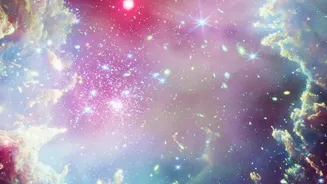
Stellar nurseries are vast, dense clouds of cold interstellar gas and dust, sometimes stretching for hundreds of light-years. Think of them as cosmic wombs where the raw materials for new stars are gathered. Within these opaque clouds, gravity begins
to pull clumps of matter together. As these clumps grow denser, they start to collapse under their own weight, heating up and slowly forming the glowing core of a future star, known as a protostar. Regions like the Carina Nebula and the Pillars of Creation are famous examples of these active star-forming areas, teeming with activity.
Peering Through the Cosmic Dust
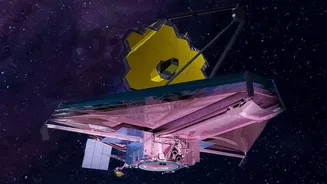
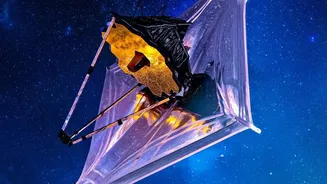
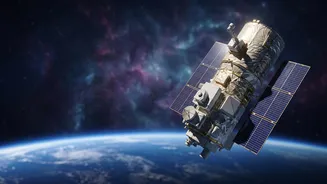
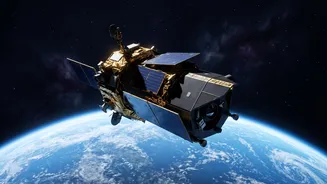
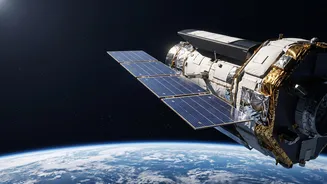
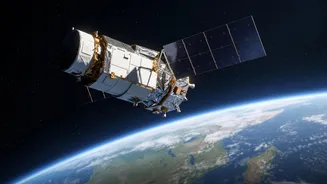
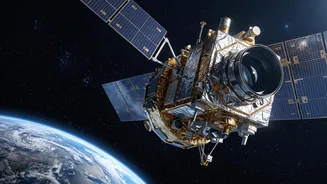
Until recently, these stellar nurseries were largely hidden from view, their secrets shrouded by the very dust that gives them life. Telescopes that observe in visible light, like the Hubble Space Telescope, could only see the outer surfaces of these clouds. This is where the James Webb Space Telescope changes the game. JWST is designed to see the universe in infrared light. This allows it to pierce through the obscuring layers of dust, much like an X-ray can see inside the human body. This unparalleled sensitivity reveals what’s happening deep inside the nurseries, capturing the fledgling stars in their earliest and most dynamic stages.
The Secret Lives of Baby Stars
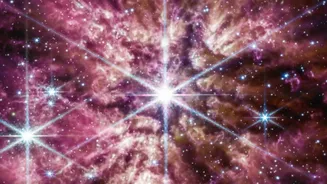
The latest images from JWST have unveiled the chaotic processes around protostars in stunning detail. One of the key revelations is a clearer view of powerful jets of gas and plasma being blasted into space from the poles of these young stars. These jets, which can stretch for light-years, are a sign that the star is actively feeding on the surrounding gas and dust. As material from the disk spirals onto the protostar, a portion of it is violently ejected. These outflows carve out huge cavities in the surrounding nebula, influencing the environment and potentially triggering or halting the formation of other nearby stars. For the first time, astronomers can see the intricate, symmetric structure of these jets, confirming theories about the stable, rotating disks that feed growing stars.
Rewriting the Story of Starbirth
These new observations are more than just pretty pictures; they are providing crucial data that will help scientists refine their models of star formation. By getting a more precise count of newly formed stars and observing how they interact with their environment, astronomers can build a clearer understanding of how stars form, evolve, and ultimately burst from their dusty cocoons over millions of years. Recent discoveries using JWST have also challenged long-held assumptions about the types of stars that formed in the early universe, suggesting that ancient galaxies may have contained far more small, faint stars than previously believed. This implies that these early galaxies were much more massive than models predicted, adding a new layer of mystery to the story of cosmic evolution.