





A Precious Cargo Awaits
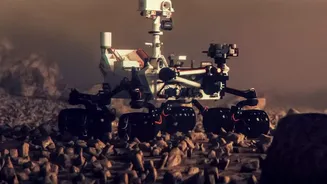
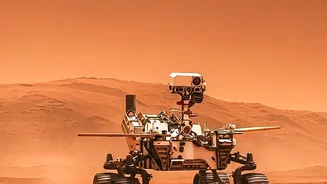
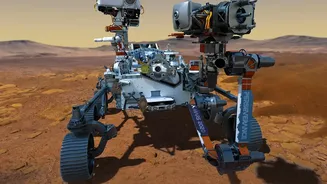
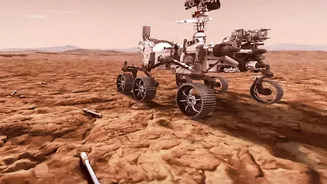
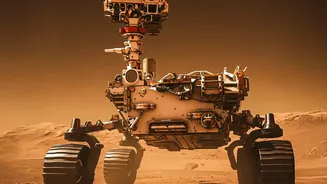
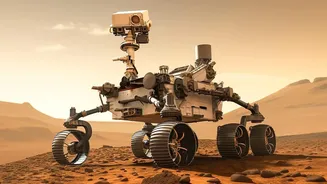
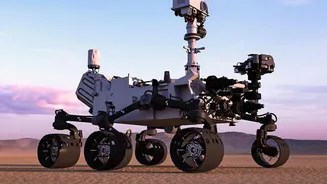
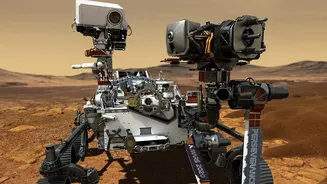
Since its landing in February 2021, the Perseverance rover has been diligently working in Mars's Jezero Crater, an area believed to be an ancient lakebed. Its primary mission is not just to explore, but to collect. The car-sized robot has been drilling
into rocks and caching cigar-sized samples of Martian rock, soil, and atmosphere in ultra-clean titanium tubes. Some of these tubes have been stored inside the rover itself, while others have been carefully placed in a depot on the Martian surface, creating a backup supply. These samples are considered by scientists to be of immense value, potentially holding the chemical fingerprints of past microbial life on the Red Planet. Returning them to Earth for analysis in state-of-the-art laboratories has been a top priority for the planetary science community for decades.
An Ambitious Plan Hits Reality
The original Mars Sample Return (MSR) campaign, a joint effort between NASA and the European Space Agency (ESA), was a highly complex, multi-stage mission. It involved sending a separate lander to Mars, which would deploy helicopters to fetch the sample tubes. Then, a 'Mars Ascent Vehicle' would launch the samples into orbit, where another spacecraft, the Earth Return Orbiter, would capture the container for the long journey home. However, this ambitious architecture faced significant hurdles. Independent reviews highlighted major issues, citing that the mission was established with unrealistic budget and schedule expectations from the start. The estimated cost ballooned to around $11 billion, with a projected return date slipping to 2040, a timeline and price tag NASA Administrator Bill Nelson deemed unacceptable. These findings forced the agency back to the drawing board.
Introducing the PSRA Strategy
In response to these challenges, NASA has kickstarted a new initiative called the Perseverance Sample Retrieval Architecture, or PSRA. Announced on November 9, 2026, by NASA's Mars Exploration Program Director, the PSRA is not a finalized mission plan but a formal process to create one. Its goal is to develop impartial recommendations for a more streamlined, cost-effective, and timely method to retrieve the samples Perseverance has collected. The PSRA strategy team will assess mission requirements, review lessons learned from the previous plan's difficulties, and evaluate all current capabilities and acquisition options, including potential commercial partnerships. This represents a fundamental reset, aimed at finding a feasible path forward for one of NASA's most critical scientific goals.
What Happens Next?
The PSRA is moving on a deliberate timeline. A strategy team is scheduled to officially kick off its work in January 2027. This team will spend the next year conducting its comprehensive review and developing new architectural options. The final report, containing their recommendations for a revised Mars Sample Return mission, is due in the winter of 2027–2028. Until then, the exact design of the mission remains an open question. NASA will be weighing different landing architectures and technologies to bring the cost down and accelerate the timeline from the previous 2040 estimate. The pressure is on, not just for budgetary reasons, but also due to international competition, as China is reportedly aiming to launch its own Mars sample–return mission, Tianwen–3, as early as 2028.