




Artemis Program: India Joins the Lunar Push
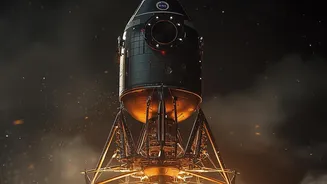
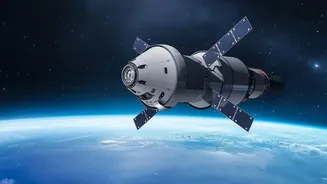
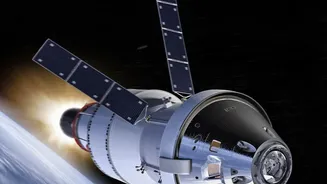
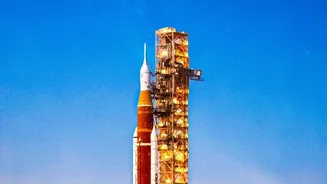
NASA's Artemis program is arguably its most ambitious endeavor, aiming to establish a sustainable human presence on the Moon. While NASA leads the charge, the mission's success relies on a coalition of international partners bound by the Artemis Accords.
India became a signatory in 2023, signaling a strategic shift towards collaborative space exploration. This partnership is more than symbolic. In August 2026, NASA officially invited ISRO to participate in its Moon Base program, which aims to build a permanent outpost near the lunar South Pole. India's experience with its Chandrayaan missions, particularly the successful landing near the South Pole, makes it a valuable partner. For India, joining this effort provides access to advanced technologies and operational protocols essential for its own long-term goals, including the Gaganyaan human spaceflight mission and its plan to land an Indian astronaut on the Moon by 2040.
NISAR: A Joint Vision of Earth
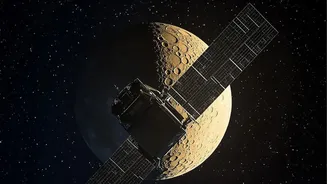
The NASA-ISRO Synthetic Aperture Radar (NISAR) mission is a prime example of the deepening space partnership between the two nations. Launched in July 2025, this sophisticated Earth-observation satellite is the first to be jointly developed by both agencies, featuring an L-band radar system from NASA and an S-band system from ISRO. NISAR is designed to provide unprecedented detail on Earth's changing ecosystems, ice sheets, and crust. For India, the applications are immediate and critical. The data will enhance monitoring of agricultural resources, bolster disaster management for events like earthquakes and tsunamis, and track climate change impacts with unparalleled precision. This mission represents a powerful fusion of American and Indian technology, working in concert to safeguard our home planet.
Mars Sample Return: A Shared Scientific Quest
Bringing a piece of Mars back to Earth is one of the most challenging goals in planetary science. NASA's Mars Sample Return (MSR) mission aims to do just that, retrieving rock and soil samples collected by the Perseverance rover for intensive study in labs on Earth. While the program's architecture has been undergoing a redesign to manage costs, with a final decision on the new approach expected in the latter half of 2026, the scientific ambition remains. Though India doesn't have a direct role in the hardware, its own successful Mars Orbiter Mission (Mangalyaan) makes it a key stakeholder in the scientific outcomes. The findings from MSR will be revolutionary, offering insights into the potential for past life on Mars and the planet's geological history—knowledge that will inform and inspire future Indian missions to the Red Planet.
Europa Clipper: The Search for Habitable Worlds
Launched in October 2024, NASA's Europa Clipper is on a long journey to Jupiter's icy moon, Europa. It is scheduled for an Earth gravity assist in December 2026 before continuing its trip to arrive in Jupiter's orbit in 2030. The mission's goal is to investigate whether the subsurface ocean of Europa could harbor conditions suitable for life. Europa Clipper will perform dozens of close flybys, using a suite of instruments to map the moon's surface, confirm the presence of its ocean, and even analyze plumes of water vapor that may erupt into space. While this is a NASA-led mission, its objective is universal. The search for life beyond Earth is a question that fascinates humanity as a whole. For a nation with a vibrant scientific community and a growing space program, missions like Europa Clipper serve as a powerful inspiration, encouraging the next generation of Indian scientists and engineers to look to the cosmos and ask the biggest questions.