


Feeling bloated or dealing with a tight lower back? Apanasana, a simple and restorative yoga pose, offers a gentle solution. This posture uses mild abdominal compression to soothe your digestive system and release tension held in the body.
Understanding Apanasana
Apanasana, commonly
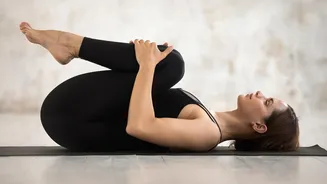
known as the 'Knees-to-Chest Pose' or 'Wind-Relieving Pose', is a foundational posture in yoga accessible to nearly everyone. In Sanskrit, 'Apana' refers to a specific type of life force energy, or 'vayu', that governs the downward and outward flow of energy in the body. This energy is responsible for elimination, governing functions like digestion and the release of physical and emotional waste. Therefore, the pose is designed to support this natural process of release, making it a calming and grounding practice. By gently hugging the knees to the chest, you create a mild compression in the lower abdomen, which can help stimulate the internal organs and promote a sense of relief and relaxation.
The Benefits of Gentle Compression
The primary benefit of Apanasana is its effect on the digestive system. The gentle pressure applied to the abdomen acts as a massage for the internal organs, particularly the intestines. This can help relieve issues like bloating, indigestion, and gas by stimulating peristalsis—the wave-like muscle contractions that move food through the digestive tract. Beyond digestion, the pose is celebrated for its ability to alleviate lower back pain. By drawing the knees inward, you create a gentle stretch for the lumbar spine and surrounding muscles, which can become tight from prolonged sitting or standing. This action can decompress the vertebrae and ease tension in the hips and glutes, promoting overall spinal health and flexibility. Emotionally, the posture is deeply calming and can activate the parasympathetic nervous system, which helps slow the heart rate and encourages the body's 'rest and digest' response.
A Step-by-Step Guide for Beginners
Performing Apanasana is simple and can be done by almost anyone. Follow these steps for a safe and effective practice:
1. Start on Your Back: Lie down comfortably on a yoga mat or a soft surface with your legs extended. Allow your body a moment to settle.
2. Bend Your Knees: Place your feet flat on the floor, about hip-width apart, with your knees bent.
3. Draw Knees to Chest: On an exhale, slowly draw both knees in toward your chest. Use your hands to gently hug your shins or the backs of your thighs. Avoid pulling too hard; the movement should be gentle.
4. Find a Comfortable Hold: You can either clasp your hands around your shins or, if it feels better, wrap your forearms around them and hold opposite elbows.
5. Relax and Breathe: Keep your head, neck, and shoulders relaxed on the floor. Tuck your chin slightly to lengthen the back of your neck. Try to keep your entire spine, from your tailbone to your skull, pressing gently into the mat. Hold the pose for 5 to 10 deep breaths, feeling the abdomen press against the thighs on the inhale and soften on the exhale.
6. Release the Pose: On an exhale, gently release your legs, placing your feet back on the floor before extending them fully. Rest for a few moments before repeating if you wish.
Modifications and Important Tips
To get the most out of Apanasana, it's important to listen to your body. If you have a larger stomach or chest, you can separate your knees slightly, drawing them toward your armpits instead of straight to your chest. If you have trouble reaching your shins, you can hold the back of your thighs or use a yoga strap. For a more dynamic movement, you can gently rock from side to side to massage your lower back. Another helpful variation is 'Ardha Apanasana', or the half-pose, where you draw one knee in at a time while keeping the other leg extended on the floor. This is particularly beneficial if you have uneven tightness in your hips or if the full pose feels too intense.
When to Be Cautious
While Apanasana is very safe, there are a few situations where it should be avoided or modified. If you have recently had abdominal or spinal surgery, you should avoid this pose until cleared by a doctor. It is also not recommended for those with an active hernia. Pregnant women, especially after the first trimester, should avoid lying flat on their back and putting direct pressure on the abdomen; they can practice modifications like a supported squat against a wall instead. If you have a knee or hip injury, be mindful and avoid any sharp pain by holding behind the thighs instead of on the shins. The goal is gentle compression, not forceful squeezing.