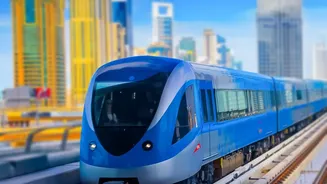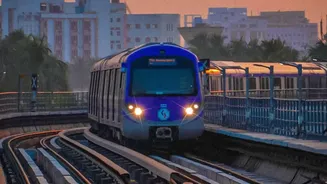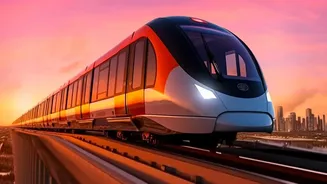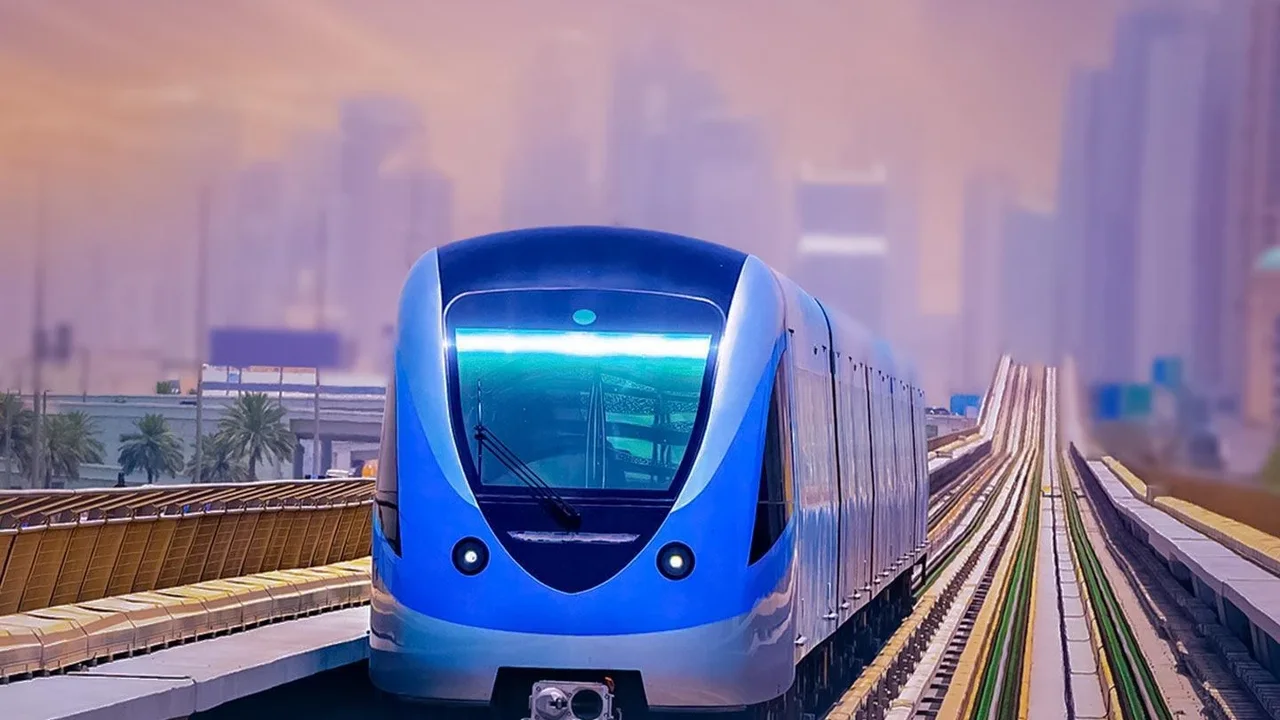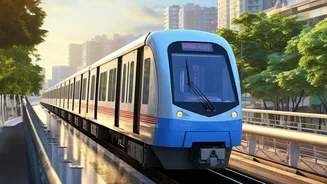







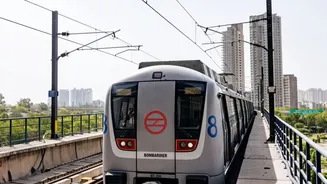

Delhi Metro's futuristic driverless trains recently shattered a ridership record, with 1.6 million passengers using the service in a single day. This milestone isn't just a number—it’s a powerful vote of confidence in India's automated transit future.
The Current Automated Network
Delhi Metro began its driverless journey in December 2020 on the Magenta Line. Today, the driverless network, operating under a system called Unattended Train Operation (UTO), includes both the Magenta Line (Janakpuri West to Botanical Garden) and the Pink Line (Majlis Park to Shiv Vihar). Together, these two corridors cover nearly 120 kilometres, with around 100 automated trains in service. This already represents about 29% of the entire Delhi Metro network and has positioned the DMRC as a global leader in urban transport automation. The phased rollout, which received safety approvals at each stage, has proven the technology's reliability and efficiency in one of the world's busiest cities.
A Landmark Ridership Record
On November 2, 2026, during the pre-Diwali travel rush, an unprecedented 1.6 million commuters traveled on the driverless Pink and Magenta lines. This figure accounted for one in every five passengers across the entire Delhi Metro system that day, which sees a total daily ridership of about eight million. The single-day achievement highlights growing public trust and reliance on the automated system. For many, what was once a novelty has become a dependable part of their daily commute. According to DMRC's Managing Director, Vikas Kumar, the success demonstrates the system's capacity and reinforces the case for its expansion across other Indian cities.
The Technology Driving Trust
Driverless trains offer significant advantages over conventional, human-operated services. The UTO technology allows for greater flexibility in train operations, reduces the possibility of human error, and increases the availability of coaches for service. Automation eliminates minor speed variations and ensures precise stopping at platforms, leading to more consistent and punctual schedules. Each train conducts exhaustive self-tests before entering service, a feature that DMRC officials say has greatly improved the fleet's reliability. Addressing concerns about job losses, the DMRC has confirmed that train operators from these lines have not been laid off but have been redeployed to other crucial roles like station management and crowd control.
Expansion Under Phase 4
The success of the existing driverless corridors has set the stage for a massive expansion under Delhi Metro's Phase 4. The plan is to extend driverless operations to the extensions of both the Pink and Magenta lines. Furthermore, the new Golden Line (formerly Silver Line), which will connect Delhi Aerocity to Tughlakabad, is also being built to be fully automated from the start. Once these Phase 4 projects are complete, Delhi's driverless metro network is expected to expand from its current 120 km to approximately 198 km. This would solidify DMRC's position as having one of the largest driverless metro networks in the world.