



The Ultimate Comfort Food
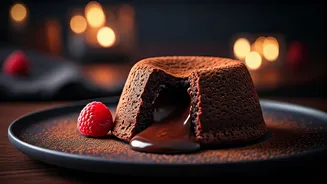
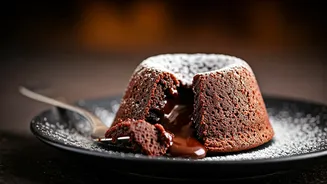
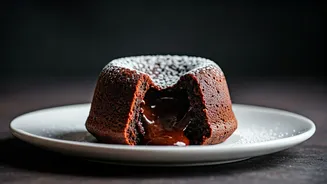
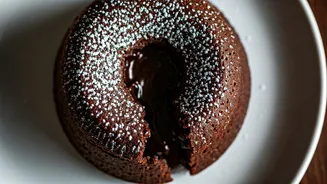
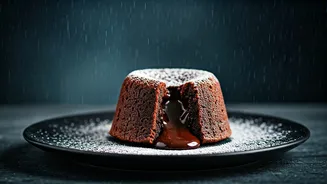
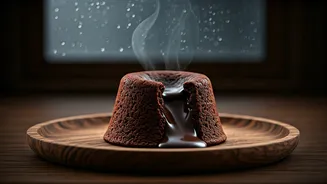
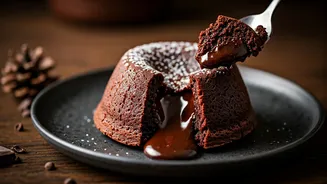
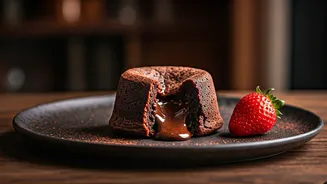
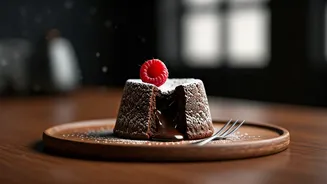
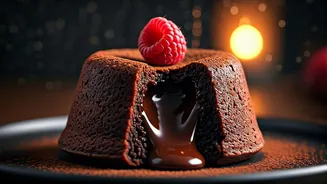
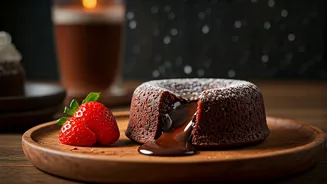
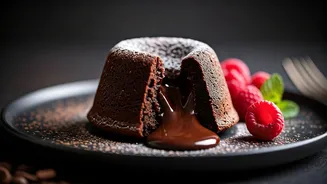
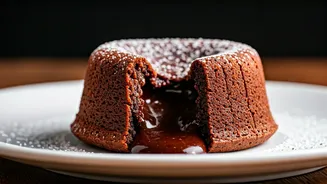
There are few desserts that command the same level of universal affection as the chocolate lava cake. It’s a study in contrasts: a firm, unassuming cake exterior that gives way to a decadent, flowing river of warm, liquid chocolate. Served on a rainy
day, it transforms from a mere dessert into a full-blown sensory experience. The appeal is deeply rooted in psychology. Gloomy weather and reduced sunlight can lead to a dip in serotonin, our natural mood-regulating chemical. [14, 23] Our bodies instinctively seek ways to counteract this, and carbohydrate-rich, energy-dense foods offer a quick and effective solution. [8, 10] A warm, sweet dessert like a lava cake not only provides physical warmth but also triggers the release of feel-good chemicals in the brain, creating a powerful sense of comfort and well-being. [21, 22]
A Tale of Two Kitchens
The origin of this iconic dessert is a subject of friendly culinary debate, with two celebrated chefs laying claim to its creation. One story begins in 1981 with French chef Michel Bras. [1] Inspired by the memory of his family warming up with hot chocolate after a ski trip, he spent two years perfecting a sophisticated version. [4, 6] His method was technical: a frozen ganache core was placed inside cake batter, which, when baked, would melt into the perfect liquid centre. [4] The second, more famous story, comes from New York in 1987. Renowned French chef Jean-Georges Vongerichten claims he created the dish by accident when he pulled a chocolate sponge cake from the oven too early. [1, 5] The undercooked centre was runny, warm, and delicious, delighting guests and becoming an instant hit. [3, 17] Vongerichten's version, which was simpler to replicate, is largely credited with popularising the dessert across America and turning it into a fine-dining staple of the 1990s. [1, 6]
The Science of the Molten Centre
Achieving that signature gooey core isn't just a happy accident; it's an act of precise science. [2] In Vongerichten's popular version, the magic lies in heat diffusion and timing. The cake is baked at a very high temperature, which cooks the outer edges quickly, solidifying the cake from the outside in. [2, 16] The key is to pull the cake from the oven at the exact moment the exterior is set but before the heat has had time to travel to the core and cook it through. [11] This halts the conduction process, leaving the centre warm, liquid, and gloriously molten. [2] The batter itself, a precise emulsion of melted chocolate and butter with egg and a small amount of flour, is designed for this very purpose. [2] Too little time in the oven and the cake collapses; too much, and you lose the lava, ending up with a (still delicious) brownie-like cake. [9, 18]
From Fine Dining to Global Favourite
While it began as a star on high-end restaurant menus, the lava cake's appeal proved too potent to stay there. [3] By the late 1990s and early 2000s, it had trickled down to casual dining chains, becoming a celebrated feature on menus at restaurants like Chili's and Applebee's. [3, 6] This move from exclusive to accessible cemented its status as a global phenomenon. It became a symbol of accessible luxury—a dessert that felt indulgent and dramatic yet was simple enough to be enjoyed by everyone. Its success lies in its perfect fusion of comfort and theatre. The moment of cutting into the cake and releasing the flow of chocolate is a shared, joyful experience. [4] Whether in a Michelin-starred restaurant or a cosy neighbourhood café, the promise of that warm, flowing centre remains a universally understood delight.