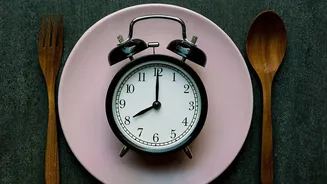








The Challenge of Working Against the Clock
Working through the night and sleeping during the day goes against our fundamental biology. Our bodies are wired to a 24-hour cycle, known as the circadian rhythm, which is primarily influenced by light and darkness. This internal clock tells our bodies when
to be awake, when to sleep, when to release certain hormones, and even when to digest food most efficiently. When you work a night shift, you force your body into a state of 'circadian misalignment'. Studies have consistently shown that this disruption increases the risk for a host of health problems, including obesity, heart disease, and type 2 diabetes. This happens because eating at night, when your body is biologically programmed to be resting, impairs its ability to process sugar and fats effectively.
Your Body's Master Conductor
Think of your circadian rhythm as a master conductor for an orchestra of bodily functions. The main conductor, located in the brain, responds to light signals from your eyes. However, nearly every organ, including your liver, pancreas, and gut, has its own 'peripheral clock'. These organ clocks are more responsive to other cues, with the most powerful one being meal timing. When you eat a large meal in the middle of the night, you are sending a confusing signal to your digestive system. While your brain's clock is saying "it's time to rest," the food in your stomach is telling your liver and pancreas "it's time to work!". This conflicting information can lead to metabolic chaos, increasing blood sugar levels and insulin resistance over time.
The Meal Timing Breakthrough
Recent research has shed light on a powerful strategy to counteract this misalignment: daytime eating. A key study simulated night work conditions and divided participants into two groups. One group ate meals during both the day and night, typical for many shift workers. The other group was restricted to eating their meals only during daylight hours, effectively fasting throughout their night shift. The results were striking. The group that ate at night saw their average glucose levels increase by 6.4%, a significant change that, over time, could increase diabetes risk. In contrast, the group that only ate during the day showed no such increase. This suggests that simply changing when you eat, without even changing what you eat, can have a profound protective effect.
Putting Daytime Eating Into Practice
The strategy is simple in concept: confine all your caloric intake to a daytime window. This means eating your main meals after you wake up in the afternoon and before your shift begins. During your overnight work hours, you would fast, consuming only water or other non-caloric beverages. For example, if you wake up at 2 PM and start your shift at 10 PM, you could aim to have your meals between 2 PM and 9 PM. This aligns your body's digestive processes with the daylight hours your metabolism is most efficient. While the idea of not eating for an entire shift might seem daunting, studies show this approach helps prevent the blood sugar spikes and cardiovascular strain associated with nighttime eating.
Tips for a Smoother Transition
Making the switch to a daytime eating schedule requires some planning. Start by eating a substantial, nutrient-rich meal after you wake up. This should be your largest meal of the day. A smaller meal or a hearty snack can be consumed closer to the start of your shift. To manage hunger pangs overnight, stay well-hydrated with water. Unsweetened herbal tea can also be a good option. Avoid sugary drinks and snacks, which can cause energy crashes and increase sleepiness. If you absolutely need something during your shift, research suggests a small, high-protein snack is a better choice than a carbohydrate-heavy one. The key is to avoid large meals between midnight and 6 AM when your digestive system is least prepared.