



What Exactly Are You Looking For?
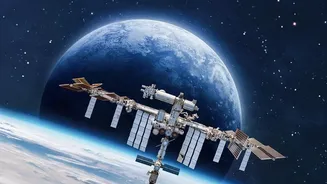
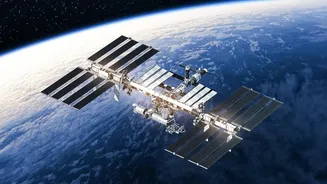
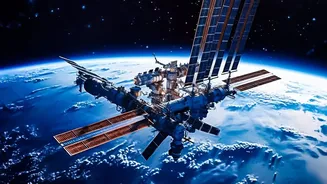
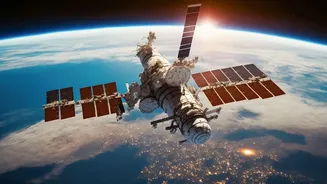
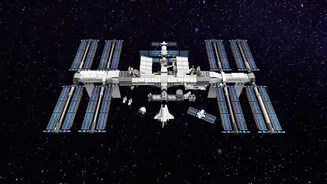
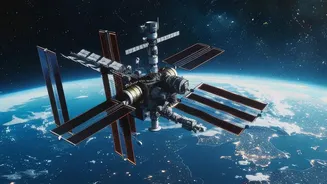
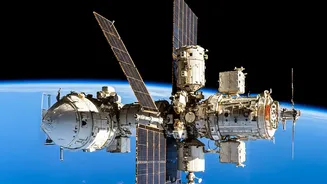
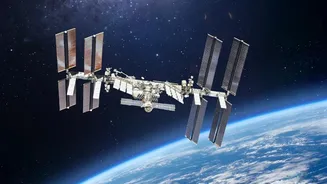
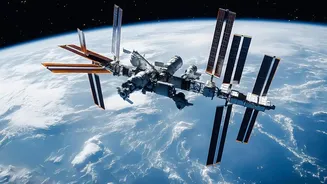
The International Space Station is the largest single structure humans have ever put into space. A joint project between the space agencies of the US, Russia, Europe, Japan, and Canada, this orbiting laboratory has been continuously crewed since November
2000. It circles the Earth at a blistering speed of 28,000 kilometres per hour, completing a full orbit every 90 minutes. For the astronauts on board, this means they experience 16 sunrises and sunsets every single day. What you see from the ground is not the station’s own light, but the reflection of the sun off its vast solar panels, making it one of the brightest objects in the night sky.
Is It a Bird? Is It a Plane? No, It’s the ISS
In the vastness of the night sky, it is easy to get confused. An aeroplane has blinking lights—red, green, and white—to signal its presence. The ISS, however, looks very different. It appears as a single, bright, and steady point of light, moving smoothly and quickly across the sky. Think of it as a fast-moving star that doesn’t twinkle or change direction. It is much faster than a commercial aircraft and travels its entire visible path in just a few minutes. Because it is visible only when the sun reflects off its surface, the best viewing times are typically a few hours before sunrise or after sunset.
Finding Your Personal Sighting Schedule
The key to a successful sighting is knowing exactly when and where to look. Thankfully, technology makes this incredibly simple. The best place to start is NASA's official 'Spot The Station' website. You can sign up with your city, and NASA will send you an email or text alert a few hours before the ISS is scheduled to fly over your location. For those who prefer apps, several excellent options are available for both Android and iOS. 'ISS Detector' is a popular choice in India, providing a compass, countdown timers, and alerts. Other highly-rated apps include 'Heavens-Above' and 'Satellite Tracker by Star Walk'. These tools will give you all the crucial details: the exact time the pass begins, how long it will be visible, its maximum height in the sky (measured in degrees), and the direction it will travel (for example, appearing in the southwest and disappearing in the northeast).
How to Prepare for the Perfect Sighting
You do not need any special equipment to see the ISS, just your own eyes. To make the most of the experience, find a viewing spot with a clear, unobstructed view of the sky, preferably away from tall buildings and bright city lights. Give your eyes about 15-20 minutes to adjust to the darkness; this will make it much easier to spot the station as it emerges over the horizon. Check the weather forecast beforehand, as clouds can easily spoil a pass. When the time comes, face the direction indicated by your tracking app and simply watch for a brilliant, non-blinking light to glide into view. The experience lasts only a few minutes, so be ready and don’t look away!
An Ever-Present Celestial Wonder
ISS sightings are not a once-in-a-lifetime event. The station passes over India frequently, offering multiple viewing opportunities every month. Because its orbital path is inclined at 51.6 degrees, it is visible from almost all inhabited parts of the globe, with India being particularly well-placed for excellent views. Depending on the season, you might get a series of morning passes for a week, followed by a period of evening passes a few weeks later. Using the tools mentioned, you can easily find the next pass for your specific town or city. The thrill of watching this marvel of human engineering soar silently overhead is a unique experience that connects us directly to the world of space exploration.