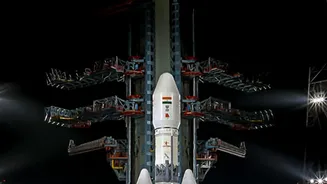







A New Space Race, Fueled by Policy
For decades, India's space ambitions were synonymous with the Indian Space Research Organisation (ISRO). But a monumental shift is underway. The Indian Space Policy 2023 has officially opened the final frontier to private companies, transforming the sector
from a government monopoly to a bustling commercial ecosystem. This policy clarifies the roles: ISRO will focus on advanced research and development, while private entities, known as Non-Governmental Entities (NGEs), will handle manufacturing, launches, and satellite operations. At the heart of this transition is the Indian National Space Promotion and Authorisation Centre (IN-SPACe), a single-window agency created to promote, authorise, and supervise private space activities. It acts as a facilitator, giving startups and established companies access to ISRO's world-class facilities and expertise, effectively lowering the barrier to entry for a capital-intensive industry.
The Investor's View: A Market Ready for Liftoff
Investors are taking note of the astronomical growth potential. India's space economy, currently valued at around $9 billion, is projected to surge to over $40 billion by the next decade. Private investment has already climbed significantly, indicating strong confidence. The opportunities extend across the entire value chain. Launch services are a primary focus, with startups like Skyroot Aerospace and AgniKul Cosmos developing small satellite launch vehicles to cater to a booming global market. Beyond rockets, there are lucrative avenues in satellite manufacturing, ground station services, and downstream data applications. Companies like Pixxel (hyperspectral imaging) and Dhruva Space (satellite platforms) are creating value from orbit. Government support, including a liberalised FDI policy and venture capital funds, further sweetens the pot for savvy investors. However, risks remain, including long development timelines and high upfront costs.
The Student's Roadmap: Skills for a New Frontier
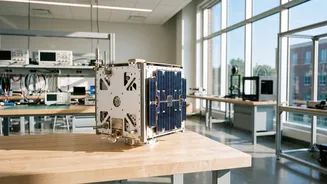
The privatisation of space has ignited a massive demand for skilled talent, creating a golden age for students passionate about the cosmos. While a B.Tech in Aerospace Engineering remains a classic entry point, the needs of modern space companies are diverse. Strong fundamentals in physics, mathematics, and computer science are essential. Expertise in software engineering, especially for embedded systems, mission control, and data analytics, is highly sought after. Fields like robotics, artificial intelligence, and materials science are also critical as companies innovate with 3D-printed engines and autonomous systems. Aspiring space professionals should look beyond traditional courses. Gaining hands-on experience through university clubs, CubeSat projects, and internships with startups is invaluable. Companies like Skyroot, AgniKul, and Pixxel are actively hiring from India's top engineering colleges, offering competitive salaries and a chance to work on cutting-edge technology.
Meet the Trailblazers
A handful of pioneering startups are leading India's private space charge. Skyroot Aerospace made history with the launch of Vikram-1, India's first privately developed orbital rocket. The company, which has achieved unicorn status, focuses on building reliable and cost-effective launch vehicles for the small satellite market. AgniKul Cosmos is another key player, renowned for its innovative approach to rocketry. The company is a pioneer in 3D-printing entire rocket engines, a technique that drastically cuts manufacturing time and cost. Its Agnibaan rocket is designed to be highly configurable for different payload needs. Other notable companies include Dhruva Space, which specializes in satellite platforms and services, and Pixxel, which is building a constellation of the world's most advanced hyperspectral imaging satellites.
ISRO's Evolving Role: From Driver to Mentor
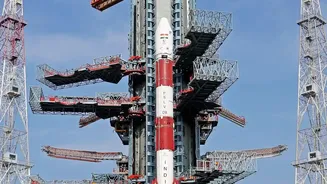
The rise of private players doesn't mean the end of ISRO's relevance. Instead, its role is evolving from being the sole driver to becoming a mentor and enabler for the entire ecosystem. By handing over the routine manufacturing of proven systems like the PSLV rocket to commercial entities, ISRO is freeing up its own resources. This allows the agency to concentrate on more ambitious and scientifically critical missions, such as human spaceflight (Gaganyaan), a future Indian space station, and landing an astronaut on the Moon. ISRO will also drive deep-space exploration and advanced R&D in next-generation technologies. This symbiotic relationship, where ISRO's decades of experience guide a dynamic private sector, is the core engine of India’s future as a global space power.