






The Small Satellite Revolution
For decades, space was the domain of giant, bus-sized satellites that took years and immense fortunes to build and launch. Small satellites, some no larger than a shoebox, are changing the entire paradigm. Thanks to miniaturization in electronics and standardized
designs, these smallsats can be produced faster and cheaper. Instead of launching one large satellite, a single rocket can deploy a whole constellation of them. This shift has democratized space, moving it from a rarefied government-only club to an arena ripe for private innovation. Globally, small satellites now account for the vast majority of spacecraft being launched, used for everything from Earth observation and communications to scientific research.
A New Space Ecosystem is Born
This global trend has found fertile ground in India. The government's decision to open the space sector to private participation in 2020, followed by the landmark Indian Space Policy in 2023, has been a game-changer. These reforms created a clear framework for non-governmental entities to participate in end-to-end space activities. To facilitate this, the Indian National Space Promotion and Authorization Centre (IN-SPACe) was established. It acts as a single-window agency, helping private companies access ISRO's facilities and expertise, and streamlining the regulatory process. The results have been explosive. From a handful in 2020, India is now home to over 400 space startups. This burgeoning private ecosystem is expected to help India's space economy grow fivefold, from around $8.4 billion today to over $40 billion by 2033.
Private Players Reach for the Stars
This policy shift has unleashed a wave of innovation. Hyderabad-based Skyroot Aerospace made history in July 2026 with the successful launch of Vikram-1, India's first privately developed orbital rocket, which placed multiple small satellites into orbit. Chennai's Agnikul Cosmos is developing its Agnibaan rocket, featuring a unique, single-piece 3D-printed engine. Meanwhile, companies like Pixxel are building constellations of advanced hyperspectral satellites that can monitor crop health, detect pollution, and track climate change in unprecedented detail. In a major public-private partnership, a consortium led by Pixxel has been tasked with building India's national Earth Observation constellation. Other startups like Dhruva Space, GalaxEye, and Bellatrix Aerospace are contributing with satellite platforms, innovative sensors, and advanced propulsion systems.
ISRO's Role as an Enabler
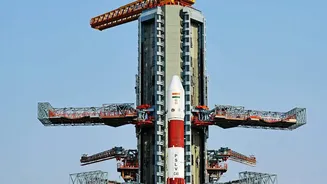
Rather than being sidelined, the Indian Space Research Organisation (ISRO) has taken on a new role as a mentor and enabler. Its workhorse rockets like the PSLV have been instrumental in launching satellites for private Indian companies. More significantly, ISRO developed the Small Satellite Launch Vehicle (SSLV), a rocket designed specifically to cater to the growing small satellite market. After three successful developmental flights, the SSLV has been validated for commercial operations. This dedicated launch capability gives Indian startups a reliable and homegrown option to send their satellites to space. By transferring established technologies to the private sector, ISRO can now focus its own considerable resources on more ambitious scientific and deep-space missions, like Gaganyaan and Chandrayaan-4.
What This Means for India
The smallsat boom is more than just a technological achievement; it's a strategic and economic imperative. The data from these new satellite constellations will have a profound impact on agriculture, disaster management, urban planning, and national security. It creates high-value jobs, attracts foreign investment, and positions India as a major hub in the global space economy, which is projected to be worth over a trillion dollars by 2040. By fostering a symbiotic relationship between a world-class government agency and a dynamic private sector, India is not just launching satellites; it's launching a new chapter in its space story.