







The Soaring Cost of Flying
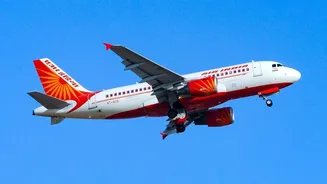
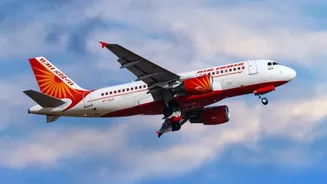
In early October 2026, major Indian carriers like Air India, IndiGo, and Akasa Air announced significant increases in fuel surcharges for both domestic and international flights. This wasn't a minor adjustment. Citing a sharp rise in Aviation Turbine
Fuel (ATF) prices, which account for up to 40% of an airline's operating costs, carriers passed the burden to passengers. For instance, Air India's surcharge revision added up to USD 215 (approximately ₹17,900) to a one-way ticket to North America and USD 135 (approximately ₹11,200) to Europe. These hikes are a direct response to volatile global energy markets, geopolitical tensions, and a weaker rupee, all of which make international operations more expensive for Indian airlines.
From Long-Haul Dreams to Regional Realities
The most immediate impact of expensive tickets is on destination choice. While the appetite for international travel remains strong—with 58% of Indians planning to travel abroad more in 2027—value is now a primary driver. A recent survey revealed that 67% of Indian travellers would consider changing their destination if another offered better value for money. This is forcing a practical shift. The dream trip to London or Paris, once aspirational, is now competing with more accessible and affordable options. Travel operators note that while familiar circuits like Dubai and Thailand remain popular, they are becoming saturated. Consequently, there's a surge in interest for destinations in Central Asia, the Balkans, and closer home in Southeast Asia. Searches for places like Bishkek in Kyrgyzstan and Tirana in Albania have skyrocketed as travellers chase better value.
The Budget-Conscious Traveller Rethinks
The rising costs are disproportionately affecting the budget-conscious middle class, students, and families who fuel a large portion of the outbound tourism market. A trip to Europe that might have cost ₹45,000 for flights can now easily exceed ₹80,000. This price barrier doesn't necessarily stop travel, but it changes its nature. Travellers are becoming more selective about discretionary spending, cutting back on non-essential extras like flight upgrades and expensive tours. Some are postponing or even cancelling trips, waiting for fares to stabilize. This behaviour indicates a market that is resilient but increasingly practical, prioritizing the core experience over costly add-ons.
A Ripple Effect Through the Travel Industry
The entire travel ecosystem is feeling the pressure. Tour operators and travel agents, who cater to the massive Indian outbound market valued at USD 23.4 billion in 2026, are having to adapt quickly. With flight prices being a top consideration for 25% of travellers, agents are redesigning packages to feature destinations with lower flight costs and better currency exchange rates. The shift also affects airlines' strategies. Some carriers have reportedly reduced frequencies on long-haul routes to Europe and North America where operating costs are high and demand is softening at higher price points. This creates a feedback loop: fewer flights can lead to limited seat availability, further pushing up prices on popular routes.
An Unintended Boost for Domestic Tourism?
There might be a silver lining, at least for the domestic economy. As international travel becomes a more expensive proposition, there's a growing argument for exploring destinations within India. Industry experts note that this isn't necessarily a decline in the desire to travel, but a potential redistribution of demand from outbound to domestic tourism. Recent search trends support this, with domestic destinations like Rupsi and Malvan seeing a massive spike in interest alongside international ones. If the high-cost environment for international flights persists, India's own diverse landscapes could see a significant influx of tourists who might have otherwise spent their money abroad.