



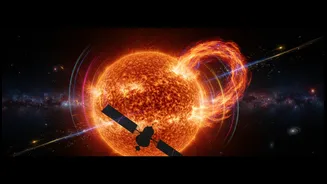


What Exactly Is Space Weather?
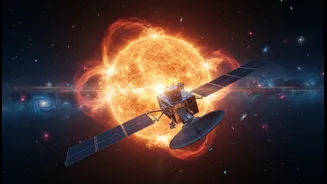
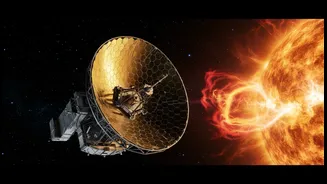
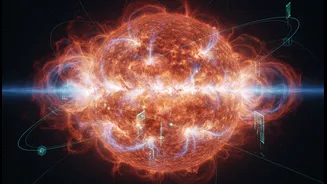
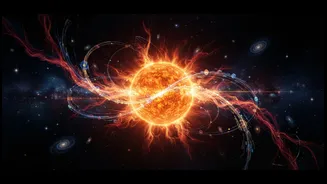
Think of space weather as the environmental conditions in space, driven by the sun. Instead of wind and rain, it involves phenomena like solar flares (intense bursts of radiation), coronal mass ejections (CMEs), which are giant clouds of charged particles,
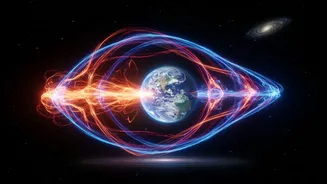
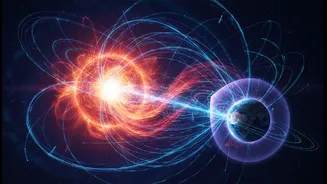
and the solar wind (a constant stream of particles). When these eruptions are aimed at Earth, they can interact with our planet's magnetic field and atmosphere, causing what are known as geomagnetic storms. While Earth’s magnetic field protects us from the worst of it, our technology is increasingly vulnerable.
Why the Sudden Urgency?
The sun has a natural rhythm, known as the solar cycle, which lasts about 11 years. We are currently in Solar Cycle 25, which is ramping up towards its peak of activity. This 'solar maximum' means a higher frequency and intensity of solar flares and CMEs. As our world becomes more dependent on technology, the potential for disruption grows. From satellites to power grids, the complex systems that underpin modern life are more exposed than ever to the sun's turbulent behaviour. This increased risk is driving demand for experts who can predict and mitigate these effects.
The Impact on Our Digital World
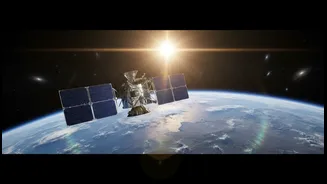
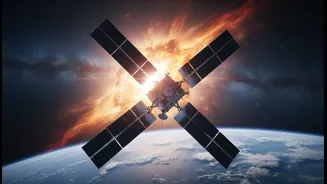
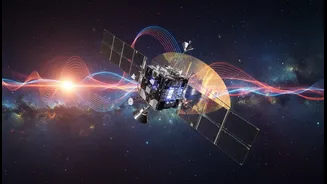
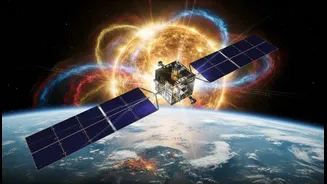
A significant space weather event could have major consequences. It can damage satellite electronics, leading to outages in communication and GPS navigation. This affects aviation, shipping, and even precision agriculture. Intense solar radiation can also cause radio blackouts, disrupting high-frequency communications used by airlines and the military. On the ground, geomagnetic storms can induce currents in power lines, potentially leading to widespread blackouts. Even astronauts need protection from increased radiation. Forecasting these events is crucial for safeguarding our infrastructure and economy.
Your Future Career in the Cosmos
The growing need to monitor and forecast space weather has created a range of specialised jobs. Key roles include: Space Weather Forecaster: These professionals analyse solar data to predict events and issue warnings, much like terrestrial weather forecasters. Space Scientist/Physicist: Researchers in this area study the underlying physics of the sun and its interaction with Earth to improve our models and understanding. Satellite Operations Engineer: These engineers work to protect satellites from the harmful effects of solar radiation, adjusting orbits or shutting down sensitive components during a storm. Data Scientist/Programmer: This field relies heavily on processing vast amounts of data from satellites and ground observatories. Experts with skills in Python, AI, and machine learning are needed to build predictive models. * Policy Advisor: Governments and large companies need experts to help them understand the risks and develop strategies to protect critical infrastructure.
Charting Your Course: Skills and Education
A career in space weather typically begins with a strong foundation in science and maths. A bachelor's degree in physics, astrophysics, atmospheric science, or a related engineering field is a common starting point. For many research and forecasting roles, a master's or even a PhD is required. Beyond core subjects, developing technical skills is vital. Proficiency in programming languages like Python or MATLAB is highly sought after for data analysis and modeling. Experience with data analysis software and even machine learning frameworks can give you a significant edge. In India, institutions like the Indian Institute of Space Science and Technology (IIST) and the Physical Research Laboratory (PRL) offer specialised courses and postgraduate programmes relevant to the field.
Who Is Hiring?
The employers for space weather professionals are diverse. Government agencies are major players, including space agencies like ISRO and NASA, and meteorological organisations like the Space Weather Prediction Center (SWPC) in the US. The aviation industry, satellite communication companies, and power grid operators also hire experts to manage their operational risks. As the private space industry booms, companies involved in satellite launches and operations are also building their own space weather teams. Furthermore, research universities and institutions are constantly looking for scientists to push the boundaries of our knowledge.