



The Blueprint Before the Boom
The idea of a film crossing linguistic borders is not new. For decades, films were dubbed or remade, and stars like Rajinikanth and Kamal Haasan found fans outside their home states. Mani Ratnam’s 1992 film Roja, with its nationally relevant theme and A.R.
Rahman's revolutionary soundtrack, was a major success in its Hindi-dubbed version, proving that powerful stories could transcend language. However, these were often exceptions rather than a concerted strategy. The different film industries—Bollywood, Tollywood, Kollywood—largely operated within their own ecosystems, with Hindi cinema widely seen as the face of the Indian film industry. The old model involved occasional crossovers, but a true, nationwide theatrical event, planned from day one, was yet to be realised.
The Baahubali Game-Changer
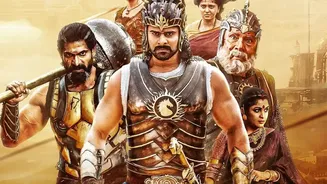
The turning point came in 2015 with S.S. Rajamouli's Baahubali: The Beginning. This Telugu epic was not just a film; it was a declaration of intent. Conceived and marketed from its inception as a pan-Indian event, it was released simultaneously in Telugu, Tamil, Hindi, and Malayalam. With a grand mythological framework, groundbreaking visual effects, and high-stakes emotional drama, it offered a cinematic experience that audiences everywhere found irresistible. The film's cliffhanger ending—“Why did Kattappa kill Baahubali?”—became a national obsession, ensuring its sequel, Baahubali 2: The Conclusion (2017), would shatter box office records to become one of India's highest-grossing films ever. Baahubali pioneered the modern pan-Indian model, proving that a film from the South could not only compete with but also comprehensively outperform its Bollywood counterparts across the country.
Cracking the Code: Action and Emotion
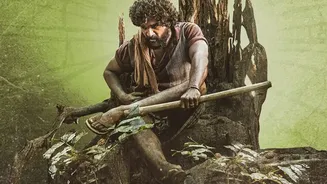
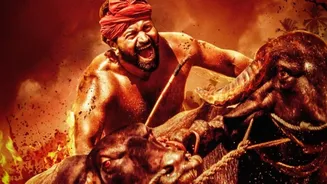
The success of Baahubali laid down a formula that others would refine. The new pan-Indian blockbuster was built on a foundation of high-octane action, but its true power lay in universal emotional hooks. These films feature larger-than-life protagonists, often with a raw, masculine energy, fighting against impossible odds for family, honour, or their people. Prashanth Neel’s Kannada-language KGF series (2018, 2022) perfected this with its stylish, gritty tale of an underdog rising through the criminal underworld, driven by a promise to his mother. Similarly, Pushpa: The Rise (2021) captivated audiences with its story of a coolie-turned-smuggling-kingpin. These narratives, often rooted in familiar mythologies or classic dramatic structures, rely on visual spectacle and powerful emotions rather than complex dialogue, making them easily accessible to audiences regardless of language.
From Stars to Visionary Directors
While star power remains crucial, the pan-Indian phenomenon has elevated directors like S.S. Rajamouli and Prashanth Neel to superstar status in their own right. Audiences now flock to theatres not just for a specific actor, but for the director's unique vision and their promise of an unparalleled cinematic event. Rajamouli’s RRR (2022) became a global sensation, winning an Oscar and demonstrating that the appeal of these maximalist action sagas was not just national, but international. The success is no longer just about dubbing a film; it’s about a deliberate strategy that includes cross-industry casting, nationwide promotional tours, and creating a story that feels authentically Indian yet universally resonant. This director-driven approach has ensured a level of quality and scale that continues to push the boundaries of Indian cinema.
Shifting the Industry's Center of Gravity
The consistent, record-breaking success of films from the Telugu, Kannada, and Tamil industries has fundamentally altered the power dynamics of Indian cinema. For years, Bollywood was the undisputed commercial centre, but now South Indian industries contribute a massive share of the national box office revenue. This has prompted a strategic shift in Bollywood, which is now embracing the 'mass' action templates perfected in the South, as seen in recent blockbusters. Furthermore, the lines are blurring, with increased collaboration between industries, as South Indian stars take on lead roles in Hindi films and vice-versa. The rise of the action saga didn't just give regional cinema a national platform; it forced the entire Indian film industry to evolve, leading to a more integrated, competitive, and ambitious creative landscape.