



Hanle, Ladakh: India’s Official Dark Sky Sanctuary
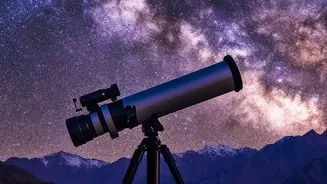
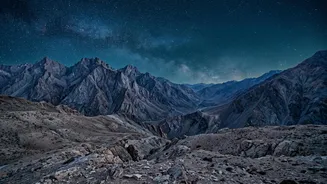
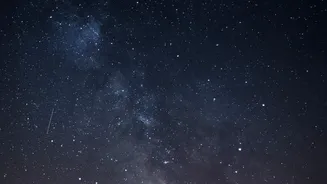
Tucked away in the Changthang Wildlife Sanctuary, Hanle is more than just a remote village; it's India's first and only officially recognised Dark Sky Reserve. At an altitude of over 4,500 metres, the air here is incredibly dry and thin, creating near-perfect
conditions for stargazing. The skies are rated Bortle 1, the darkest possible classification, meaning the Milky Way can appear so bright it casts a soft shadow. You don't need any special gear to be mesmerised. On a clear, moonless night, the view is spectacular to the naked eye, revealing galaxies, planets, and a density of stars that feels almost unreal. The local community is deeply involved, with villagers trained as 'Astronomy Ambassadors' to guide visitors, making this a unique, science-driven ecotourism initiative.
Spiti Valley, Himachal Pradesh: A High-Altitude Desert Observatory
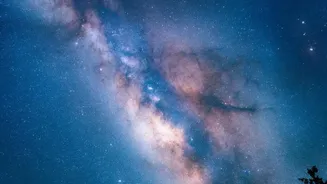
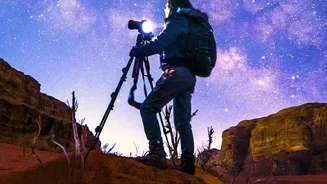
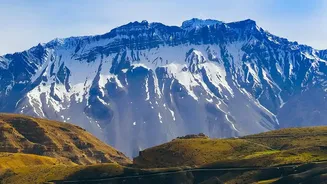
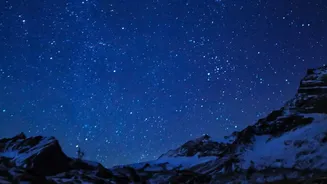
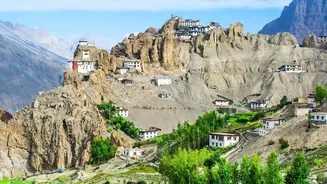
Spiti Valley is a cold desert mountain valley, a world away from the noise and light of modern life. Its high altitude, remote location, and dry climate result in exceptionally clear, pollution-free skies that have made it a legendary destination for astrophotographers and stargazers. Villages like Langza, Komic, and Kibber, some of the highest in Asia, serve as natural observatories. After sunset, the valley transforms. The sky becomes a deep, dark canvas where constellations pop with startling clarity and shooting stars are a common sight. No telescope is needed to see the grand arc of the Milky Way dominating the heavens; all you need is a warm jacket and the patience to let your eyes adjust to the profound darkness.
Rann of Kutch, Gujarat: Stargazing Over a Salt Desert
The Great Rann of Kutch offers a stargazing experience unlike any other. This vast, flat salt desert provides a completely unobstructed, 360-degree view of the sky. Far from any major cities, its light pollution is practically non-existent, making it one of India's darkest spots. The best time to visit is during the Rann Utsav festival, which runs from November to February, when the winter air is crisp and clear. On new moon nights, the darkness is absolute, making constellations like Orion and planets such as Jupiter and Saturn brilliantly visible to the naked eye. Even on full moon nights, the experience is magical, as the white salt pans reflect the moonlight, creating an ethereal glow while still allowing the brightest stars to shine through.
Coorg, Karnataka: Celestial Views from the Western Ghats
For those in South India, the misty hills of Coorg (Kodagu) offer an accessible escape to darker skies. While the main town of Madikeri has some light, the surrounding coffee plantations and remote areas, especially in the southern valleys near the Brahmagiri Wildlife Sanctuary, are remarkably dark. The region's elevation in the Western Ghats places you above the lowland haze, and from November to May, the skies are often clear. In these dark pockets, the Milky Way becomes visible as a faint, shimmering cloud. Locations like Tadiandamol, the highest peak in the district, provide an excellent vantage point away from artificial lights, proving you don't need to travel to the Himalayas for a breathtaking celestial show.
What You Can See and When
The night sky is a dynamic spectacle. While the Orionids meteor shower peaks around October 21-22, it's just one of many events. Throughout the year, patient observers can spot planets like Jupiter and Saturn, which are often visible to the naked eye. Key constellations like Orion, with its distinct three-star belt, and the 'W' of Cassiopeia are easy to find on clear winter nights. The Pleiades star cluster, also known as the Seven Sisters, is another beautiful naked-eye object. Simply packing a pair of binoculars can dramatically enhance your view, revealing the craters of the moon and the countless stars that make up the Milky Way. The most important tool, however, is an open sky far from city lights.