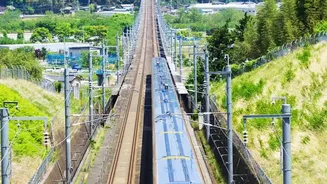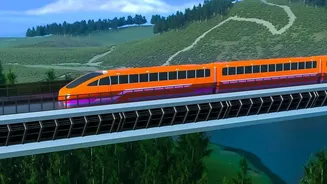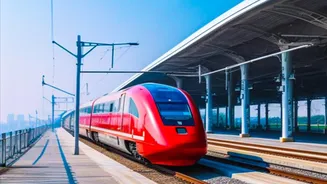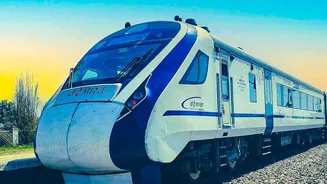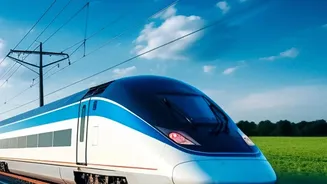




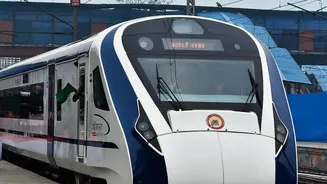
The long-held dream of a bullet train crisscrossing the Indian landscape is inching closer to reality. Indian Railways has set a firm target to begin the first high-speed rail service in the final quarter of 2027 on the Surat-Vapi section.
A Concrete Timeline for a National Ambition
For years, the
Mumbai-Ahmedabad High-Speed Rail Corridor has been a symbol of India's infrastructure aspirations. Now, a concrete date has brought the vision into sharp focus. Railway Minister Ashwini Vaishnaw confirmed that the first passenger service is targeted to launch in the last quarter of 2027. This initial phase will connect the industrial hubs of Surat and Vapi in Gujarat, a significant stretch of the larger 508-kilometre project. This phased approach, starting with the most advanced sections, is a strategic decision to get the trains running and operationalise the massive investment in technology and construction. Trials for the Surat-Bilimora stretch are expected to begin even earlier, in May 2027, signalling that the project is moving from pure construction to the testing and commissioning phase.
Why the Gujarat Section is Leading the Way
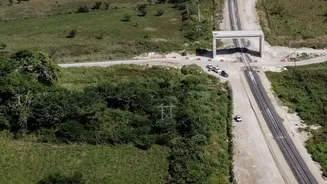
The focus on the Gujarat portion of the corridor, particularly the Surat to Vapi and Bilimora sections, is no accident. Progress here has significantly outpaced the work in Maharashtra. According to the minister, serious construction only began in earnest in 2021 after overcoming significant delays. These included nearly two and a half years spent on pending state permissions and land acquisition in Maharashtra, followed by two more years lost to the COVID-19 pandemic. As of September 2026, the construction milestones were substantial: over 456 km of pier work and 371 km of viaduct (the elevated bridge-like structure for the track) were completed. Recently, a major milestone was achieved with the successful energisation of the overhead electrical equipment on the 50-km Surat-Bilimora stretch, a critical step for conducting trials.
Engineering Marvels on the Ground
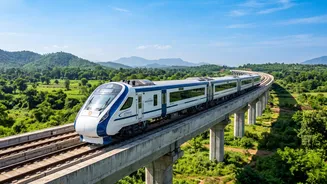
The project is not just about speed; it's a showcase of cutting-edge engineering. The corridor is being built using Japan's renowned Shinkansen technology, with a design speed of 350 km/h and an operational speed of 320 km/h. The vast majority of the line is elevated on viaducts to avoid level crossings and ensure safety. The project also includes India's first undersea rail tunnel, a 21-km-long passage in Maharashtra, with a 7-km portion running beneath Thane Creek. This complex section is being excavated by massive tunnel boring machines, each as tall as a four-storey building. Even components like noise barriers, with over six lakh already installed, highlight the attention to detail in minimising environmental impact.
A Boost for 'Make in India'
Beyond being a transport project, the bullet train corridor is a significant driver for domestic manufacturing. While the core technology is from Japan, there's a strong emphasis on indigenisation. India's first indigenous bullet train, the B28 trainset, is being manufactured by a collaboration between the Integral Coach Factory (ICF) and BEML. This train, designed for speeds of 280 km/h, is expected to be ready for track trials by mid-2027. The first body frame is already complete and undergoing structural testing. Furthermore, critical components for the high-speed electrification system, such as transformers and masts, are all being manufactured in India, providing a major boost to the 'Make in India' initiative.
The Road Ahead to Mumbai
The 2027 launch on the Surat-Vapi section is just the beginning. The plan is to open the entire 508-km corridor in phases, progressively extending the line towards its final destinations. The section is targeted to reach Thane by 2029. Once fully operational, the bullet train is expected to slash travel time between Mumbai and Ahmedabad to just under two hours, a dramatic reduction from the current eight to nine hours by road. This will connect major economic centres like Mumbai, Thane, Vapi, Surat, Vadodara, and Ahmedabad, potentially transforming business and leisure travel in the region. The project, being executed by the National High Speed Rail Corporation Limited (NHSRCL), represents not just a new train line, but the dawn of a new era in Indian transportation.