



The Core Difference: Muscle Engagement
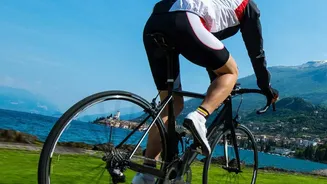
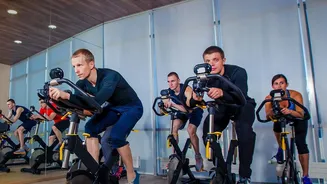
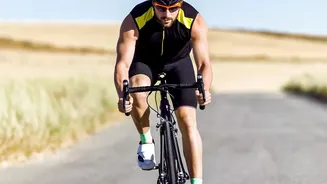
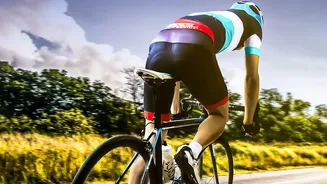
The most significant difference between cycling and skating lies in which muscles they target. Cycling is famous for building powerful lower-body strength. The repetitive pedalling motion primarily works your quadriceps, hamstrings, glutes, and calves.
It’s a very focused workout; if you want to build endurance and strength in your legs specifically, cycling is an incredibly effective and straightforward choice. Skating, on the other hand, is a more comprehensive, full-body workout. While it certainly targets the legs, the side-to-side gliding motion also engages your inner and outer thighs, along with your gluteus medius — muscles often underutilised in linear movements like cycling. More importantly, skating demands constant core engagement to maintain balance. Your abdominal and lower back muscles are always working to keep you stable, and your arms swing for rhythm and propulsion, bringing the upper body into the action.
Cardio and Calorie Burn
Both activities are excellent for cardiovascular health, strengthening your heart and lungs. Cycling allows for long, sustained periods of aerobic exercise, which is great for building endurance. You can burn a significant number of calories, with a moderate pace potentially burning between 400 and 600 calories per hour, and even more at higher intensities. Skating often has a slight edge in calorie burn because it engages more muscle groups simultaneously. The need to constantly balance and propel yourself forward means your body is working harder in some respects. An hour of steady skating can burn anywhere from 360 to over 600 calories, depending on your pace and effort. Some studies suggest that skating provides a comparable aerobic workout to running, but with significantly less impact.
Impact on Your Joints
For those concerned about joint health, both cycling and skating are excellent low-impact alternatives to high-impact exercises like running. Cycling is particularly gentle on the joints because your weight is supported by the saddle, taking the stress off your knees and ankles. This makes it an ideal choice for people with arthritis or those recovering from certain injuries. Skating is also considered a low-impact sport. The fluid, gliding motion avoids the harsh shock that comes from your feet striking the pavement while running. One study found that inline skating produces less than 50% of the impact shock of running. This smooth movement helps build joint strength without subjecting them to excessive stress.
The Skill and Accessibility Factor
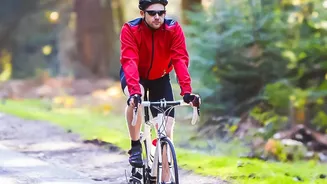
When it comes to getting started, cycling is generally more accessible for beginners. Most people learn to ride a bike as children, and the basic skill is often retained. It’s relatively easy to hop on a bike and go. Skating, however, requires a bit more of a learning curve. It demands a good sense of balance, coordination, and agility, which takes time to develop. New skaters should expect a few tumbles and should always wear protective gear, including a helmet, wrist guards, and knee pads. In terms of where you can do these activities, bikes are versatile for roads and dedicated trails. Skating is best on smooth, paved surfaces like parks, rinks, or promenades, as cracks and rough terrain can be challenging and dangerous.