





Understanding the Autumn Sky Show
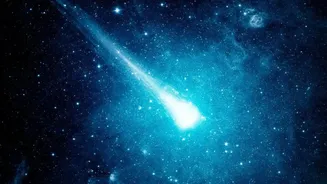
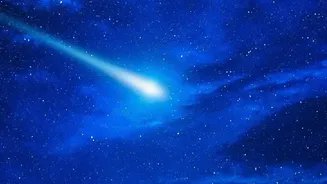
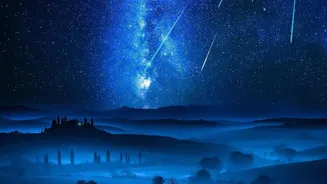
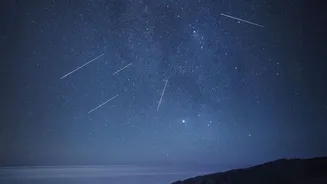
Meteor showers, often called shooting stars, occur when Earth passes through trails of debris left by comets or asteroids. The Perseid shower originates from Comet Swift-Tuttle, while the Orionids are born from the dust of the famous Halley's Comet. The Perseids
are beloved for their high rate of bright meteors, often leaving persistent trains of light. The Orionids are known for their speed, entering the atmosphere at about 71 km per second and producing fast, often colourful streaks of light. Together, they provide two distinct and brilliant opportunities to connect with the night sky during the clearer post-monsoon months.
Mark Your 2026 Calendar
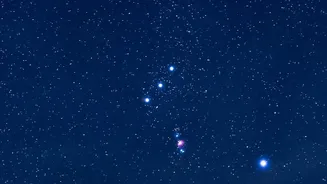
Timing is everything for a successful stargazing session. In 2026, the conditions are especially favourable. The Perseid meteor shower will peak on the night of August 12-13. This coincides perfectly with a New Moon, meaning the sky will be exceptionally dark, allowing even faint meteors to become visible. For viewers in India, the best window is between 2:00 AM and 4:30 AM IST, when the radiant point in the constellation Perseus is high in the northeastern sky. The Orionid meteor shower will peak later in the year, on the night of October 21-22. At its peak, you could spot 15 to 25 meteors per hour under dark skies, radiating from the constellation Orion. The best viewing time for the Orionids is in the pre-dawn hours.
Escape the City Glow
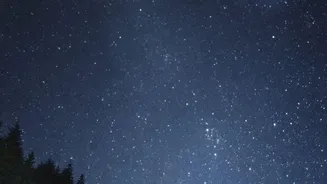
The single biggest obstacle to stargazing is light pollution from cities, which can wash out all but the brightest stars. Astronomers use the Bortle Scale to measure sky darkness, where Class 1 is a pristine dark sky and Class 9 is an inner-city sky. To truly experience a meteor shower, you need to find a location rated Bortle 4 or lower. For those in non-metro areas, this is much easier. Head to a spot at least 40-50 kilometres away from any major town. High-altitude locations are even better as they are above much of the atmospheric haze. Excellent stargazing destinations in India known for their dark skies include Spiti Valley in Himachal Pradesh, Hanle in Ladakh (India's first official Dark Sky Reserve), the Rann of Kutch in Gujarat, and Jaisalmer in Rajasthan. For those in the south, the coffee plantations of Coorg, Karnataka, also offer suitably dark skies away from city lights, especially from October through May.
Your Stargazing Essentials
You don't need expensive equipment to enjoy a meteor shower. In fact, telescopes and binoculars are not ideal because their narrow fields of view will cause you to miss most of the action. Your eyes are the best tool. Instead, focus on comfort and preparation. Bring a blanket or a reclining camping chair to lie back on comfortably. Dress in layers; even on warm nights, sitting still for hours can make you feel chilly. Pack some snacks and a flask of a warm beverage. Crucially, bring a torch with a red light setting. White light from a standard torch or your phone screen will ruin your night vision, which takes 20 to 30 minutes to fully adapt to the dark. Red light allows you to see your surroundings without resetting your eyes.
Patience and Best Practices
Once you've found your dark spot, the final step is patience. Allow your eyes at least 20-30 minutes to fully adjust to the darkness. During this time, avoid looking at any bright light sources. Don't focus on the radiant point of the shower (Perseus or Orion) itself. Instead, lie back and look at a wide patch of the sky about 45 degrees away from the radiant; this is where the meteors will appear to have the longest and most dramatic streaks. Meteor showers can be unpredictable, with lulls in activity followed by sudden bursts. The key is to relax, stay comfortable, and give yourself a couple of hours to simply watch the sky. The reward is a natural fireworks display that is both humbling and unforgettable.