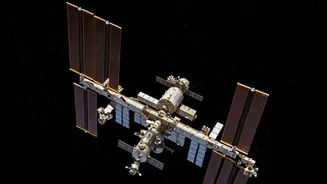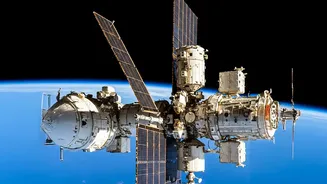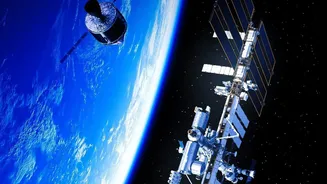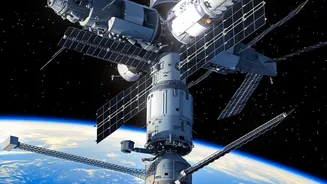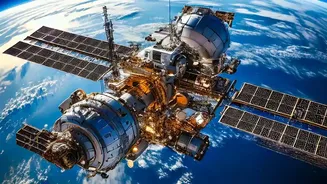





The End of an Era for the ISS
Since 2000, the International Space Station has been a symbol of global cooperation and a hub for groundbreaking science, hosting more than 270 astronauts and 3,000 experiments. But after three decades of service, the aging hardware, rising maintenance
costs, and structural fatigue make its continued operation unsustainable. NASA and its partners have committed to operating the station until 2030, after which it will perform a controlled deorbit, breaking up over a remote area of the Pacific Ocean known as Point Nemo. This planned retirement marks the end of a major chapter in space exploration but also catalyzes the beginning of the next one: a transition from a government-run program to a commercial marketplace in low-Earth orbit (LEO).
NASA's New Role: From Landlord to Tenant
Instead of building a government-owned successor, NASA is shifting its strategy to become an anchor customer for a fleet of privately owned and operated space stations. Through its Commercial Low-Earth Orbit Destinations (CLD) program, the agency is investing funds to help private companies design and deploy their own orbital platforms. This pivot is designed to reduce costs for the American taxpayer, stimulate a robust LEO economy, and allow NASA to focus its resources on more ambitious deep-space exploration goals under the Artemis program, such as returning to the Moon and eventually sending humans to Mars. The plan is to have at least one commercial station operational before the ISS is retired, ensuring a continuous American presence in orbit for research and development.
The Commercial Contenders
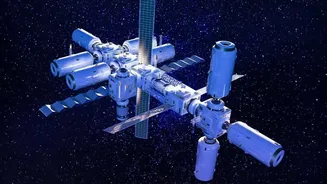
Several companies are in a race to build the first commercial successors to the ISS. Axiom Space is taking a unique hybrid approach, planning to attach its first module to the ISS as early as 2026 or 2027. These modules will later detach to form a free-flying independent station before the ISS is decommissioned. Starlab, a transatlantic joint venture between Voyager Space and Airbus, is developing a station designed to launch on a single flight by 2029. Other major players include Vast, which aims to launch its smaller Haven-1 station in 2027, and the Orbital Reef concept, a 'mixed-use business park' in space led by Blue Origin and Sierra Space. Each of these ventures is vying for NASA contracts while also building business cases to serve a global customer base of researchers, companies, and international space agencies.
An Emerging Economy in Orbit
These future commercial stations are not just intended to be science labs. Their business models envision a thriving ecosystem in low-Earth orbit. Beyond serving NASA astronauts, the operators plan to host a wide range of clients. This includes space tourists, international astronauts from countries without their own space programs, and private companies looking to conduct research or develop new products in a microgravity environment. In-space manufacturing, from fiber optics to bioprinted organs, represents a significant potential market. The goal for companies like Blue Origin, which describes Orbital Reef as a 'business park', is to create a versatile infrastructure that lowers the barrier to entry for a variety of commercial activities in space.
Challenges on the Horizon
The path to a commercialized LEO is not without obstacles. The timelines are aggressive, and human spaceflight development is notoriously prone to delays. Securing the massive funding required to build, launch, and operate a space station remains a primary challenge, with companies relying on a mix of private investment and NASA's milestone-based funding. There have also been policy shifts; NASA briefly considered and then abandoned a plan to build its own core module in early 2026, causing some uncertainty before reverting to the original commercial-first strategy. Ultimately, success depends on these companies proving not only that their technology works, but that a sustainable market for their services exists beyond NASA. The pressure is on to get these new outposts in the sky before the ISS takes its final plunge.