

Day 1: Bhubaneswar’s Temple City
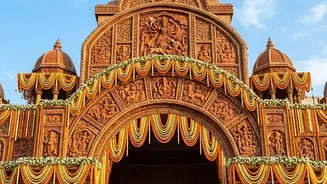
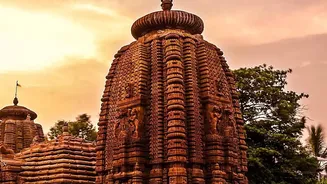
Begin your journey in Bhubaneswar, the 'Temple City of India'. Your first stop is the magnificent Lingaraj Temple, a masterpiece of Kalinga architecture dating back to the 11th century. To understand it, look for its four main components: the towering
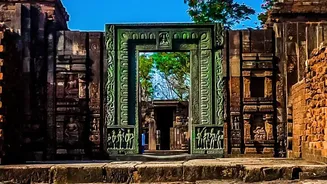
sanctum (Deul), the assembly hall (Jagamohana), the festival hall (Natamandira), and the hall of offerings (Bhogamandapa). This structure is a textbook example of the Rekha Deul and Pidha Deul styles, which define most temples in the region. Notice how the temple represents a fusion of Shaivism and Vaishnavism, dedicated to Harihara, a combined form of Shiva and Vishnu. Nearby, visit the Mukteshwar Temple, an ornate 10th-century gem often called the 'Gem of Odisha Architecture' for its exquisite stone archway and detailed carvings. This smaller temple provides a perfect introduction to the architectural language you'll see all week.
Day 2: Ancient Jain Caves and Early Styles
Travel back further in time at the Udayagiri and Khandagiri caves on the outskirts of Bhubaneswar. These are not temples but rock-cut shelters for Jain monks, carved during the 1st or 2nd century BCE under King Kharavela. Exploring these caves helps you understand the region's pre-Hindu spiritual landscape. Udayagiri ('Sunrise Hill') has 18 caves, with the Rani Gumpha (Queen's Cave) being the most impressive, featuring elaborate carvings depicting royal and religious scenes. Across the road, Khandagiri ('Broken Hill') has 15 caves and offers panoramic views. The carvings here illustrate Jain beliefs and mythology. Visiting these ancient monastic dwellings provides a stark contrast to the grand temples, showing an evolution in both faith and architectural ambition over the centuries.
Day 3: The Grandeur of Konark’s Sun Temple
Today is dedicated to the awe-inspiring Konark Sun Temple, a UNESCO World Heritage site. Built in the 13th century by King Narasimhadeva I, the temple is designed as a colossal chariot for the Sun God, Surya. To understand its genius, you must see it as a metaphor in stone. It has 24 intricately carved wheels and is pulled by seven mighty horses. The wheels are not merely decorative; they are functional sundials that can tell time with remarkable accuracy. The symbolism is profound: the horses represent the seven days of the week, while the twelve pairs of wheels signify the months of the year, embodying the passage of time itself. The temple's detailed sculptures depict everything from divine figures to scenes of daily life and sophisticated erotic imagery, representing the celebration of all facets of life.
Day 4: Puri’s Living Faith and Jagannath Culture
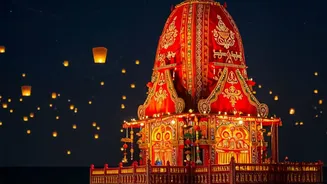
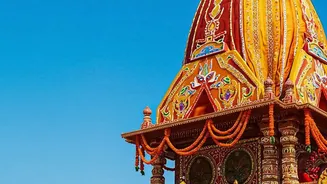
Head to the coastal city of Puri, one of the four holiest pilgrimage sites (Char Dham) for Hindus. The city's life revolves around the Jagannath Temple, a massive complex dedicated to Lord Jagannath, a form of Vishnu. Understanding this site means recognizing its status as a living temple with deep-rooted traditions. A crucial point for visitors is that only practicing Hindus of Indian origin are allowed inside the main temple premises. This rule is due to a history of invasions and the need to preserve sacred rituals. However, all are welcome to view the temple's impressive exterior from the Raghunandan Library's rooftop viewing platform nearby. More importantly, the culture of Jagannath extends to everyone during the annual Rath Yatra (Chariot Festival), when the deities come out for a public procession, allowing people of all faiths to participate.
Day 5: The Living Arts of Raghurajpur and Pipili
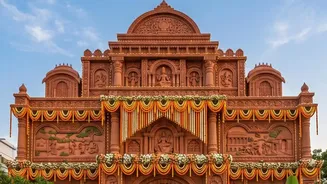
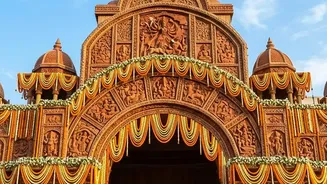
The final day connects the temples to Odisha's living craft traditions. A short drive from Puri lies Raghurajpur, a designated heritage village where every house is an artist's studio. This is the heart of Pattachitra painting, an ancient art form of scroll painting on cloth with natural colours. The themes are almost always mythological, often depicting Lord Jagannath and stories from the epics, directly linking the art to the temples you've visited. Next, visit the town of Pipili, famous for its vibrant appliqué work, known locally as 'Chandua'. This craft originated to create the decorative canopies, banners, and umbrellas for the Jagannath Temple's chariots during the Rath Yatra. Seeing artisans create these colourful textiles firsthand is to understand how ancient religious devotion continues to fuel a thriving, beautiful craft economy.