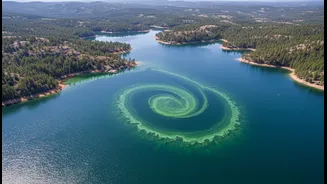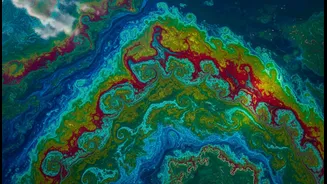









More Than Just a Pretty Picture
These captivating images showcase algal blooms, a rapid and dense growth of microscopic algae in water. While algae are fundamental to aquatic ecosystems, forming the base of the food web, these massive blooms are a different story. When conditions are right,
their populations can explode, creating colourful scums, mats, or discolorations visible from miles away—and even from orbit. Not all blooms are dangerous, but many are classified as Harmful Algal Blooms (HABs). These occur when the proliferating algae produce potent toxins or grow so dense they cause widespread ecological damage. These are not a new phenomenon, but their frequency, size, and visibility are on the rise globally, turning them into a subject of intense scientific scrutiny and public fascination.
The Science Behind the Swirls
So, what fuels these dramatic events? The primary cause is a process called eutrophication, which means the water has become overly enriched with nutrients. The main culprits are nitrogen and phosphorus, which run off from agricultural fields using fertilizer, as well as from urban stormwater and wastewater discharge. Think of it as over-fertilizing our water bodies. Compounding this issue is climate change. Warmer water temperatures create a more favorable environment for algae to multiply rapidly. Slower-moving water, often a result of drought or changes in circulation, also contributes to bloom formation. This combination of excess nutrients and warmer, more stagnant water creates a perfect storm for algae to grow out of control.
From Space to Your Screen
The reason these blooms have become so prominent in our visual feeds is due to a revolution in monitoring technology. Earth-observing satellites from agencies like NASA and the European Space Agency (ESA) provide a bird's-eye view, capturing the scale and spread of blooms in unprecedented detail. Instruments on satellites like Landsat and Copernicus Sentinel can detect the specific pigments in algae, like chlorophyll, allowing scientists to map their concentration. More recently, artificial intelligence is being used to analyze these massive datasets, helping to predict and identify HABs faster and more accurately. Closer to the ground, drones equipped with high-resolution sensors offer another powerful tool. They can fly under clouds that block satellite views and gather detailed data on specific areas like beaches or drinking water intakes, providing a crucial link between broad satellite observation and on-the-ground water sampling.
The Hidden Danger in the Bloom
Behind the beautiful facade of an algal bloom lies significant danger. The most direct threat comes from the toxins produced by some species, particularly cyanobacteria (or blue-green algae). These toxins can be harmful, and in some cases fatal, to fish, birds, marine mammals, and even humans who may get sick from eating contaminated seafood, swimming in affected water, or inhaling airborne toxins. Even non-toxic blooms can be devastating. As the massive quantity of algae dies and decomposes, the process consumes vast amounts of oxygen in the water. This creates hypoxic areas, better known as "dead zones," where most aquatic life cannot survive. These blooms also block sunlight from reaching plants on the seafloor, further disrupting the ecosystem. The economic impact is also severe, costing millions each year in lost revenue for fisheries, tourism, and recreation.