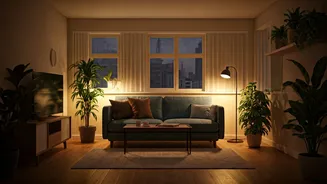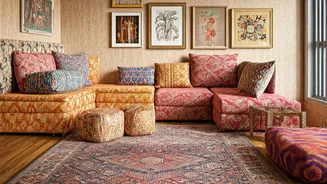









Why Your Fabric Choice Matters
During the rainy season, indoor humidity levels can soar, causing heavy textiles like velvet, thick polyester, or dense jacquard to absorb and trap moisture. This not only makes them feel perpetually damp but also creates a breeding ground for mildew,
leading to musty smells. Switching to lightweight, natural, and breathable materials is the key to maintaining a fresh and airy environment. Fabrics with a loose or open weave allow moisture to evaporate quickly instead of accumulating, which is crucial when textiles take much longer to dry. Thin cotton, linen, and mulmul (muslin) are ideal choices as they don't hold onto ambient humidity and help improve air circulation within your flat.
Swap Heavy Curtains for Sheer Alternatives
The most impactful change you can make is replacing heavy, opaque curtains. Thick drapes block what little natural light is available on an overcast day, contributing to a darker, more confined feeling. Worse, they absorb dampness from the air, especially near open windows. Opt for sheer or semi-sheer curtains made from voile, linen, or lightweight cotton. These fabrics allow maximum light to filter through, instantly making a room feel brighter and more spacious. Their open weave also means they dry exceptionally fast, preventing the stale odours that plague heavier textiles during the monsoon.
Rethink Your Bedding and Upholstery
Heavy bedspreads and synthetic sheets can feel sticky and uncomfortable in a humid bedroom. For a comfortable night's sleep, switch to bedding made from breathable fabrics. Percale or mulmul cotton sheets are excellent choices because their weave allows air to circulate and moisture to evaporate, keeping you cool and dry. Instead of a thick razai or comforter, a lightweight cotton dohar provides just enough warmth without trapping heat. The same logic applies to your living room. Swap out velvet or chenille cushion covers and throws for ones made of cotton, linen, or khadi. This is an easy, low-cost way to introduce lighter textures and prevent that damp feeling when you sit down.
Embrace the Power of Colour and Pattern
Beyond texture, the colour of your fabrics can have a profound psychological effect, helping to combat the 'monsoon blues' that can result from reduced sunlight. Dark and muted tones can make a room feel more somber, amplifying the grey weather outside. To counteract this, choose textiles in light, cheerful, and warm colours. Crisp whites, soft pastels, sunny yellows, and fresh greens can make a space feel more open and uplifting. Studies on colour psychology show that bright and warm hues can boost energy levels and evoke feelings of happiness and comfort. Simple, airy patterns like block prints or subtle stripes can also add visual interest without overwhelming the space.
Complementary Tips for a Fresher Home
While fabrics are your first line of defence, a few other adjustments can enhance their effect. Ensure your home is well-ventilated by opening windows when it's not raining and using fans to keep air moving. This helps fabrics dry faster and prevents moisture from settling. Consider replacing heavy wool or synthetic rugs with options made from natural, quick-drying materials like jute or cotton. To tackle musty smells, use natural absorbents and fresheners. Small pouches of camphor, neem leaves, or cloves placed in cupboards and corners can help absorb excess moisture and impart a pleasant, clean scent. Using mirrors to reflect light can also make a room feel significantly brighter.