

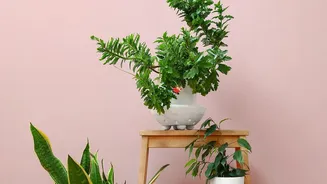
The Myth's Green Roots
The popular belief that houseplants scrub the air of toxins stems largely from a 1989 NASA study. Researchers were exploring ways to clean the air in sealed environments like space stations. They placed plants in small, airtight chambers and found they
could remove volatile organic compounds (VOCs) like formaldehyde and benzene. The study was scientifically sound for its specific purpose and suggested that for a future on Mars, we'd need to take nature with us. The problem arose when these findings were applied to the average home, an environment vastly different from a sealed NASA lab.
A Reality Check for Your Home
In the real world, our homes are not sealed chambers. Air is constantly flowing through cracks, doorways, and open windows. Subsequent research, including a major review from Drexel University, concluded that in a normal room, the effect of houseplants on air quality is practically negligible. The rate at which buildings naturally exchange air—a process called the air exchange rate—dilutes pollutants far more quickly and effectively than plants can absorb them. To replicate the results of the NASA study, you would need an impossibly large number of plants. Estimates suggest anywhere from 10 to 1,000 plants per square metre of floor space would be required to compete with a building's basic ventilation. That’s not a green thumb; that’s an indoor jungle.
The Unseen Power of Fresh Air
So, if plants aren't the answer, what is? The consensus among experts is clear: ventilation. The simple act of replacing stale indoor air with fresh outdoor air is the most effective way to reduce the concentration of indoor pollutants, from cooking fumes and cleaning product chemicals to the carbon dioxide we exhale. According to the U.S. Environmental Protection Agency, indoor air can be two to five times more polluted than outdoor air. Ventilation works by dilution. By introducing cleaner outdoor air, you lower the concentration of contaminants that have built up inside. It is a fundamental strategy for maintaining a healthy indoor environment, often more effective than even sophisticated air filtration systems alone.
Simple Ways to Ventilate Your Space
Improving your home's ventilation doesn't require a costly renovation. The easiest method is natural ventilation: simply opening windows and doors for 10-15 minutes a day, even in colder weather, can dramatically improve air quality by flushing out pollutants. Creating a cross-breeze by opening windows on opposite sides of your home is even better. Another key strategy is using spot ventilation. Always run the exhaust fan in your kitchen when cooking and in the bathroom during and after a shower. These fans are designed to pull moisture and pollutants directly out of the room and vent them outside, which is crucial for preventing mould growth and removing contaminants at their source.