







The Monsoon Travel Dilemma
For many city dwellers, a Himalayan getaway is the perfect antidote to urban chaos. Yet, planning a trip between June and September can feel like a gamble. This is the season when popular destinations in Himachal Pradesh and Uttarakhand are frequently
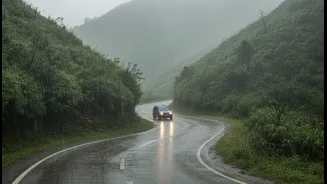
in the news for torrential rains, flash floods, and devastating landslides. News of blocked highways, stranded tourists, and cancelled bookings has become an unfortunate hallmark of the monsoon. These disruptions are more than just an inconvenience; they represent lost holidays and significant stress for travellers bound by tight work schedules. This uncertainty has pushed a growing number of people to look for mountain destinations that are not at the mercy of the monsoon clouds.
The Geographical Safe Haven
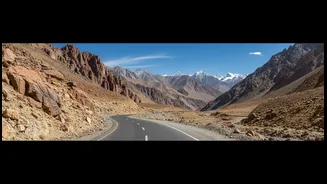
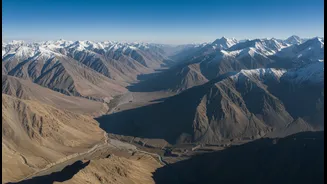
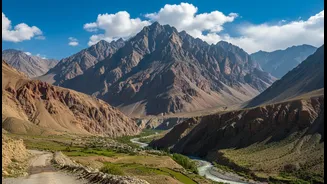
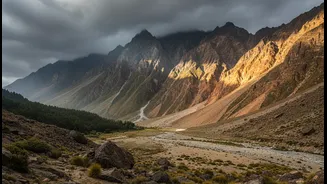
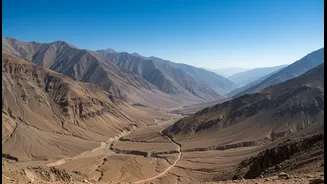
The secret to Spiti and Ladakh's appeal lies in a simple geographical phenomenon: the rain shadow effect. As the moisture-laden monsoon clouds travel north from the Indian Ocean, they are obstructed by the massive Pir Panjal and Great Himalayan ranges. Forced to rise, the clouds cool and release their rain and snow on the southern, windward side, which includes most of Himachal and Uttarakhand. By the time the air crosses over these towering peaks to the leeward side—where Spiti and Ladakh are located—it has lost almost all its moisture. This results in a stark, arid, cold-desert landscape that receives minimal rainfall, enjoying clear skies and sunny weather while the rest of the country is drenched.
‘Landslide-Resistant,’ Not ‘Landslide-Free’
The headline claim of being “landslide-free” requires a crucial distinction. While these regions are largely spared from the rain-induced landslides common elsewhere, they are not entirely without risk. A scientific paper on landslide susceptibility classifies the Trans-Himalayan areas of Ladakh and Spiti as a 'Moderate to Low Vulnerability Zone' precisely because the primary trigger—heavy rainfall—is absent. However, landslides can still be triggered by other factors. The region is seismically active, and earthquakes can cause slope failure. Furthermore, sudden glacial lake outbursts or localized cloudbursts, though infrequent, can cause flash floods and damage. The terrain, characterised by steep slopes and loose sedimentary rock, makes it inherently prone to some level of instability. So, while the risk is significantly lower, it is not zero.
Predictability Is the New Luxury
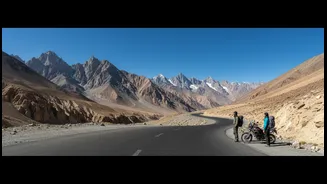
For the modern urban traveller, predictability is a valuable commodity. The primary appeal of Spiti and Ladakh during the monsoon is reliability. Knowing that your meticulously planned 10-day itinerary is unlikely to be washed away by a sudden downpour is a huge relief. You can book flights, hotels, and transport with a higher degree of confidence. While the roads leading to these regions, such as the Manali-Leh Highway, can be challenging and are subject to their own weather patterns, the valleys themselves offer a stable environment once you arrive. This assurance allows travellers to focus on the experience—the surreal landscapes, ancient monasteries, and unique culture—rather than worrying about being cut off from the outside world.
What You Still Need to Know
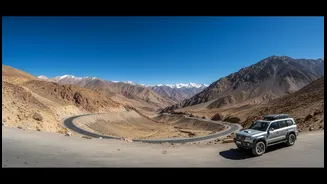
Choosing Spiti or Ladakh for a monsoon trip bypasses the worst of the rains, but it comes with its own set of challenges. The high altitude (often above 10,000 feet) means that acclimatisation is non-negotiable to avoid Acute Mountain Sickness (AMS), a serious health risk. The roads, while scenic, can be rough and demanding, requiring skilled drivers and robust vehicles. Even though the valleys are dry, the high mountain passes that provide entry, like Rohtang or Zoji La, can be temporarily closed due to weather on the other side. Therefore, it is always essential to build buffer days into your itinerary and check road conditions before and during your journey. The adventure lies not just in the destination, but also in navigating the journey with caution and respect for the powerful mountain environment.