






The Foundation: Adjust Your Chair Height
Everything starts with your connection to the floor. The first step is to adjust your chair's height so your feet rest flat on the ground. Your thighs should be parallel to the floor, and your knees should be at roughly a 90-degree angle, level with or slightly
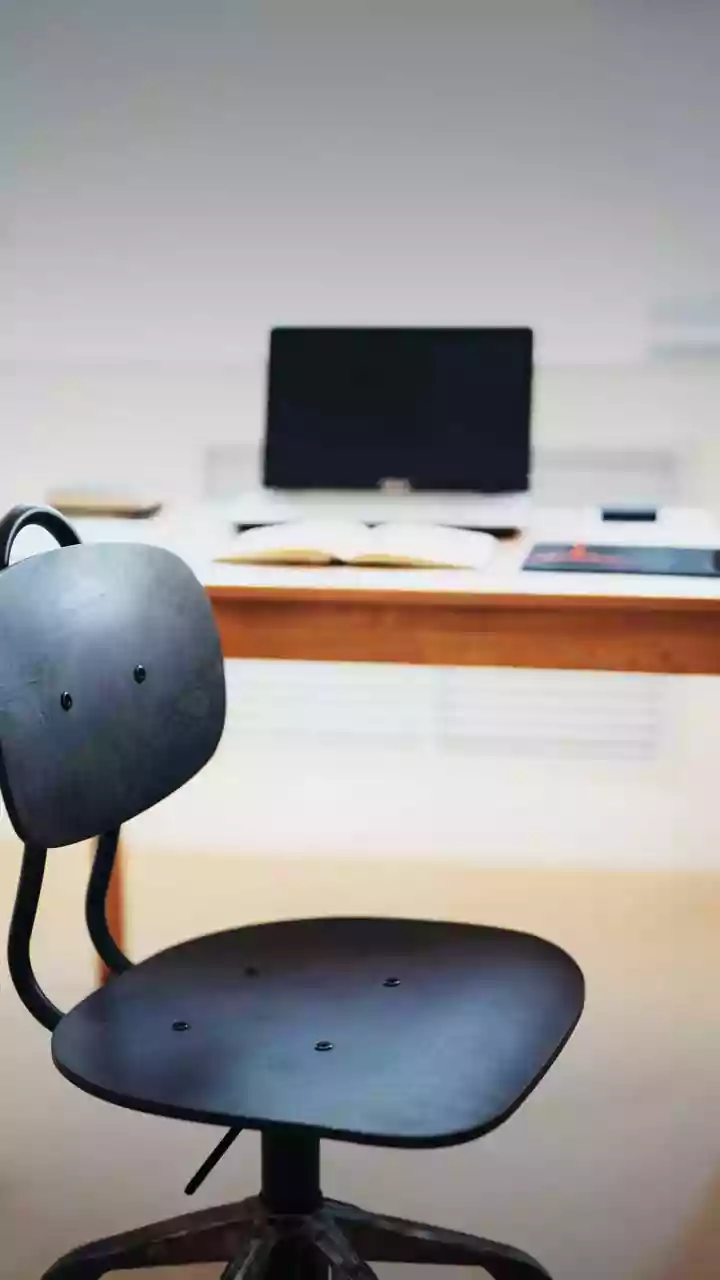
lower than your hips. If your feet are dangling, your chair is too high. If your knees are pointing towards the ceiling, it's too low. This stable base prevents you from slouching and balances your pelvis, setting the stage for good posture. You should also ensure there's a small gap, about two to three fingers wide, between the back of your knees and the edge of your seat to avoid cutting off circulation.
Fine-Tune Your Lumbar Support
Once your height is set, focus on your lower back. Your spine has a natural inward curve, and the lumbar support in your chair should fit into that curve like a puzzle piece. Many people make the mistake of setting it too high or too low. The support should rest at your belt line, filling the gap between the chair and the small of your back. The goal is to feel gentle, continuous contact that encourages your natural spinal curve without aggressively pushing you forward. If your chair lacks built-in support, a small cushion or rolled-up towel can work wonders. This simple step is crucial for preventing the muscle strain that leads to end-of-day aches.
Relax Your Shoulders with Armrests
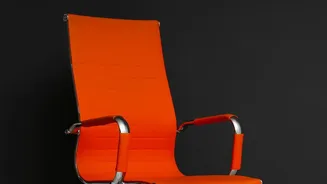
Armrests play a key role in reducing tension in your neck and shoulders. Adjust them so that your elbows can rest at a comfortable 90-degree angle when your arms are by your sides. Your shoulders should be completely relaxed, not hunched up towards your ears. If the armrests are too high, they'll force your shoulders upward; if they're too low, you'll likely lean to one side to compensate. Proper armrest height helps keep your wrists and forearms aligned, which is important for preventing strain while typing or using a mouse.
Align Your Gaze: Monitor Position
Now look forward. Your computer monitor's position is just as important as your chair's. The general rule is to place the monitor directly in front of you, about an arm's length away. The top of the screen should be at or slightly below your eye level. This ensures you are looking slightly downward to view the center of the screen, which helps keep your head and neck in a neutral, comfortable position. If your monitor is too low, you will crane your neck down, and if it's too high, you'll tilt your head back, both of which can cause significant strain over time. Use a monitor stand or a stack of books if you need to raise it.
Beyond the Setup: Move and Stretch
Even the most perfectly ergonomic setup can't defeat the negative effects of sitting still all day. Your body is designed to move. Experts recommend taking short breaks every 30 minutes to stand up, walk around, or do simple stretches. Simple movements like a seated spinal twist, a shoulder blade squeeze, or a standing back extension can make a huge difference. Think of your ergonomic setup as your starting point, not the finish line. The combination of a well-adjusted workspace and regular movement is your best defense against back pain and stiffness.