


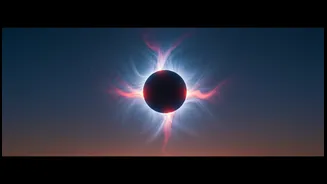
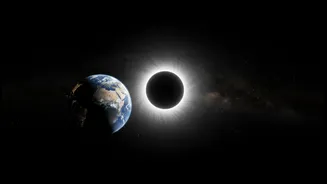


A Spectacular Sunset Eclipse Abroad
A wave of excitement is building across Europe for what will be the continent's first total solar eclipse since 1999. The path of totality, the narrow track where the Moon will completely obscure the Sun, will cross over Greenland, Iceland, the Atlantic
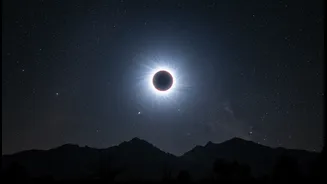
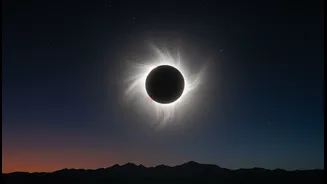
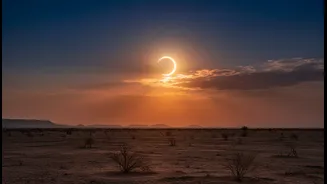
Ocean, and northern Spain. For eclipse chasers in Spain, the event promises to be particularly stunning. Totality will occur late in the evening, creating a rare and highly anticipated “sunset eclipse” where the Sun’s glowing corona will be visible as it dips toward the horizon. This dramatic alignment, which hasn't been seen over mainland Spain since 1905, is expected to draw astronomers and tourists from around the globe for a few minutes of daytime darkness.
What Makes Totality So Special?
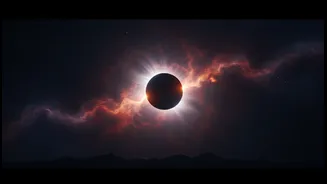
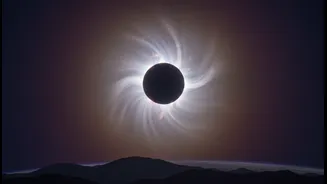
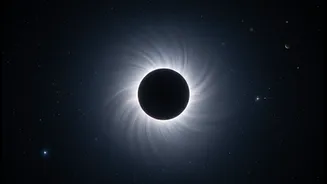
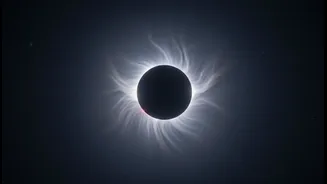
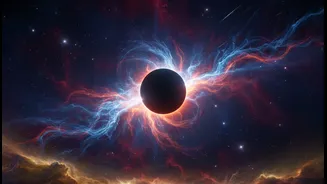
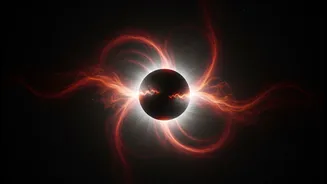
A total solar eclipse is more than just a momentary darkening. It occurs when the Moon aligns perfectly between the Earth and the Sun, casting its deep, central shadow, the umbra, onto a small part of our planet. For those within this path of totality, the world changes. The sky darkens as if it were twilight, temperatures can drop, and the Sun’s magnificent outer atmosphere, the corona, becomes visible to the naked eye. This ethereal, wispy halo is normally invisible, completely overwhelmed by the Sun’s brightness. It is this brief, awe-inspiring vision of the corona that makes totality the ultimate prize for skywatchers. Outside this narrow path, viewers only see a partial eclipse, which is a completely different experience.
India's View: An Eclipse After Dark
So, what will viewers in India see? The simple answer is, unfortunately, nothing. The solar eclipse will not be visible from the Indian subcontinent. The entire celestial event takes place during India's night hours. According to astronomical data, the eclipse will occur between approximately 9:45 PM IST on August 12 and 2:15 AM IST on August 13. Since the Sun will be well below the horizon for all of India at that time, there will be no eclipse to observe directly. Consequently, religious rituals and precautions, such as Sutak Kaal, which are sometimes observed during eclipses, do not apply. While some advanced calculation tools suggest a minuscule partial eclipse may theoretically be visible from the most extreme northern tips of Ladakh, this is not on official visibility maps and would be imperceptible for all practical purposes.
The Science Behind the Shadow
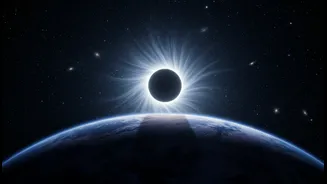
Why will Europe see an eclipse while India will not? It all comes down to the geometry of the Moon's shadow. The umbra, where a total eclipse is seen, is a narrow cone of darkness, typically only a couple of hundred kilometres wide when it reaches Earth. The much larger, fainter shadow is called the penumbra, and anyone within it sees a partial eclipse. On August 12, the Moon’s shadow will trace a path across the Arctic and Europe, completely missing the Indian subcontinent. Because the Earth is a sphere, the shadow can only fall on one side at a time. By the time the shadow reaches Europe, India will have already rotated into night, placing it outside the eclipse's viewing zone entirely.
A Different Celestial Treat Awaits
While the solar eclipse will be a miss for India, there is a silver lining for the nation's skywatchers. The date of the eclipse, August 12, coincides with the peak of the annual Perseid meteor shower, one of the most reliable and spectacular meteor showers of the year. A solar eclipse can only occur during a New Moon, which means the sky will be exceptionally dark, free from any competing moonlight. This creates perfect conditions to view the Perseids. So, while you won't see the Sun being blocked, you will have a front-row seat to see dozens of “shooting stars” per hour streaking across the night sky, especially in the pre-dawn hours of August 13. It's a different kind of celestial show, but a beautiful one nonetheless.