






Bad weather, a tight schedule, or simply not wanting to leave the house can derail fitness goals. Enter walking in place: a simple, free, and surprisingly effective workout you can do anywhere, anytime. It's more than just a backup plan.
The Unexpected Power of Staying Put
Walking in place
is a fantastic low-impact cardiovascular exercise, making it gentle on your joints while still elevating your heart rate. It improves circulation, boosts heart health, and can aid in weight management by burning a significant number of calories. A brisk 30-minute session can burn between 100 to 200 calories, depending on your intensity. Beyond the physical, it's incredibly accessible; it requires no special equipment and can be integrated into your daily routine, like while watching TV, folding laundry, or on a phone call. This makes it an ideal starting point for beginners and a reliable option for seasoned fitness enthusiasts on busy days.
Mastering the Proper Form
To get the most out of your workout and prevent injury, proper form is key. Stand up tall, as if a string is gently pulling you up from the top of your head. Keep your eyes forward, looking about 10-20 feet ahead, and your chin parallel to the ground. Your shoulders should be rolled back, down, and relaxed, not scrunched up toward your ears. Engage your core to keep your back straight and your pelvis neutral. As you begin to walk, lift your knees to a comfortable height and land softly on your feet. Let your arms swing naturally in opposition to your legs—right arm forward with left leg up, and vice versa.
How to Increase the Intensity
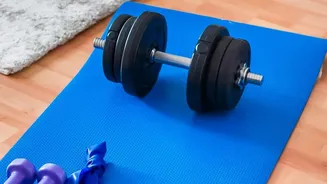
Once you're comfortable with the basic movement, there are several ways to make your walking workout more challenging. Increasing your cadence, or the number of steps you take per minute, is a simple way to boost your heart rate. You can also introduce variations in movement. Try lifting your knees higher, aiming for hip height, which engages more of your quadriceps and hip flexors. Incorporating 'butt kicks' by trying to touch your heels to your glutes works your hamstrings. Pumping your arms more vigorously or adding light hand weights can also elevate the intensity and engage your upper body. For an even greater challenge, consider wearing a weighted vest.
A 20-Minute Sample Workout
Ready to give it a try? This simple routine is a great way to start. All you need is a small space and maybe some music to keep you motivated. - Warm-up (3 minutes): Start with a slow, gentle march in place. Roll your shoulders and neck to loosen up. - Brisk Walk (5 minutes): Pick up the pace to a brisk march. Your breathing should be elevated, but you should still be able to hold a conversation. Focus on your form and arm swings. - Interval 1: High Knees (2 minutes): March in place while lifting your knees as high as you comfortably can. Keep your core tight. - Recovery Walk (2 minutes): Return to a brisk, steady walking pace. - Interval 2: Side Steps (2 minutes): Instead of marching forward, take alternating steps to the right and left (step jacks without the jump). This engages your hips. - Recovery Walk (2 minutes): Go back to your brisk walking pace. - Cool-down (4 minutes): Gradually slow your pace down to a very slow march. Finish with some gentle stretches for your calves, hamstrings, and quadriceps.
Making It a Lasting Habit
The key to seeing results from any fitness routine is consistency. Try to schedule your walking workouts at the same time each day to build a routine. Using a fitness tracker to set and monitor a daily step goal can also provide motivation. Don't be afraid to mix things up to keep it interesting; follow along with online walking workout videos, listen to a podcast, or create a high-energy playlist. Most importantly, listen to your body. Start with shorter sessions and gradually increase the duration and intensity as you get stronger. Any movement is better than none, and walking in place is a powerful, convenient way to take a step toward better health without ever leaving home.