



India's Eye on the Sun
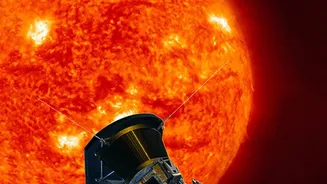
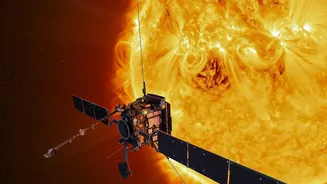
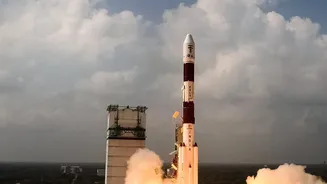
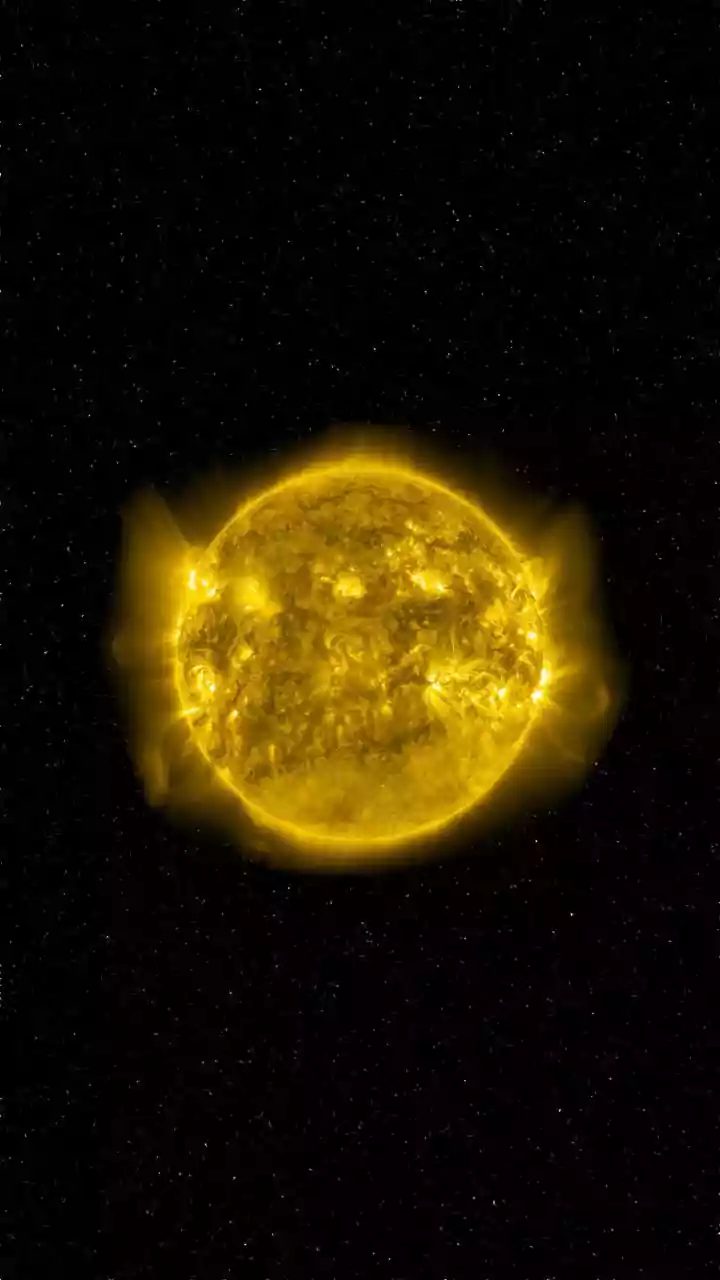
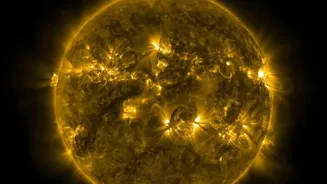
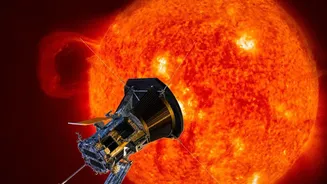
Since its successful launch, ISRO's Aditya-L1 has been diligently observing the Sun from an extraordinary position in space. The spacecraft is stationed in a halo orbit around the Lagrange Point 1 (L1), approximately 1.5 million kilometres from Earth.
This strategic location offers an uninterrupted view of the Sun, free from the eclipses or occultations that would obscure it from a lower Earth orbit. Aditya-L1 is not just a single instrument but a comprehensive observatory equipped with seven distinct payloads. Four of these are designed for remote sensing, observing the Sun's light from afar, while the other three perform in-situ measurements, directly sampling the environment of particles and magnetic fields at the L1 point. This dual approach allows scientists to connect events on the Sun's surface with their effects across space.
Decoding the Solar Wind
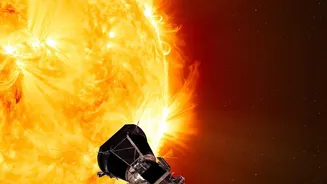
A key objective of the mission is to analyse the solar wind—a continuous stream of charged particles, mostly protons and electrons, flowing outward from the Sun. For this task, Aditya-L1 relies on several specialised sensors, including the Plasma Analyser Package for Aditya (PAPA) and the Aditya Solar wind Particle Experiment (ASPEX). The PAPA payload contains two sensors: the Solar Wind Electron Energy Probe (SWEEP) and the Solar Wind Ion Composition Analyser (SWICAR). Together, these instruments measure the energy, direction, and composition of the electrons and ions that make up the solar wind. Early data from these payloads have already demonstrated their capability, successfully detecting the impact of solar events like Coronal Mass Ejections (CMEs). The consistent performance of these sensors is now allowing scientists to build a detailed picture of the solar wind's speed and density variations, marking steady and crucial progress in the mission's scientific goals.
Why This Data Matters
Measuring the solar wind isn't just an academic exercise; it has profound practical implications for our technologically dependent world. The speed and magnetic properties of the solar wind are the primary drivers of space weather. High-speed solar winds can trigger geomagnetic storms on Earth, which have the potential to disrupt satellite operations, interfere with GPS navigation and communication systems, and even damage power grids on the ground. In February 2022, a batch of satellites was lost after a geomagnetic storm increased atmospheric drag. By studying the solar wind in detail, scientists hope to improve their ability to forecast such events. Understanding how phenomena like CMEs accelerate particles and propagate through space is essential for protecting our critical infrastructure, as well as ensuring the safety of astronauts in space.
The Road Ahead
The data streaming back from Aditya-L1 is just the beginning. ISRO has been actively encouraging the wider Indian scientific community to engage with the mission's findings. The space agency has released terabytes of data to the public and invited researchers from universities and institutions across the country to submit proposals for observation time. This collaborative approach aims to maximise the scientific return from the mission. In recent months, Aditya-L1 has already contributed to significant findings, including the detection of early warning signs for solar flares—small, transient brightenings that occur hours before a major eruption. As the mission continues its observations, the steady flow of data on solar wind and other solar phenomena will be crucial for building more accurate models of space weather, positioning India as a key contributor to global solar research.