






The Perishable Problem
In the regions surrounding Bengaluru, a major hub for India's floriculture industry, thousands of small farmers depend on flowers like roses for their livelihood. However, their product is incredibly perishable. Once a rose is cut, the clock starts ticking.
High temperatures cause rapid wilting and decay, leading to significant post-harvest losses, which can be as high as 20-35% for traditional flowers. Farmers without access to affordable cooling facilities are often forced into distress sales, selling their delicate harvest immediately to the nearest trader at whatever price is offered. Traditional cold storage units are often located far from the farms, require grid electricity that can be unreliable in rural areas, and command high rental fees, making them inaccessible for many.
A Solar-Powered Solution Arrives
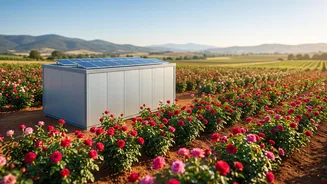
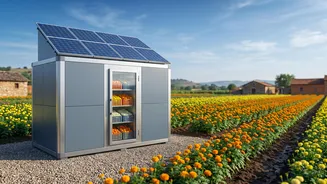
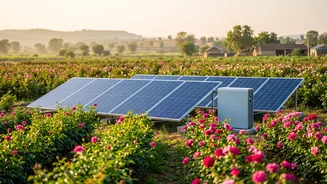
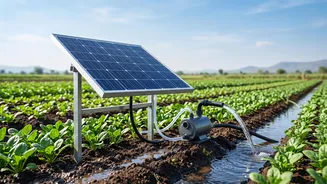
Enter the solar cold hub: a decentralised, off-grid cold storage unit powered entirely by the sun. These hubs are essentially insulated rooms equipped with refrigeration units that run on electricity generated by solar panels. Many systems include battery storage or thermal energy storage, ensuring they can maintain a consistent, cool temperature even at night or on cloudy days. By placing these facilities directly in or near farming villages, innovators and organisations like The Energy and Resources Institute (TERI) are bringing the solution to the problem. This eliminates the dependency on unstable power grids and expensive diesel generators, offering a clean, reliable, and sustainable alternative.
Empowering Farmers and Boosting Incomes
The impact of these solar cold hubs is transformative. With access to affordable local storage, farmers are no longer at the mercy of immediate market pressures. They can store their roses and other perishables for several days, extending their shelf life and giving them the power to wait for better prices, especially during peak demand periods like festivals. For example, a Farmer Producer Organisation (FPO) near Bengaluru has been able to offer storage at half the cost of conventional facilities. This not only reduces waste but directly increases farmer income. Reports from similar projects show income boosts of 20-30% or more, as farmers can aggregate their produce, access larger markets, and command a better price for their higher-quality, well-preserved flowers.
Beyond the Rose Farm
While the impact on rose farmers is significant, the potential of solar cold hubs extends far beyond floriculture. These units are a game-changer for India's entire agricultural sector, which supports nearly 60% of the population. The same technology is being used to preserve fruits, vegetables, dairy, and even pharmaceuticals, tackling India's massive post-harvest loss problem head-on. Initiatives led by agritech startups and institutions are demonstrating success across the country, from storing strawberries in Maharashtra to potatoes in Punjab. By providing this critical infrastructure at the farm gate, these hubs strengthen the entire food supply chain, enhance food security, and improve rural livelihoods.
The Road Ahead for Sustainable Cooling
The success of the Bengaluru-area solar hubs serves as a powerful model for the rest of India. The key to scaling this solution lies in making the technology even more accessible and affordable. High initial investment can still be a barrier for individual smallholders. However, community-led models, where Farmer Producer Organisations (FPOs) own and operate the hubs for their members, have proven effective. Continued support through government subsidies, partnerships with financial institutions, and the ingenuity of Indian agritech startups will be crucial in expanding this network of sustainable cooling. The goal is to create a future where every farmer has the tools to minimise waste and maximise the value of their hard work.