






Your New Digital Health Guru
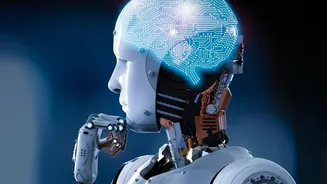
AI wellness coaches have matured significantly from the simple chatbot and habit trackers of the past. In 2026, the best platforms operate as sophisticated assistants that synthesize data from your wearables, sleep monitors, and even your calendar. They
deliver personalized prompts grounded in behavioral science, analyze your biometric data to find patterns you might miss, and adapt their recommendations over time. Think of a personal trainer, nutritionist, and mindfulness coach rolled into one affordable subscription, available 24/7. This accessibility is democratizing wellness, making expert-level guidance available to a much wider audience than ever before.
The Case for the Algorithm
The primary advantage of an AI wellness bot is its ability to process vast amounts of data without bias or fatigue. It can detect subtle patterns in your health metrics, like how a late meal affects your sleep quality or how a specific type of workout impacts your recovery. This data-driven approach provides objective, actionable insights. Furthermore, AI coaches offer what many humans crave: a judgment-free zone. An app won't get frustrated if you miss a workout; it will simply recalibrate and suggest a new plan. Studies have shown that for many, these digital tools can successfully reduce distress and improve adherence to wellness goals through consistent, gentle nudges.
The Argument for Personal Judgment
Despite the power of algorithms, personal judgment—that gut feeling or inner compass—remains irreplaceable. Your intuition holds a deep, contextual understanding that AI cannot replicate. It knows about your family dynamics, your emotional state, and your readiness for change, all of which are critical factors in any wellness journey. AI can mimic empathy, but it can't feel genuine compassion or understand the complex, nuanced reasons behind your choices. True transformation is often driven by these uniquely human elements: the 'aha' moments, creative problem-solving, and the deep personal motivation that a human coach can help uncover. Over-reliance on technology can also lead to a depersonalized experience, turning self-care into just another scorecard to optimize.
Where Bots Falter and Humans Shine
The limitations of AI become most apparent in moments of crisis or complexity. AI models can misinterpret data, give culturally inappropriate advice, or miss crucial emotional nuance. Privacy is another major concern, as sensitive health information is shared with platforms that may not have the same ethical and legal obligations as a human professional. While AI is great at handling repetitive, data-heavy tasks, it falls short in providing the therapeutic relationship that is often the strongest predictor of positive outcomes in coaching and therapy. The human touch—empathy, accountability, and wisdom born from lived experience—is something an algorithm cannot simulate.
The Bot as a Co-Pilot, Not the Pilot
The 2026 trend doesn't present an either/or choice. Instead, it changes the case by framing the bot as a powerful co-pilot for your own judgment. The most effective approach is a hybrid one, where AI handles the data and humans provide the wisdom. Studies show that combining AI tools with human coaching leads to significantly better outcomes than using AI alone. Human coaches in 2026 are increasingly expected to be AI-literate, helping clients interpret the data from their apps and place it within the larger context of their lives. The AI provides the 'what' (data and patterns), while personal judgment and human connection provide the 'so what' (meaning and action).