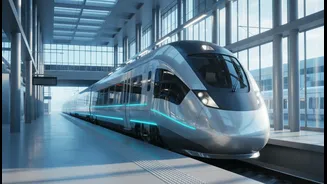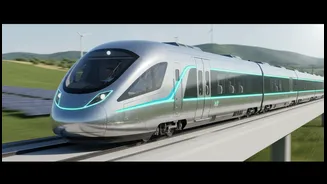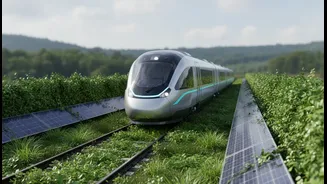






What Exactly Is a Hydrogen Train?
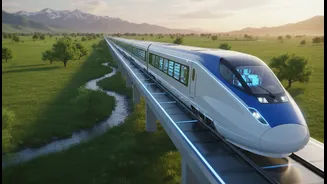
Imagine a train that runs on the most abundant element in the universe and emits only water vapour. That's the core concept of a hydrogen train. Instead of a diesel engine, these trains use a fuel cell stack. Inside the fuel cell, hydrogen stored in onboard
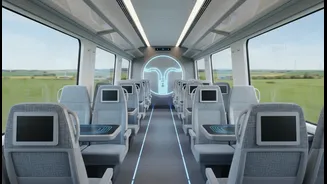
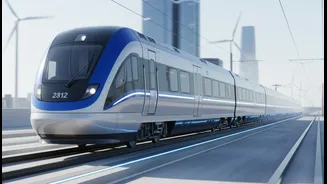
tanks reacts with oxygen taken from the air. This electrochemical reaction generates electricity to power the motors, with heat and water being the only by-products. It’s a quiet, clean, and efficient system that eliminates the smoke and pollutants associated with traditional diesel locomotives. India's first hydrogen train, a 10-coach retrofitted Diesel Electric Multiple Unit (DEMU), will feature a powerful 1,200-kilowatt propulsion system.
India's First Green Corridor
The journey for India's hydrogen-powered rail is set to begin in Haryana. Prime Minister Narendra Modi is expected to inaugurate the country's first hydrogen train on July 17, 2026. The chosen pilot route is the approximately 90-kilometre stretch between Jind and Sonipat. This non-electrified corridor was selected for its suitability for controlled trials, and a dedicated hydrogen production, storage, and refuelling facility has been established at Jind to support the project. The train is expected to make two round trips daily, significantly cutting the journey time to about one hour from the two hours it currently takes diesel trains. Following extensive and successful trials, where the train reached speeds of 120 km/h, it will operate at a service speed of 75 km/h.
A Leap Towards Net-Zero Railways
The introduction of hydrogen trains is a cornerstone of Indian Railways' ambitious mission to become a net-zero carbon emitter by 2030. While massive electrification of the network is the primary strategy, hydrogen offers a clean alternative for routes where electrification is difficult or not cost-effective, such as heritage tracks, hilly terrains, and lines with low traffic. By replacing diesel-powered trains, which contribute to air and noise pollution, hydrogen technology aligns with the 'Make in India' initiative and the nation's broader Green Transport Mission. This positions India among a select group of nations like Germany, Japan, and China that are actively exploring hydrogen for cleaner rail transport.
The Hurdles on the Track
Despite the immense potential, the path to a widespread hydrogen rail network is not without its challenges. The primary obstacle is the high initial cost. Manufacturing and retrofitting trains with fuel cell technology, along with building the necessary hydrogen production and refuelling infrastructure, requires significant capital investment. The project to develop the first train cost an estimated Rs 89 crore. Furthermore, the cost and scalability of producing 'green' hydrogen—which is made using renewable energy—remains a key concern for long-term economic viability. Safety protocols for handling and storing compressed hydrogen are also stringent, requiring specialised training and infrastructure.