


The Mango Frustration We All Know
The mango is, without a doubt, the king of fruits. Its arrival is a celebrated event, signalling the peak of summer with its unparalleled sweetness and fragrance. But for every moment of mango-induced bliss, there's the inevitable struggle that precedes
it. Peeling a mango can be a surprisingly messy and wasteful affair. The traditional method with a peeler or a paring knife often leads to sticky hands, a juice-covered countertop, and far too much precious fruit clinging stubbornly to the skin. Many of us have surrendered, resorting to hacking the fruit into cubes while still on the peel, but this often means leaving the best bits behind. It’s a universal kitchen conundrum: how to liberate that perfect pulp with minimal fuss and maximum yield.
Why the Glass Method Is a Game-Changer
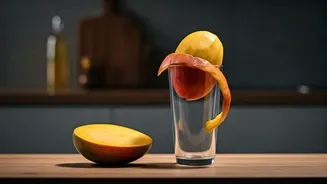
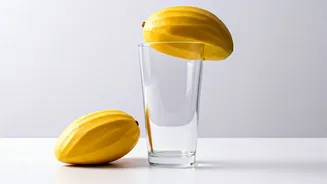
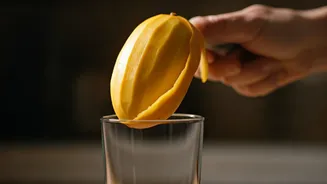
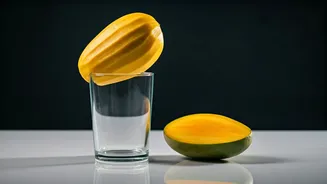
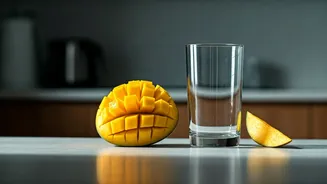
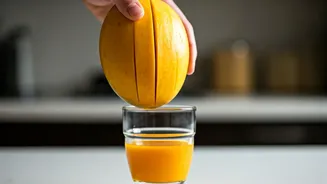
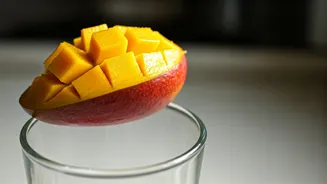
Enter the drinking glass method, a kitchen hack so brilliantly simple you’ll wonder why you didn't think of it yourself. This technique, popularised across social media and food blogs, leverages basic physics to do the work for you. Instead of trying to carve the skin away from the fruit, you use the firm rim of a glass to separate the two in one clean, smooth motion. The curve of the glass perfectly follows the curve of the mango cheek, scooping out the flesh cleanly and efficiently. The result is a perfectly intact slice of mango, ready for dicing, blending, or eating straight away, with the peel left behind in a neat, hollowed-out shell. It's fast, it’s clean, and it’s incredibly satisfying.
Gather Your Simple Toolkit
You don’t need any specialised equipment for this trick. In fact, you almost certainly have everything you need in your kitchen right now. Before you begin, gather these essentials: - **A Ripe Mango:** The method works best with a mango that is ripe but still firm. If it’s too soft or mushy, the flesh may break apart. If it’s too green and hard, it will be difficult to slide along the glass. - **A Sharp Knife:** You'll need this to slice the mango cheeks off the central seed. - **A Sturdy Drinking Glass:** The ideal glass has a relatively thin but strong rim. A standard pint glass, a sturdy water glass, or even a durable tumbler works perfectly. Avoid glasses with very thick, rounded lips, as they won't cut through the fruit as cleanly.
The Four-Step Glass Method
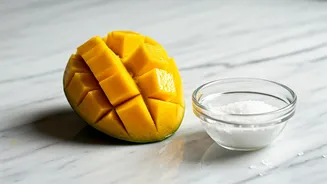
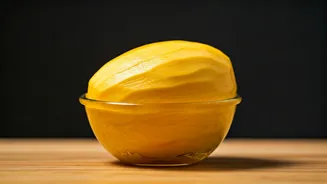
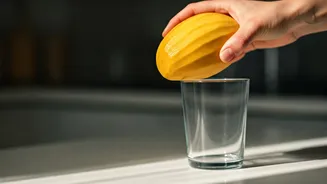
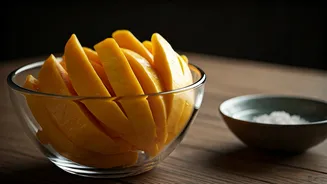
Ready to change your mango life forever? Follow these four simple steps. Once you try it, you’ll never go back. **Step 1: Slice the Mango.** Place the mango on a cutting board. The large, flat seed runs through the centre. You want to slice lengthwise on either side of this seed, cutting off the two fleshy “cheeks” of the mango. You’ll be left with three pieces: two large cheeks and the middle section with the seed. **Step 2: Position the Mango Cheek.** Take one of the mango cheeks in one hand and the drinking glass in the other. Position the bottom edge of the mango cheek against the rim of the glass, where the skin meets the flesh. **Step 3: Scoop and Slide.** Apply firm, steady pressure and push the mango down along the outer edge of the glass. The rim of the glass will slide between the skin and the flesh. Continue this motion, following the curve of the fruit, until the entire slice of mango has been scooped out and has fallen neatly into the glass. **Step 4: Repeat and Enjoy.** Discard the now-empty peel. Repeat the process with the second mango cheek. You can also use a small knife to carefully trim the remaining fruit from around the central seed. In less than a minute, you have perfectly peeled mango, with virtually no mess or waste.
Tips for Flawless Results
While the technique is straightforward, a few tips can help you perfect it. First, choose your glass wisely. A thinner rim provides a cleaner separation. If you find the mango is slipping, make sure your hands and the outside of the glass are dry. The ripeness of the mango is also key. This method is a dream for varieties like Alphonso, Kesar, or Dasheri when they are perfectly ripe—sweet, fragrant, but still holding their shape. For very fibrous mangoes, you might still get some stringiness, but the overall process remains far cleaner. Don't be afraid to apply firm pressure; the mango skin is tougher than you think, and the glass rim needs that force to work its magic.