


A New Eye on the Cosmos
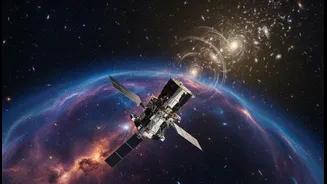
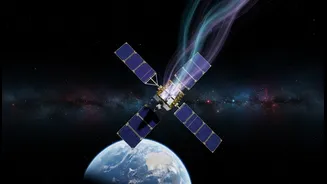
Meet the Nancy Grace Roman Space Telescope, NASA’s next great observatory, slated for launch on August 30, 2026. Named after NASA's first Chief of Astronomy, Nancy Grace Roman, this telescope is not designed to replace its famous predecessors but to complement
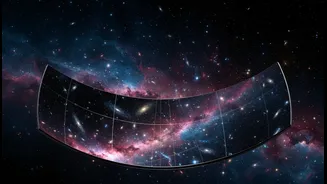
them with a unique and powerful capability. While the Hubble and James Webb space telescopes are renowned for their incredibly deep, focused views of small sections of the sky, Roman is built for breadth. It’s a survey telescope, engineered to map huge swathes of the universe quickly and efficiently, creating cosmic charts of unprecedented scale and detail. The spacecraft, which arrived at Kennedy Space Center in June 2026 for final launch preparations, is set to open a new window on the cosmos.
The Power of a Panoramic View
The heart of Roman’s power is its Wide Field Instrument (WFI), a 300-megapixel camera that will give it a field of view at least 100 times larger than Hubble’s. It has the same size primary mirror as Hubble—2.4 meters in diameter—but its optical design allows it to capture a vast cosmic landscape in a single shot. Think of it this way: where Hubble or Webb might study a single tree in exquisite detail, Roman will survey the entire forest at once, while still being able to distinguish the individual leaves. In fact, in just over two months, Roman will be able to map an area of the sky with the same depth and clarity that would have taken the Hubble Space Telescope over 85 years to achieve.
Hubble, Webb, and Now Roman
To understand Roman's role, it helps to see it as part of a celestial toolkit. Hubble sees primarily in visible and ultraviolet light. Webb is optimized for the infrared, allowing it to peer back toward the dawn of time and through cosmic dust. Roman also observes in the infrared but with a crucial difference: its wide-angle lens. This makes it a discovery machine. Roman will identify tens of thousands of new targets—distant galaxies, exploding stars, and other phenomena—that Webb and other telescopes can then investigate in greater detail. This synergy is key; Roman will find the astronomical needles in the cosmic haystack, and Webb will perform the close-up analysis.
Unveiling Cosmic Mysteries
Roman's five-year primary mission has two main goals: understanding dark energy and finding exoplanets. To tackle dark energy, the mysterious force accelerating the universe's expansion, Roman will conduct massive surveys of galaxies and supernovae. By mapping the distribution of hundreds of millions of galaxies, it will provide crucial data on how cosmic structure has evolved over time. For exoplanets, Roman is expected to be revolutionary. Using a technique called gravitational microlensing, it is projected to find around 100,000 new worlds, from gas giants to smaller, rocky planets. This is more than all other telescopes combined have found to date. It will also carry a technology demonstration called a Coronagraph, designed to directly image large planets by blocking out their star's overwhelming light.
The Road to First Light
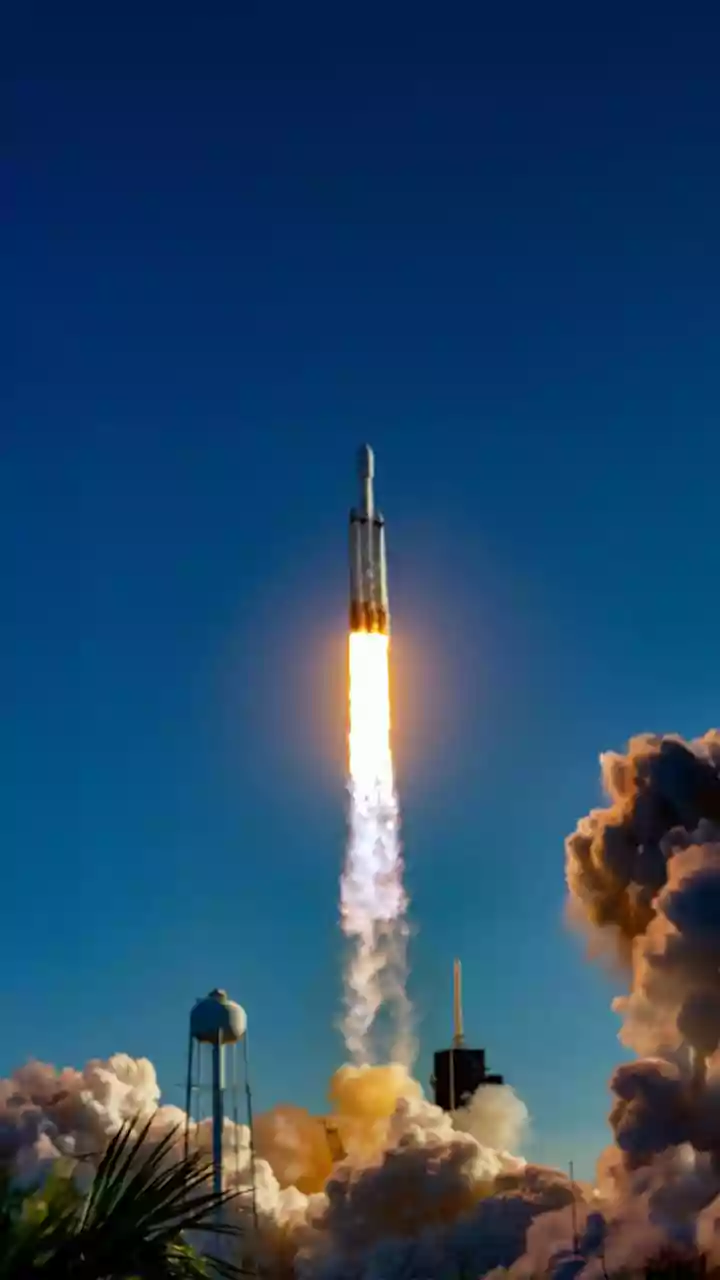
With its launch aboard a SpaceX Falcon Heavy rocket rapidly approaching, the Roman Space Telescope is in its final stages of preparation. After liftoff, it will travel to the second Lagrange point (L2), a gravitationally stable spot about 1.5 million kilometers from Earth, where the James Webb Space Telescope also resides. From this distant vantage point, shielded from Earth's glare, Roman will begin its ambitious surveys. The sheer volume of information will be immense, with the mission expected to generate around 20 petabytes of data. Scientists are already preparing for this data flood, which promises to keep astronomers busy for decades and transform our understanding of the universe's scale, structure, and contents.