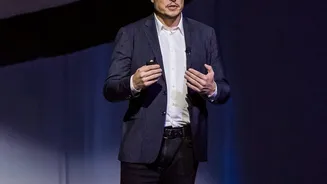







Elon Musk's ventures operate on a global scale, but a stark contrast is emerging. While he reportedly directs nearly half a billion dollars into US politics, his ambitions for satellite internet in India are caught in a web of local regulations.
The $445 Million Political Play
The reported
$445 million figure is not for building factories or research centers. Instead, recent reports from October 2026 indicate Elon Musk has channeled this staggering sum into the US midterm election cycle, making him one of the largest individual political donors. This spending, directed primarily toward Republican-aligned political action committees (PACs), is seen as a strategic move to cultivate favorable political relationships. Musk's companies, including SpaceX, Tesla, and others, are heavily intertwined with US government agencies, relying on them for everything from launch licenses and satellite authorizations to massive federal contracts. This level of political spending highlights a strategy of using significant capital to influence the regulatory and legislative environment in a key market.
The Indian Impasse
While money talks in US politics, it's a different story for Musk's Starlink in India. The satellite internet venture, which aims to provide high-speed connectivity to underserved areas, is operationally ready but legally stalled. Despite obtaining a Global Mobile Personal Communication by Satellite (GMPCS) license in June 2025 and an authorization from India's space regulator, IN-SPACe, a month later, the service has not been cleared for a commercial launch. Musk himself has publicly expressed frustration, alleging that powerful local business interests are creating a 'monopolistic chokehold' to block Starlink's entry. This has sparked a public debate about competition and market access in India's burgeoning digital economy.
Navigating a Maze of Regulation
The primary hurdles for Starlink in India are not technological but regulatory. The company, as a wholly foreign-owned subsidiary of SpaceX, requires specific approvals under India's Foreign Direct Investment (FDI) policy. While India permits up to 100% FDI in the satellite sector, any stake above 74% requires explicit government approval, moving it from the 'automatic' route to the 'government' route. This process involves intense scrutiny. Furthermore, a final security clearance from the Ministry of Home Affairs is pending. Indian authorities have expressed concerns about national security, the ability to lawfully intercept data, and ensuring the government can control the network in a crisis. The government has implemented strict conditions, such as requiring all user data to be processed within India and for network operations to be based in the country.
A Clash of Business Cultures
The situation underscores a fundamental clash between Musk's aggressive, fast_moving style and India's cautious, process_driven regulatory environment. Starlink has signaled its readiness by setting up ground infrastructure, including over 20 gateway sites, and even entering preliminary distribution partnerships with local giants like Reliance Jio and Bharti Airtel. However, the Indian government maintains that Starlink is subject to the same rules as all other players, including domestic ones like Jio's own satellite venture, which is also awaiting final clearances. The delay reflects a broader tension in the India_US economic relationship and a global trend where market access is increasingly tied to complex negotiations over technology sovereignty and national interest. For Musk, who is accustomed to shaping outcomes with capital and influence in the US, the Indian market is proving to be a place where regulatory compliance and national security considerations take precedence.