



The Foundation: Choosing Your Paneer
The journey to perfect paneer tikka begins with the star ingredient itself. Not all paneer is created equal. For tikka, you want a firm, full-fat block that won't crumble when cubed and marinated. Avoid the softer, malai paneer which is better suited
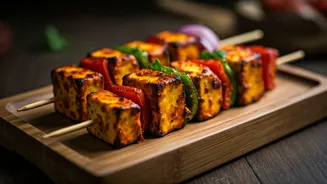
for gravies. A dense, slightly 'squeaky' paneer holds its shape beautifully on skewers and develops a delightful texture when cooked. Once you have your paneer, cut it into uniform 1-inch cubes. Uniformity is key for even cooking. Before you do anything else, soak the cubes in warm, salted water for about 15-20 minutes. This simple step, often overlooked at home, is a restaurant trick that ensures the paneer becomes incredibly soft and absorbent, ready to soak up all the flavours of the marinade. After soaking, drain the water completely and pat the cubes dry with a paper towel. This prevents the marinade from becoming watery.
The First Marinade: Building Flavour
The journey to perfect paneer tikka begins with the star ingredient itself. Not all paneer is created equal. For tikka, you want a firm, full-fat block that won't crumble when cubed and marinated. Avoid the softer, malai paneer which is better suited for gravies. A dense, slightly 'squeaky' paneer holds its shape beautifully on skewers and develops a delightful texture when cooked. Once you have your paneer, cut it into uniform 1-inch cubes. Uniformity is key for even cooking. Before you do anything else, soak the cubes in warm, salted water for about 15-20 minutes. This simple step, often overlooked at home, is a restaurant trick that ensures the paneer becomes incredibly soft and absorbent, ready to soak up all the flavours of the marinade. After soaking, drain the water completely and pat the cubes dry with a paper towel. This prevents the marinade from becoming watery.
The Second Marinade: The Creamy, Spicy Heart
This is where the magic happens. The second marinade is the thick, yogurt-based coating that gives paneer tikka its signature tang and texture. The most crucial ingredient here is hung curd (chakka). Regular dahi or yogurt is too watery and will slide right off. To make hung curd, simply place plain yogurt in a muslin cloth and hang it for a few hours (or leave it in a strainer over a bowl in the fridge) to drain the excess whey. What’s left is thick, creamy, and perfect for marination. In a large bowl, whisk your hung curd until smooth. To this, add roasted besan (gram flour), which acts as a binder and prevents the marinade from splitting. Simply dry-roast a couple of tablespoons of besan in a pan on low heat until it becomes fragrant. Next, add your spices: kashmiri red chilli powder for colour, garam masala for warmth, coriander powder, cumin powder, and a touch of kasuri methi (dried fenugreek leaves) crushed between your palms to release its aroma. The final non-negotiable ingredient is pungent mustard oil, heated until it just starts to smoke and then cooled slightly. This kills its raw taste and blooms the spices, lending an authentic, sharp flavour that is quintessentially tikka. Mix everything into a thick, smooth paste, check for salt, and then gently fold in your pre-marinated paneer and cubed vegetables like onions and capsicum.
The Smokey Finish: Faking a Tandoor
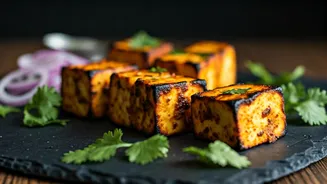
The defining characteristic of restaurant tikka is that smoky char, a flavour known as 'tandoori.' But you don't need a clay oven to achieve it. The most effective home method is called 'dhungar.' After your paneer has marinated for at least an hour (or preferably overnight), thread it onto skewers, alternating with the vegetables. Now, for the smoke: place a small steel bowl in the centre of your marinating bowl (or alongside your skewers). Heat a piece of charcoal over an open flame until it's red hot. Carefully place the hot charcoal in the steel bowl, pour a spoonful of ghee or oil over it, and as soon as it starts smoking profusely, cover the entire dish with a tight-fitting lid. Let it sit for 5-10 minutes. The smoke will infuse everything with that incredible, unmistakable tandoori aroma. For cooking, you can pan-fry the skewers on a hot grill pan, turning occasionally until charred on all sides. Alternatively, arrange them on a baking tray and cook in a preheated oven at high temperature (around 220°C) for 10-15 minutes, turning once. For a final flourish, you can hold the cooked skewers directly over a gas flame for a few seconds to get those perfect blackened edges.