






A sedentary job can leave your muscles tight, weak, and unbalanced. But with the right strategy, your time at the gym can effectively reverse these effects, helping you stay active and build functional strength without spending hours working out.
Prioritize the Posterior Chain
Sitting
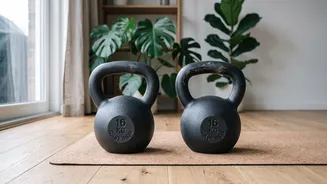
all day leads to what many trainers call 'gluteal amnesia'—your glute muscles forget how to fire properly. This, combined with tight hip flexors and weak hamstrings, can lead to poor posture and lower back pain. The solution is to focus your workouts on the posterior chain: the group of muscles on the back of your body. Exercises like Romanian deadlifts, glute bridges, and kettlebell swings are essential. They directly strengthen the glutes and hamstrings, helping to pull your pelvis back into a neutral position and provide support for your spine.
Embrace Compound Movements
When your time is limited, efficiency is key. Instead of isolating small muscle groups with exercises like bicep curls, focus on compound movements. These are multi-joint exercises that work several muscle groups at once, giving you more bang for your buck. Think squats, deadlifts, overhead presses, and rows. A workout built around these core lifts engages your entire body, builds functional strength that translates to daily activities, improves coordination, and burns more calories in less time. For example, a proper squat strengthens not just your legs, but also your core and back.
Add Mobility to Your Warm-Up
Before you even touch a weight, dedicate 10-15 minutes to mobility work. Sitting locks your body into a fixed position, leading to stiffness in your hips, shoulders, and upper back. A targeted mobility routine can help 'un-do' the damage of your desk posture. Focus on exercises that open up the areas that get tight. Half-kneeling hip flexor stretches can counteract tight hips, while thoracic spine rotations on all fours (like the 'thread the needle' exercise) can help relieve upper-back stiffness. This not only feels great but also prepares your body to move safely and effectively during your workout.
Use Supersets to Increase Density
A great 'hack' for a time_crunched workout is to use supersets. This involves pairing two different exercises and performing them back_to_back with little to no rest in between. This strategy increases your workout density, allowing you to get more work done in less time. A classic approach is to pair exercises for opposing muscle groups, such as a set of bench presses (a pushing exercise) immediately followed by a set of bent_over rows (a pulling exercise). This ensures one muscle group can rest while the other works, keeping your heart rate up and cutting down on total gym time without sacrificing volume.
Don't Neglect Your Upper Back
Slouching over a keyboard encourages your shoulders to round forward and your upper back muscles to weaken. Over time, this can contribute to neck and shoulder pain. To build a strong, upright posture, you need to actively train your upper back. Make exercises like face pulls, band pull_aparts, and various forms of rows a staple in your routine. These movements strengthen the rhomboids and rear deltoids, the muscles responsible for pulling your shoulder blades back and down, effectively fighting the forward hunch that office work promotes.
Strengthen Your Core Intelligently
A strong core is about much more than a six_pack; it's about creating stability for your entire torso. When you sit, your core muscles often relax and become inactive. To counteract this, focus on core exercises that promote stability and resist movement. Planks, side planks, and Pallof presses are excellent choices because they train your abs and lower back to work together to prevent unwanted motion in your spine. A stable core provides a solid foundation for all your other lifts and helps protect your lower back from injury.