









Why Monsoon Demands Extra Caution
The rainy season's high humidity and damp conditions are perfect for harmful microorganisms like bacteria, fungi, and viruses to thrive. Food spoils much faster, and the risk of contamination rises significantly. Water sources can become compromised due
to flooding and overflow, leading to a spike in waterborne diseases such as cholera, typhoid, and gastroenteritis. According to the Indian Council of Medical Research, gastrointestinal infections can increase by up to 40 percent during these months, making mindful eating more important than ever.
Handle Leafy Greens and Raw Veggies Carefully
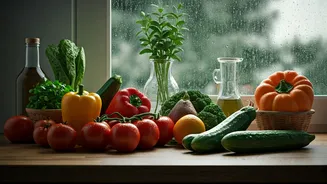
Leafy green vegetables like spinach and cabbage, which grow close to the soil, are particularly high-risk during the monsoon. They can be easily contaminated by dirty rainwater and mud, harbouring germs and bacteria. It's safest to avoid raw salads and opt for cooked vegetables instead. If you do consume leafy greens, wash them thoroughly, perhaps by soaking them in salt water or a mild vinegar solution, and cook them well before eating to kill any lingering pathogens.
Rethink Your Street Food Cravings
The craving for hot pakoras or a plate of chaat intensifies during a downpour, but street food is a primary source of monsoon-related illnesses. The main issue is often the use of unpurified water, especially in items like pani puri, chutneys, and juices. Open stalls also expose food to flies and airborne contaminants. If you must indulge, choose vendors who maintain high hygiene standards, cook food fresh and serve it piping hot, as heat kills most germs. Preparing your favourite snacks at home is the safest way to satisfy your cravings.
Be Wise About Water and Beverages
Contaminated water is one of the biggest culprits behind monsoon illnesses. It is essential to drink only boiled or properly filtered water throughout the season. Avoid ice from unknown sources, as freezing does not kill bacteria. Be cautious with fresh juices and other beverages from roadside stalls, as the water quality is often questionable. Instead, carry your own water bottle when you go out and prefer hot beverages like tea or coffee.
Exercise Caution with Meat and Seafood
The monsoon is the breeding season for fish and other seafood, making them less fresh and more prone to spoilage. The high humidity also accelerates bacterial growth on all types of meat. It is advisable to reduce the intake of seafood during this time. If you are consuming meat or fish, ensure it is sourced from a reputable vendor and is extremely fresh. Cook all meat and poultry thoroughly until it reaches a safe internal temperature to eliminate any risk of foodborne illness.
Boost Your Immunity with the Right Foods
While it's important to know what to avoid, it's equally crucial to eat foods that strengthen your body's defenses. A strong immune system is your best protection against seasonal infections. Incorporate immunity-boosting ingredients like turmeric, ginger, and garlic into your daily cooking. These have powerful anti-inflammatory and antimicrobial properties. Citrus fruits like oranges and lemons are rich in Vitamin C, which helps in the production of white blood cells that fight infection. Probiotic-rich foods like homemade curd (yoghurt) can also support gut health, which is closely linked to immunity.