


What Is a Planetary Alignment?
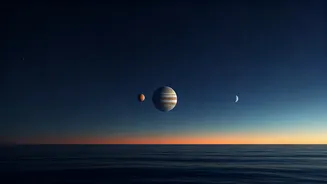
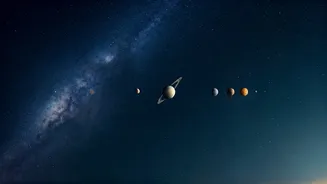
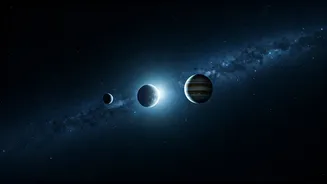
First, let's clarify what we mean by 'alignment'. The planets won't be in a perfectly straight line in space—that's an incredibly rare event. Instead, a planetary alignment, or conjunction, occurs when two or more planets appear close together in the sky
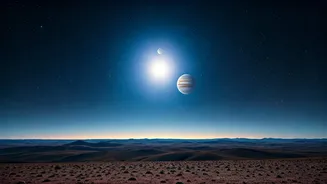
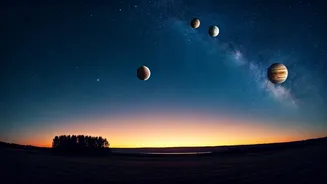
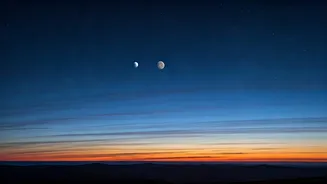
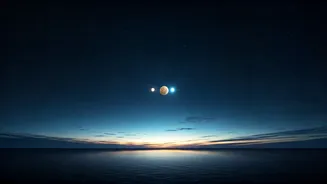
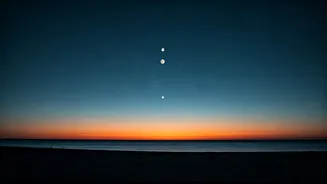
from our perspective on Earth. Tonight, the speedy Mercury, the brilliant Venus, and the giant Jupiter will form a close grouping in the same small patch of sky. While alignments happen periodically, seeing these three specific planets clustered together is an uncommon and beautiful sight, easily enjoyed without any special equipment.
When and Where to Look
Timing and location are everything for this event. The best window for viewing will be shortly after sunset. Start looking about 30 to 45 minutes after the sun has completely dipped below the horizon. You’ll need to face west, the same direction the sun just set. Find a spot with an unobstructed view of the western horizon, away from tall buildings, trees, and the glare of city lights if possible. A park, a rooftop, or an open field would be ideal. The entire spectacle will be low in the sky and will only last for a short while before the planets themselves set, so don't wait too long to head out.
How to Spot the Planets
You won't need a star chart to find this trio, but knowing what to look for helps. The brightest 'star' you'll see in the western twilight sky will be Venus. It's unmistakable due to its brilliant, steady light. Just above or near Venus, you should spot the second-brightest point of light, which will be Jupiter. The real challenge, and the prize of the night, is Mercury. It will be the faintest of the three and positioned very close to the horizon. Look for it just below or to the side of the much brighter Venus. Be patient, as your eyes will need a few minutes to adjust to the dimming twilight. Jupiter and Venus will be obvious, but spotting Mercury will give you true bragging rights.
Do I Need a Telescope or Binoculars?
Absolutely not! This planetary gathering is a naked-eye event, meaning you can see all three planets without any special equipment. Venus and Jupiter are two of the brightest objects in the night sky, and even elusive Mercury will be visible if conditions are right. However, if you have a pair of binoculars, bring them along. Binoculars will make the planets appear sharper and more distinct. They will be especially helpful for getting a clear view of Mercury against the twilight glow. A telescope would, of course, offer a spectacular view, potentially revealing Jupiter's largest moons, but it's not necessary to simply enjoy the alignment itself.
A Few Tips for the Best View
To make the most of this celestial show, a little preparation goes a long way. First, check your local weather forecast; clear skies are essential. Second, give your eyes at least 10-15 minutes to adapt to the darkness, away from your phone screen or other light sources. This will make it much easier to spot the fainter Mercury. If you're new to stargazing, you can use a simple astronomy app on your phone (like Stellarium or SkyView) to help you confirm which planet is which. Just point your phone at the sky, and the app will identify the objects for you. Finally, take a moment to simply appreciate the view. It's a beautiful reminder of the vast solar system we are a part of.