







Our Plates, Our Planet
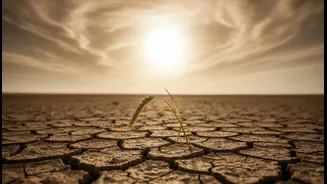
The foundation of India's food security, the monsoon, is becoming increasingly erratic due to climate change. Unpredictable rainfall, marked by long dry spells and sudden, intense downpours, disrupts age-old farming cycles. This volatility directly impacts
the yields of staple crops like rice and wheat, which are crucial for feeding the nation. Farmers, especially the more than 86% who are smallholders, are hit hardest. Beyond the monsoon, rising temperatures are causing what experts call "terminal heat stress," particularly for the winter wheat crop, which can shrink grains and reduce protein content. This not only threatens the livelihoods of millions dependent on agriculture but also affects food prices and nutritional security for everyone. The very nutrients in our food are at risk, with studies indicating that increased carbon dioxide can decrease the concentration of protein, iron, and zinc in essential crops.
Journeys in a Changing World
The impact of climate change extends to how and where we travel. India’s diverse landscapes, a major draw for tourism, are under threat. The Himalayas, for instance, are warming faster than the global average, leading to shrinking glaciers and unpredictable weather that affects the viability of trekking and spiritual tourism. Winter sports destinations like Gulmarg and Auli have seen a decline in snowfall, shortening the skiing season and impacting local economies that depend on it. Along the coasts, rising sea levels and an increase in powerful cyclones threaten beaches and infrastructure in popular destinations. This environmental stress is forcing a shift in travel patterns, with extreme heat making some cities less appealing during traditional peak seasons. The changing climate is not just altering landscapes; it's reshaping the tourism map and forcing a reconsideration of what makes a destination desirable and sustainable.
A Fever Pitch for Health
The link between climate and health is becoming dangerously clear. One of the most direct impacts is the rise in extreme heatwaves, posing a significant risk of heat stress, especially for urban populations and outdoor workers. But the effects are more insidious, too. Changing temperature and rainfall patterns are creating new breeding grounds for disease-carrying vectors like mosquitoes. As a result, vector-borne diseases such as dengue, malaria, and chikungunya are no longer confined to their traditional seasons or geographical areas. These diseases are spreading to higher altitudes and new states, extending their transmission windows and making outbreaks more frequent and harder to predict. The World Health Organization has warned that climate change is a significant global health threat, and in a densely populated country like India, the consequences include increased risks of water-borne illnesses and other infectious diseases.
The Ripple Effect of Water
Underpinning all these challenges is a growing water crisis, intensified by climate change. The same erratic monsoons that disrupt agriculture also fail to adequately replenish India's crucial water sources. With around 55% of the country's agricultural land being rain-fed, this variability is devastating. At the same time, accelerated glacier melt in the Himalayas threatens the long-term flow of major rivers that provide water to millions downstream. Rising demand from a growing population and unsustainable groundwater extraction have already put immense pressure on water availability; climate change acts as a force multiplier. Nearly 600 million people in India already face high-to-extreme water stress. This scarcity has a cascading effect, impacting everything from food production and energy generation to public health and sanitation, tying our collective future to the health of the water cycle.