






Beyond the PDF
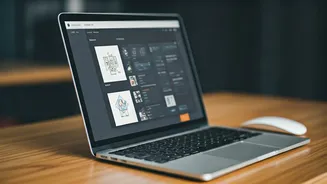
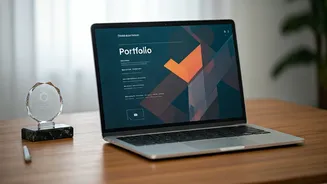
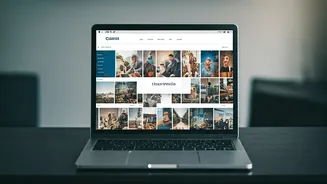
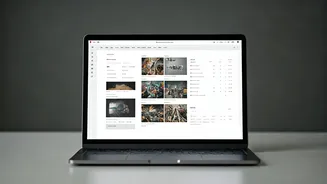
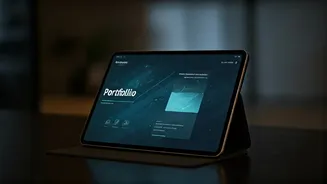
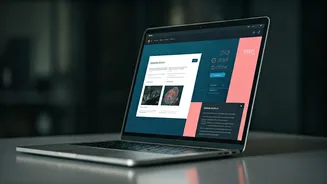
First, let's be clear about what we mean. An interactive digital portfolio is not just a PDF of your work samples saved on Google Drive. It’s a personal website designed to showcase your skills, projects, and professional story in a compelling, engaging
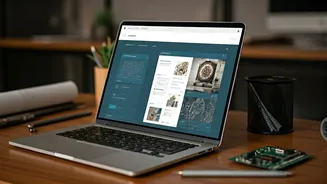
way. Think of it as your personal career museum, where you are the curator. Unlike a static resume that lists 'Project Management' as a skill, your portfolio can feature a clickable timeline of a project you managed, complete with key milestones, challenges overcome, and embedded testimonials. For a developer, it's a space to embed live code snippets from GitHub. For a marketer, it’s a place to display campaign videos and interactive charts showing ROI.
Show, Don’t Just Tell
This is the core principle that makes interactive portfolios so powerful. A traditional resume *tells* a recruiter you have skills in graphic design, UX/UI, or content writing. An interactive portfolio *shows* them. Imagine a recruiter clicking on a project and being able to interact with a Figma prototype you designed, or reading a blog post you wrote with animated infographics. This is not just evidence; it's an experience. It transforms you from a list of qualifications into a living, breathing professional who can deliver tangible results. It answers the recruiter’s most important question: 'Can this person actually do the job?' Your portfolio answers with a resounding 'yes, and here’s the proof.' This act of demonstration is far more persuasive than any bullet point on a CV.
Crafting Your Career Narrative
Your career is more than a series of job titles. It's a story of growth, learning, and impact. A resume struggles to tell this story, constrained by its rigid format and brevity. A digital portfolio gives you the canvas to craft a compelling narrative. You can use an 'About Me' section to share your professional philosophy, explain your passion for your field, and connect the dots between your different experiences. You can structure your projects thematically to highlight specific strengths, like 'Brand Transformation Projects' or 'Data-Driven Solutions'. By controlling the narrative, you guide the recruiter through your achievements in a way that is memorable and emotionally resonant. This storytelling element adds a layer of personality that a formal document simply cannot capture.
The Recruiter’s Perspective
In a world where recruiters spend mere seconds scanning each resume, a well-designed portfolio is a welcome disruption. It immediately signals that a candidate is serious, organised, and has put in the extra effort. For hiring managers, it's a massive time-saver. Instead of trying to guess your capabilities from vague descriptions, they can see your work firsthand. An interactive portfolio helps them vet candidates more effectively, leading to better-quality interviews. It also demonstrates a crucial soft skill: communication. The ability to present your work and ideas clearly and professionally is valuable in any role. Your portfolio is your first, and perhaps best, demonstration of this skill before you even step into an interview.
A Mark of Modern Professionalism
Ultimately, having an interactive digital portfolio is the 'ultimate career flex' because it shows you understand the currency of the modern workplace: visibility, branding, and digital fluency. It shows that you are not a passive job seeker waiting to be discovered, but an active architect of your own career. It demonstrates that you are current, tech-savvy, and invested in your professional growth. In competitive fields like technology, design, marketing, and media, it's fast becoming the standard. Arriving without one is like showing up to a meeting unprepared. It’s a statement of intent and a powerful tool for personal branding that works for you 24/7, making a great impression long before you shake anyone's hand.