







The Bot's Domain: Infinite Comparison
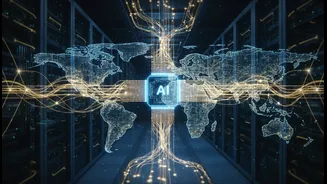
Artificial intelligence excels at tasks that are overwhelming for the human brain. Its core strength lies in processing vast datasets at incredible speeds, identifying patterns, and performing complex calculations without fatigue or error. Think of an AI
in finance, sifting through millions of market data points to assess risk, or a system in manufacturing that predicts maintenance needs. In these scenarios, the bot's role is to automate repetitive tasks and present a filtered, data-driven set of options. It can compare thousands of product specifications, analyse customer behaviour patterns, or even generate a hundred different marketing slogans in seconds. This is the “compare” function in its most powerful form: tireless, fast, and comprehensive. It frees up human workers from tedious analysis, allowing them to focus on higher-value work.
The Limits of Logic
However, the bot’s analysis is based on the data it is given. While it can identify correlations, it doesn't understand causation, context, or the subtle, unquantifiable factors that influence a decision's real-world impact. An algorithm can suggest the most cost-effective business strategy, but it can't weigh the impact on employee morale or long-term brand reputation. This is because AI models are objective-function-based; they are designed to optimise for a specific, programmed goal. They lack genuine creativity, emotional intelligence, and the ability to navigate ambiguity—the very qualities that define human intelligence. In high-stakes environments, relying solely on an algorithm can be problematic, as it may lack the nuance required for complex situations.
The Human Element: Choosing with Wisdom
This is where human wisdom becomes critical. To “choose wisely” is to do more than just select the most logical option from a list. It involves intuition, which psychologists now understand as a rapid, unconscious process where the brain synthesizes past experiences to form a 'gut feeling'. This intuitive intelligence allows us to make effective decisions even when information is incomplete. Wisdom also incorporates ethics, empathy, and strategic foresight. A human leader can look at AI-generated recommendations and ask crucial questions: Does this align with our company's values? How will our customers feel about this change? What are the potential unintended consequences? This level of contextual understanding and moral judgment is, for now, a uniquely human capability.
A Powerful Partnership in Practice
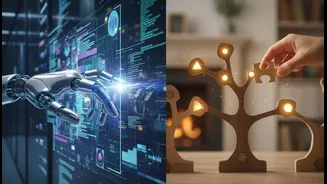
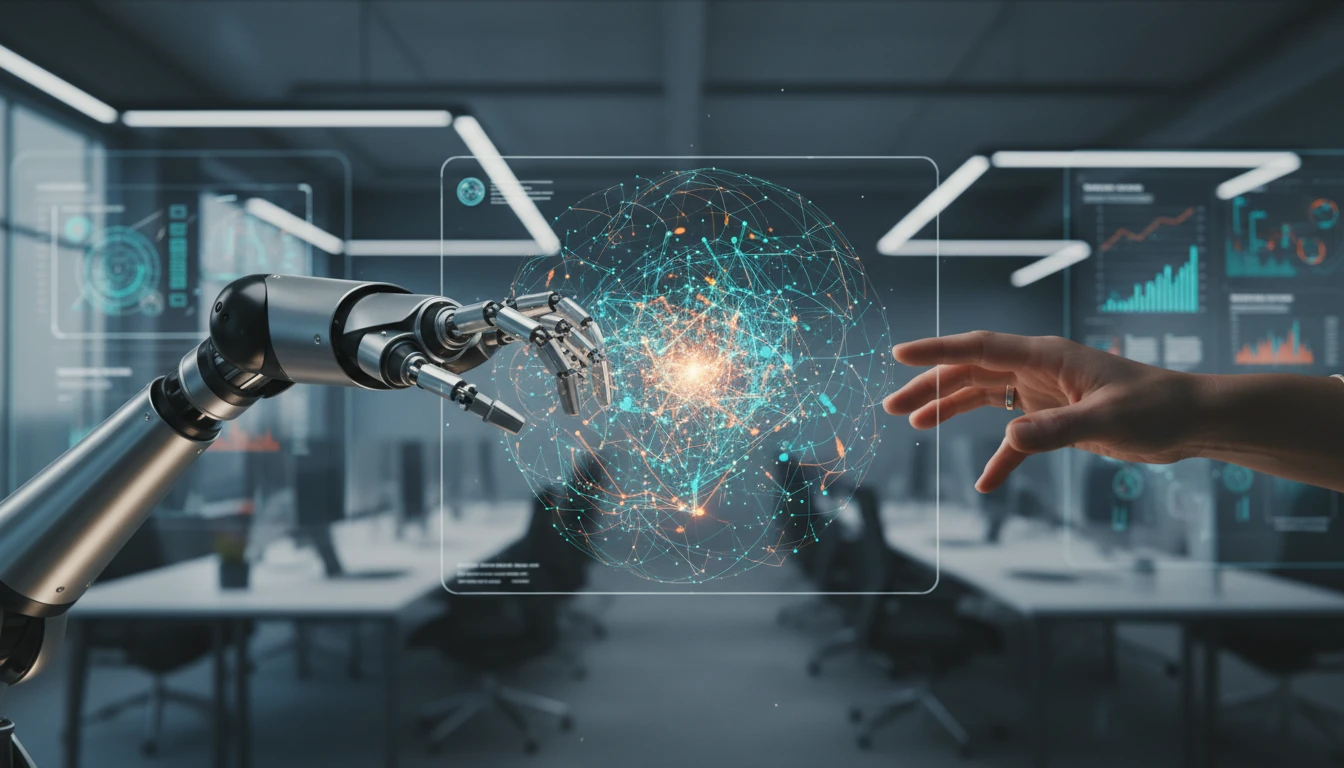
The most successful applications of AI in business aren't about replacing humans, but augmenting them. This human-AI collaboration is already transforming industries. In healthcare, AI systems can scan thousands of medical images to detect anomalies with incredible accuracy, but a human doctor makes the final diagnosis and decides on a compassionate treatment plan. In customer service, chatbots handle routine queries, freeing up human agents to solve more complex and emotionally charged problems. In creative fields, AI can generate countless design variations or musical motifs, but an artist uses their taste and vision to select and refine the final product. In each case, the bot provides the data-driven comparisons, while the human provides the wisdom, context, and final judgment.
Thriving in an AI-Augmented Future
As AI continues to automate routine analytical tasks, the skills that will become most valuable are precisely the ones that machines cannot replicate. The World Economic Forum notes that as technology becomes more ubiquitous, human-centric skills like leadership, empathy, and strategic problem-solving are growing in demand. To thrive in the future of work, professionals should focus on developing AI literacy to effectively partner with these tools, while simultaneously honing their uniquely human abilities. This means cultivating critical thinking to question AI-generated outputs, emotional intelligence to manage teams and clients, and creative thinking to innovate beyond what the data suggests. The future belongs not to those who can compete with AI, but to those who can collaborate with it most effectively.