






Every time we fly, we place immense trust in an invisible system of signals and controllers. But when that system falters, as it did recently with a false hijack alert, it forces a crucial look at the technology keeping our skies safe.
A Signal Gone Wrong
On October 14, 2026,
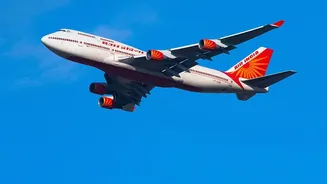
Air India flight AI2030 from Frankfurt to Delhi was forced to divert to Jaipur after air traffic controllers received a '7500' transponder code—the universal signal for a hijacking. The aircraft, with 306 people on board, was isolated and inspected by security agencies before being cleared to continue its journey. Early reports pointed to a possible error by the flight crew, but the focus has since shifted. India's aviation regulator, the DGCA, is now investigating whether a newly installed air traffic control (ATC) system in Mumbai generated the false alert, even though the pilots confirmed all was normal onboard.
How Air Traffic Control Works
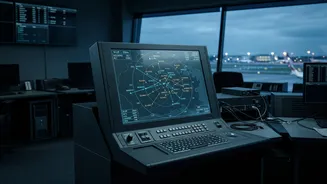
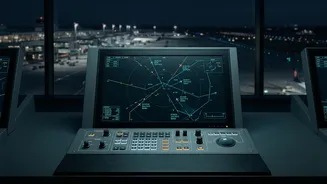
Air Traffic Control is a complex network of people and technology designed to keep aircraft safely separated. Controllers use a combination of radar, GPS, and direct communication to guide pilots through every phase of flight, from the departure gate to the arrival terminal. A critical piece of this is the aircraft's transponder, which communicates its identity, altitude, and speed to ground-based radar. Pilots can also use the transponder to input specific four-digit 'squawk' codes to signal a particular situation, like a radio failure (7600) or a general emergency (7700). The '7500' code for hijacking is treated with the highest priority, triggering an immediate security response. A false alert, whether from human error or a system glitch, can cause massive disruption.
An Aging System Under Strain
The Air India incident highlights a wider, long-standing concern in global aviation: aging ATC infrastructure. For decades, the system has been a patchwork of old and new technologies. Many facilities still rely on decades-old computer systems and analog communication lines. A 2024 report from the U.S. Government Accountability Office (GAO) warned that urgent action was needed to address these aging systems, noting that some facilities are so old they operate as independent silos, unable to talk to each other digitally. This reliance on outdated hardware, including copper wiring from the 1960s, makes the system vulnerable to outages and failures. A severed fiber-optic cable or a single equipment failure can, and has, led to thousands of flight delays and cancellations.
The Slow Push for Modernization
Governments and aviation authorities are aware of the problem and have been working for years on massive modernization projects, often referred to as 'NextGen' in the United States. These initiatives aim to replace legacy radar and analog communications with a modern, satellite-based digital system. The goal is to create a more resilient, efficient, and safer airspace. However, progress has been notoriously slow, plagued by delays and cost overruns. Recent funding injections have accelerated the transition, with the U.S. Federal Aviation Administration (FAA) reporting progress in replacing old copper wires with fiber optics and installing new radar systems. Still, a full transition to a cloud-based, fully digital system is years away, with some key goals not expected to be complete until the late 2020s or beyond.
What This Means for Travelers
Despite these underlying issues, air travel remains one of the safest forms of transportation. The system has multiple layers of redundancy, and the skill of human air traffic controllers provides a crucial final backstop against technological failure. The recent incident in India, as well as a similar false alert in Germany, ultimately demonstrated that safety protocols worked as intended—the system treated the threat as real until proven otherwise. However, these events also serve as a clear warning. They expose the brittleness of a system under immense strain, one that is managing more flights than ever before. The scrutiny on ATC systems is not about causing alarm, but about highlighting the urgent need for continued investment to ensure the invisible network that protects us in the sky is fit for the future.