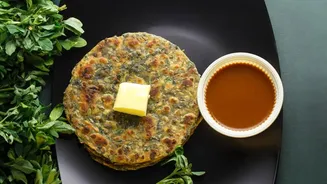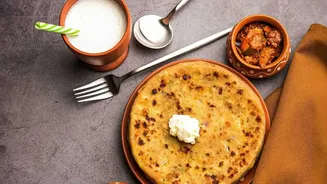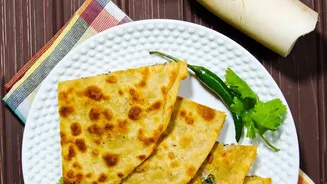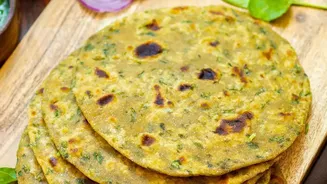



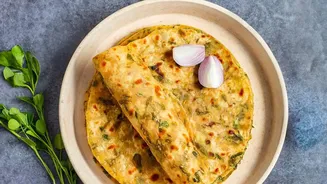

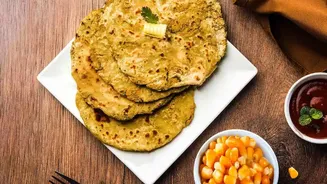
As winter mornings arrive with a distinct chill, our cravings turn to warm, comforting, and nourishing breakfasts. This homemade Jowar Mooli Paratha is the perfect answer—a savoury, healthy, and satisfying way to start your day on a cosy note.
A Winter Powerhouse on Your Plate
This paratha
isn't just about comfort; it's a nutritional powerhouse perfectly suited for the colder months. The two star ingredients, jowar (sorghum) and mooli (radish), are winter superfoods. Jowar is a gluten-free millet prized for its ability to provide sustained energy, which helps in maintaining body heat. Rich in fibre, it aids digestion and helps prevent constipation, which can be more common in winter. It's also packed with essential minerals like magnesium, calcium, and iron, which contribute to bone strength and can help combat the joint stiffness that sometimes worsens in the cold. Mooli, a quintessential winter vegetable, is loaded with Vitamin C, bolstering your immune system against seasonal colds and flu. Its high fibre content supports a healthy gut, while its natural properties are believed to aid in detoxifying the liver and purifying the blood. Together, jowar and mooli create a breakfast that not only warms you up but also works to keep you healthy and resilient through the season.
Mastering the Gluten-Free Dough
Working with jowar flour can seem intimidating because it's gluten-free, meaning it lacks the elasticity of wheat flour. This can lead to dry, cracked rotis. The secret to a soft, pliable dough lies in one simple technique: using hot water. Boiling water helps the flour absorb moisture thoroughly, making the dough much easier to handle. After mixing the flour with boiling water, it's crucial to let it rest, covered, for about 5-10 minutes. This resting period allows the steam to hydrate the flour particles, resulting in a cohesive dough that won’t break while rolling. When it's cool enough to handle, knead the dough for a few minutes until it's smooth. If it feels too dry, add a little more warm water; if it's sticky, a light dusting of flour will help.
Jowar Mooli Paratha Recipe
This recipe brings together the earthy flavour of jowar with the sharp, fresh taste of mooli and spices.
Ingredients:
1.5 cups jowar flour
1 cup grated mooli (radish)
1/2 cup finely chopped mooli leaves (optional, but recommended)
1-2 green chillies, finely chopped
1 tsp grated ginger
1 tsp ajwain (carom seeds)
1/2 tsp turmeric powder
Salt to taste
Hot water, as needed
Ghee or oil for cooking
Instructions:
1. Prepare the mooli: In a bowl, toss the grated mooli with a little salt and set it aside for about 10-15 minutes. This will cause the radish to release its water. Squeeze the mooli firmly to remove all excess water, but reserve this water for kneading the dough.
2. Make the dough: In a large mixing bowl, combine the jowar flour, the squeezed grated mooli, chopped mooli leaves, green chillies, ginger, ajwain, turmeric, and salt. Mix everything well.
3. Slowly add the reserved mooli water and then hot water as needed to knead everything into a soft, smooth dough. Be mindful not to add too much water at once. Let the dough rest for 10 minutes.
4. Roll the parathas: Divide the dough into equal-sized balls. On a rolling board dusted with jowar flour, gently flatten a ball. Since jowar dough can crack at the edges, it's easiest to pat it into a circle with your palms or roll it between two sheets of parchment paper. You can also use a sharp-edged lid or bowl to cut a perfect circle.
5. Cook the parathas: Heat a tawa (griddle) over medium heat. Place the paratha on the hot tawa and cook for about a minute. Flip it, apply some ghee or oil, and cook the other side. Press gently with a spatula to ensure it cooks evenly until golden-brown spots appear on both sides. Serve hot.
Serving Suggestions and Tips
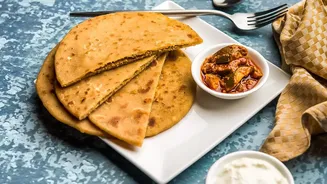
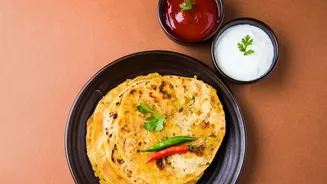
These Jowar Mooli Parathas are incredibly flavourful on their own but pair beautifully with simple accompaniments. A bowl of thick curd or a dollop of white butter complements the savoury spices perfectly. For a complete and balanced meal, serve them with a side of pickle or a simple chutney, like mint or coriander. You can even enjoy them with a winter special raita, such as one made with bathua (chenopodium).
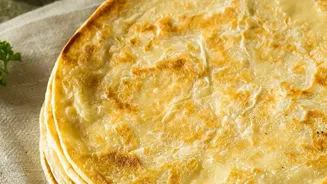
For extra flavour and nutrition, you can add other finely chopped greens like methi (fenugreek) or palak (spinach) to the dough. To ensure the parathas remain soft after cooking, stack them and cover them with a clean kitchen towel. This traps the steam and keeps them from drying out, making them perfect for a lunchbox as well.