






A Buzzing Electrical Environment
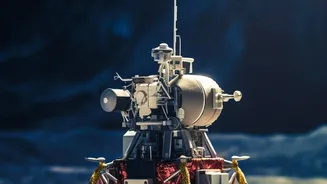
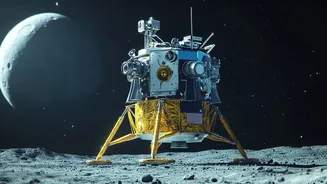
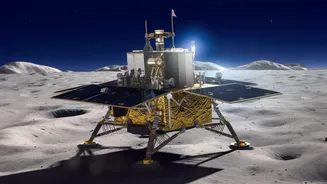
The key discovery comes from an instrument on the Vikram lander called the Radio Anatomy of the Moon Bound Hypersensitive ionosphere and Atmosphere, or RAMBHA. It made the first-ever direct measurements of the plasma environment near the lunar surface
at the south pole. Plasma, often called the fourth state of matter, is a gas of charged particles like ions and electrons. While scientists knew the Moon had a thin plasma layer created by solar wind and sunlight, RAMBHA found it to be far more active and dense at the 'Shiv Shakti Point' landing site than previously estimated from orbit. The instrument detected electron densities significantly higher than expected, with surprisingly high energy levels, equivalent to temperatures of thousands of degrees Kelvin.
Why Plasma Is a Problem for Landings
An unexpectedly dense and energetic plasma environment poses several challenges for exploration. This highly charged layer can interfere with radio communications between a lander, rovers, and Earth. It can cause signal degradation, attenuation, or even a complete communications blackout during critical phases of a mission. Furthermore, the electrical properties of the plasma can affect the fine, abrasive lunar dust. This can cause the dust to become electrostatically charged, making it stick to surfaces like solar panels, camera lenses, and spacesuits, potentially damaging sensitive equipment and posing risks to astronaut safety on future crewed missions.
From Data to Safer Designs
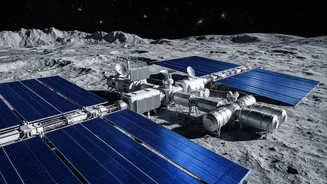
This is where the Chandrayaan-3 discovery becomes invaluable. By providing a 'ground truth' measurement of the plasma conditions at a potential future landing region, ISRO and other space agencies can now design more robust hardware. Engineers can develop communication systems that can better withstand or cut through this type of plasma interference. They can also create materials and mitigation strategies to combat the effects of electrostatically charged dust. Having this detailed environmental data allows for the design of safer landers, more reliable rovers, and better-protected habitats for the long-term human presence envisioned under programmes like Artemis.
More Than Just Plasma
The plasma data isn't the only crucial finding. Analysis of the lunar soil, or regolith, at Shiv Shakti Point also yielded surprises. Data from the ChaSTE instrument revealed that the top 10 centimetres of soil are not uniform but consist of three distinct layers with different thermal properties and densities. Another instrument, the APXS on the Pragyan rover, found the soil composition to be unique compared to previous landing sites, suggesting it contains primitive material from the Moon's mantle, excavated billions of years ago. This geological information is just as important for selecting a landing site, as the stability and composition of the ground are critical for the safety and scientific objectives of any mission.
Paving the Way for Future Missions
The discoveries made by Chandrayaan-3 are directly feeding into the planning for India's next lunar missions. This includes the Lunar Polar Exploration Mission (LUPEX), a collaborative project between ISRO and Japan's JAXA, which will deploy a more advanced rover to further explore the south polar region. A proposed Chandrayaan-4 mission aims to be India's first to return a lunar sample to Earth for deeper analysis. The invaluable data from Shiv Shakti Point provides a crucial reference, helping scientists pinpoint the most scientifically interesting and logistically safest locations for these ambitious future endeavours, solidifying India’s role as a leader in lunar exploration.